
Scaling a consumer brand in Mexico City rarely fails for lack of effort. More often, growth stalls because channels, content, and retail partners pull in different directions. Moreover, shoppers move quickly between a phone screen, a marketplace listing, and a neighborhood store. Therefore, executives need one clear system that connects those moments.
This guide explains consumer products digital marketing in Ciudad de Mexico in practical terms. Furthermore, it shows how local language, messaging commerce, and retail coverage shape every decision. You will also find a phased roadmap, a channel comparison table, and honest guidance on measurement.
Why does scaling feel different in Ciudad de México?
Ciudad de México is dense, diverse, and highly connected at the same time. However, each borough and neighborhood shops with slightly different habits and expectations. Consequently, a single national message often feels generic and easy to ignore.
Shoppers also compare options across several places before they buy anything. For example, a buyer might discover a product on video, check reviews on a marketplace, and ask questions by message. In addition, that same buyer may still prefer to collect the item in a physical store.
Services face a similar pattern, although the purchase feels less tangible. Indeed, trust matters even more when people book cleaning, beauty, repair, or wellness support. As a result, reviews, clear pricing, and fast replies influence choice as much as advertising does.
What makes the capital harder to serve well?
Traffic, delivery zones, and store coverage vary sharply across the city. Meanwhile, demand shifts around paydays, school calendars, holidays, and major sales events. Therefore, stock, delivery promises, and campaign timing must stay tightly aligned.
Competition adds another layer of pressure for growing brands. Specifically, large brands bring strong distribution, while smaller local brands often win on speed and personality. In contrast, mid-sized brands can lose both ways without a focused position.
Start with the shopper, not the channel
Strong growth starts with a clear picture of who buys, why they buy, and what stops them. Moreover, that picture should come from real conversations, reviews, and search behavior. Guesswork, however, produces broad campaigns that speak to everyone and convince nobody.
Begin by mapping two or three priority audiences in plain language. For instance, busy parents buying household staples need different proof than young renters furnishing a first home. Similarly, service buyers need reassurance about reliability, safety, and arrival times.
Listen carefully before you write any campaign copy. In fact, support chats, marketplace questions, and store feedback reveal the exact words shoppers use. Consequently, your messaging becomes clearer, more honest, and far easier to test.
How should Spanish-language content marketing shape your voice?
Spanish-language content marketing should lead your plan, not follow it as translation. Moreover, local phrasing, humor, and everyday references help shoppers feel understood quickly. However, slang must stay natural and respectful, never forced or borrowed carelessly.
Write product pages, guides, and videos in clear Spanish first. For example, explain benefits, usage, care, and delivery options in simple everyday terms. In addition, keep key service information visible, such as zones served, booking steps, and contact options.
Bilingual support still helps in some premium or cross-border segments. Nevertheless, Spanish should remain the default for discovery, comparison, and purchase content. As a result, shoppers face less friction at every step of the journey.
Build a mobile-first marketing foundation that lasts
Most discovery and comparison in the capital happens on a phone. Therefore, mobile-first marketing is not a design preference but a growth requirement. Moreover, slow pages and confusing menus quietly erase otherwise strong campaign performance.
Audit your store and landing pages on real mobile connections first. For instance, check load speed, tap targets, image weight, and checkout steps on mid-range devices. In addition, test forms, maps, and click-to-message buttons before you increase ad spend.
Clear information architecture helps shoppers and search engines alike. Specifically, organize products by need, occasion, and problem solved, not only by internal category names. Consequently, visitors find relevant options faster and bounce less often.
Why does local SEO in Ciudad de Mexico deserve weekly attention?
Local SEO in Ciudad de Mexico helps nearby shoppers find stores, services, and stock quickly. Moreover, accurate listings, hours, photos, and reviews build confidence before any visit happens. However, outdated hours or wrong addresses can damage trust in a single search.
Keep every location profile complete, current, and consistent across platforms. For example, add neighborhood names, nearby landmarks, parking notes, and delivery coverage where relevant. In addition, reply to reviews in Spanish, thank critics politely, and fix repeated complaints visibly.
Neighborhood landing pages can support that work when they add real value. Indeed, useful pages explain local delivery, staff, stock, and service coverage honestly. As a result, search visibility grows alongside genuine local usefulness. Broader lessons on connected growth also appear in our overview of the global impact of digital marketing on modern business.
Make chat and social discovery work as one system
Discovery and conversation now happen in the same feed for many shoppers. Moreover, social commerce in Mexico blends short video, creator content, live questions, and direct messaging. Therefore, your content plan and your reply process must be designed together.
A practical WhatsApp commerce strategy turns interest into a helpful conversation quickly. For example, shoppers can ask about sizes, ingredients, availability, delivery, or booking times inside one thread. In addition, catalogs, quick replies, and clear payment guidance reduce back-and-forth confusion.
Human help still matters when questions become personal or complex. However, simple automation can handle greetings, order updates, and frequently asked questions reliably. Consequently, staff time stays focused on advice, exceptions, and higher-value support.
How can teams handle WhatsApp without creating chaos?
Assign clear ownership for inbox hours, response tone, and escalation rules. Moreover, connect the inbox to your customer records so context survives staff changes. For instance, agents should see past orders, open issues, and preferred contact times instantly.
Consent and clarity protect both shoppers and your brand reputation. Specifically, ask permission before promotional messages, identify your business clearly, and honor opt-out requests promptly. As a result, messaging stays welcome instead of becoming noise.
Post-purchase messages deserve the same care as sales messages. Indeed, delivery updates, usage tips, review requests, and refill reminders extend the relationship naturally. Similarly, service follow-ups can confirm satisfaction and invite a future booking gracefully.
Sell where people already shop, online and offline
Marketplaces, brand stores, and physical retail each solve a different shopper need. Moreover, marketplace selling on Mercado Libre and similar platforms helps buyers compare, review, and purchase with familiar payment options. Therefore, marketplace presence should complement your own store, not replace it blindly.
Treat each marketplace listing as a full product page, not a copy-paste shortcut. For example, use clear titles, complete attributes, honest delivery estimates, and helpful usage photos. In addition, answer public questions quickly, because future buyers read those answers carefully.
Your own store still gives you control over bundles, loyalty, and storytelling. However, forcing every shopper into one channel usually reduces total growth. Consequently, let each channel do its best job within one shared stock and pricing logic.
What role should traditional trade and tienditas play?
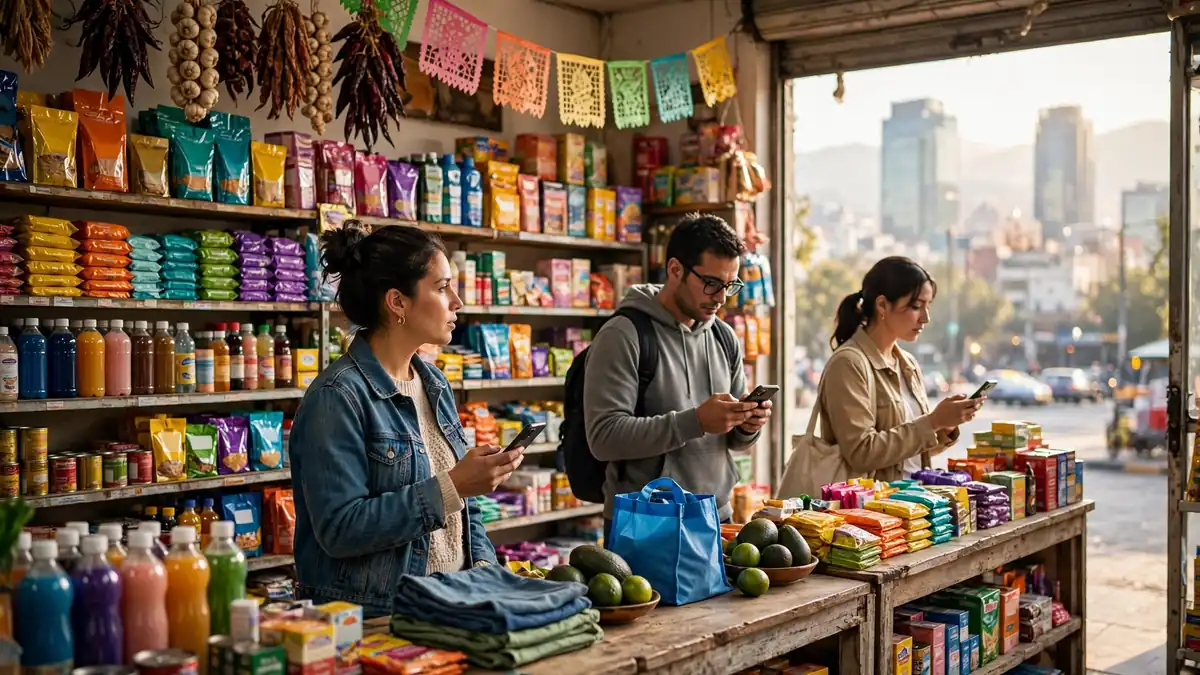
Traditional trade and tienditas remain essential for everyday reach in many neighborhoods. Moreover, small stores offer proximity, personal trust, and frequent top-up purchases. Therefore, digital plans should support those stores instead of ignoring them.
Help small retailers order easily, display products clearly, and join local promotions confidently. For instance, share simple digital ordering tools, shelf guidance, and ready-to-post social assets. In addition, feature partner stores in local content so online discovery drives offline visits.
An omnichannel retail strategy connects those pieces into one shopper experience. Specifically, stock visibility, consistent prices, and shared promotions prevent confusion between channels. As a result, shoppers can research online, buy nearby, or order delivery without friction. Our guide to local e-commerce and neighborhood marketplaces explores this blend in more depth.
| Channel | Best job | Watch closely |
|---|---|---|
| Your online store | Bundles, loyalty, and full brand story | Checkout friction and delivery clarity |
| Marketplaces | Comparison shopping and review proof | Listing quality and question response time |
| WhatsApp and messaging | Advice, booking, and post-purchase care | Consent, staffing, and response quality |
| Tienditas and retail partners | Proximity, trust, and everyday availability | Stock levels and display consistency |
| Social video and creators | Discovery, demonstration, and trust building | Creative fit and honest disclosure |
The table above simplifies choices, although real shoppers mix channels freely. Moreover, your job is to keep information consistent wherever that mixing happens. Therefore, align product names, prices, and promotion dates across every surface.
Grow reach with creators, video, and paid media
Consumer packaged goods marketing succeeds when products feel useful, familiar, and easy to picture at home. Moreover, short-form video marketing shows usage, texture, scale, and results faster than static images can. Therefore, video should demonstrate real routines, not only polished brand moments.
Film simple demonstrations in real homes, kitchens, bathrooms, and workspaces. For example, show unboxing, setup, cleaning, storage, and common mistakes in plain language. In addition, add captions in Spanish, because many viewers watch with sound off.
Creators can extend that honesty when partnerships fit naturally. Indeed, influencer marketing in Mexico works best when creators already serve your audience and category. Consequently, relevance and trust matter far more than follower counts alone.
How should paid media full funnel planning work in practice?
Paid media full funnel planning connects discovery, consideration, purchase, and repeat buying deliberately. Moreover, each stage needs different creative, different proof, and different success measures. However, many brands judge every ad by immediate sales alone, which distorts decisions.
Use broad video and creator content to build recognition and interest first. For instance, retarget engaged viewers with comparisons, reviews, bundles, and clear delivery information. In addition, reserve direct offers for shoppers who already know the product well.
Budget discipline keeps experimentation healthy and sustainable over time. Specifically, test one variable at a time, document results clearly, and stop weak variants quickly. As a result, learning compounds instead of resetting with every new campaign. Thoughtful urgency can also help when it stays honest, as explained in our piece on the scarcity principle in digital marketing.
Seasonal planning deserves early preparation in this market. Moreover, Hot Sale and Buen Fin campaigns reward brands that prepare stock, creative, and support staffing in advance. Therefore, build landing pages, bundles, and reply templates well before demand peaks.
Turn first buyers into repeat buyers
Acquisition brings attention, but repeat buying builds a durable business. Moreover, a thoughtful customer retention strategy lowers pressure on constant paid acquisition. Therefore, post-purchase experience deserves the same budget and creativity as launch campaigns.
Start retention work the moment the first order or booking completes. For example, send clear confirmation, delivery or arrival guidance, and simple usage advice promptly. In addition, make help easy to find when something goes wrong.
Loyalty mechanics should reward behavior you genuinely want to encourage. Specifically, refill reminders, honest reviews, referrals, and bundle upgrades all support healthy repeat buying. However, constant discounts train shoppers to wait, so use offers with care.
Why does customer lifetime value change executive decisions?
Customer lifetime value helps leaders judge channels by long-term contribution, not first-order noise. Moreover, that view often favors better service, clearer content, and stronger onboarding. Consequently, teams stop chasing cheap clicks that produce unhappy one-time buyers.
Measure repeat rate, time between purchases, and support resolution alongside revenue. For instance, a channel with slower first sales may still win through loyal repeat behavior. In addition, interview repeat buyers directly to learn which moments earned their trust.
Service brands can apply the same logic to bookings and memberships. Indeed, reminders, easy rescheduling, and consistent quality encourage customers to return without heavy promotion. Similarly, product brands can use subscriptions or refill plans only when they truly add convenience. Executives comparing markets may also value our parallel guide on scaling consumer products and services growth in Doral.
Measure honestly and improve in small cycles
Measurement should guide decisions, not decorate weekly slide decks. Moreover, every metric needs an owner, a definition, and a decision attached to it. Therefore, agree in advance what result will trigger scaling, fixing, or stopping.
Track the full journey from discovery to repeat purchase carefully. For example, combine website analytics, marketplace reports, messaging outcomes, and retail sell-through where possible. In addition, keep definitions consistent, because shifting definitions hide real performance changes.
Attribution will never be perfect in an omnichannel business. However, imperfect data still helps when teams triangulate several signals honestly. Consequently, use controlled tests, unique links, and post-purchase surveys to check major claims.
Which questions should your dashboard answer every week?
Which products gained discovery but failed to convert into sales?
Moreover, that question points directly to listing, price, stock, or delivery problems. Therefore, review it alongside reviews and unanswered shopper questions each week.
Where do shoppers drop out between interest and completed purchase?
Specifically, that drop may reveal checkout friction, unclear fees, or slow message replies. In addition, fixing one visible bottleneck often beats launching another campaign.
Which content and creators drive assisted sales and repeat buying?
Indeed, assisted influence matters even when the final click happens elsewhere. As a result, credit discovery content fairly instead of judging it only by last clicks. For measurement context, see our analyses of digital marketing ROI for consumer firms in Vevey and consumer products marketing ROI in Bochum.
A phased roadmap executives can actually follow
Sequencing matters because teams cannot fix everything at once. Moreover, a phased roadmap protects focus while still creating visible progress each month. Therefore, start with foundations, then expand reach, then deepen loyalty.
- Stabilize the basics: Fix mobile pages, listings, stock accuracy, and response ownership first.
- Clarify the offer: Rewrite core pages in natural Spanish with honest proof and delivery detail.
- Connect the channels: Link store, marketplaces, messaging, and retail partners with shared information.
- Expand discovery: Add creator partnerships, short video series, and full-funnel paid testing carefully.
- Deepen retention: Improve onboarding, follow-up care, loyalty, and repeat purchase journeys systematically.
- Prepare seasonal peaks: Build Hot Sale and Buen Fin plans, staffing, and stock checks early.
Each phase should end with a short review and a clear next decision. Moreover, document what changed, what improved, and what remains uncertain honestly. Consequently, institutional learning survives team changes and campaign turnover.
Governance keeps that learning useful across departments and partners. For instance, marketing, sales, operations, and support should review the same shopper evidence together. In addition, one shared calendar prevents conflicting promotions and confusing messages. Leaders scaling adjacent online models can compare notes in our guide to scaling eCommerce growth in Beograd.
Common mistakes that quietly limit growth
Many teams translate global campaigns and expect local shoppers to adapt. However, literal translation misses context, humor, concerns, and everyday shopping language. Therefore, local review should happen before design, filming, and media spending begin.
Other teams over-invest in acquisition while stock and support lag behind. Moreover, a successful ad that leads to an empty shelf creates frustration, not loyalty. Consequently, campaign approval should always include stock, staffing, and delivery readiness checks.
Vanity reporting creates a third, quieter risk for executives. Specifically, reach and follower growth mean little without conversion, retention, and margin context. As a result, insist on business outcomes alongside channel metrics in every review.
What should you do differently starting this quarter?
Pick one audience, one hero product or service, and one clear journey to improve. Moreover, fix that journey across content, marketplace, messaging, and retail touchpoints together. For example, a focused pilot reveals more than ten scattered small tests.
Write down your assumptions before the pilot begins in earnest. In addition, agree on success measures, review dates, and who can approve scaling decisions. Finally, share results openly, including failures, so the next cycle starts smarter.
Scaling in Ciudad de México rewards patience, local respect, and operational honesty. Indeed, brands grow durably when discovery, conversation, availability, and care reinforce each other daily. Therefore, build that connected system step by step, and let real shopper behavior guide every expansion.




