
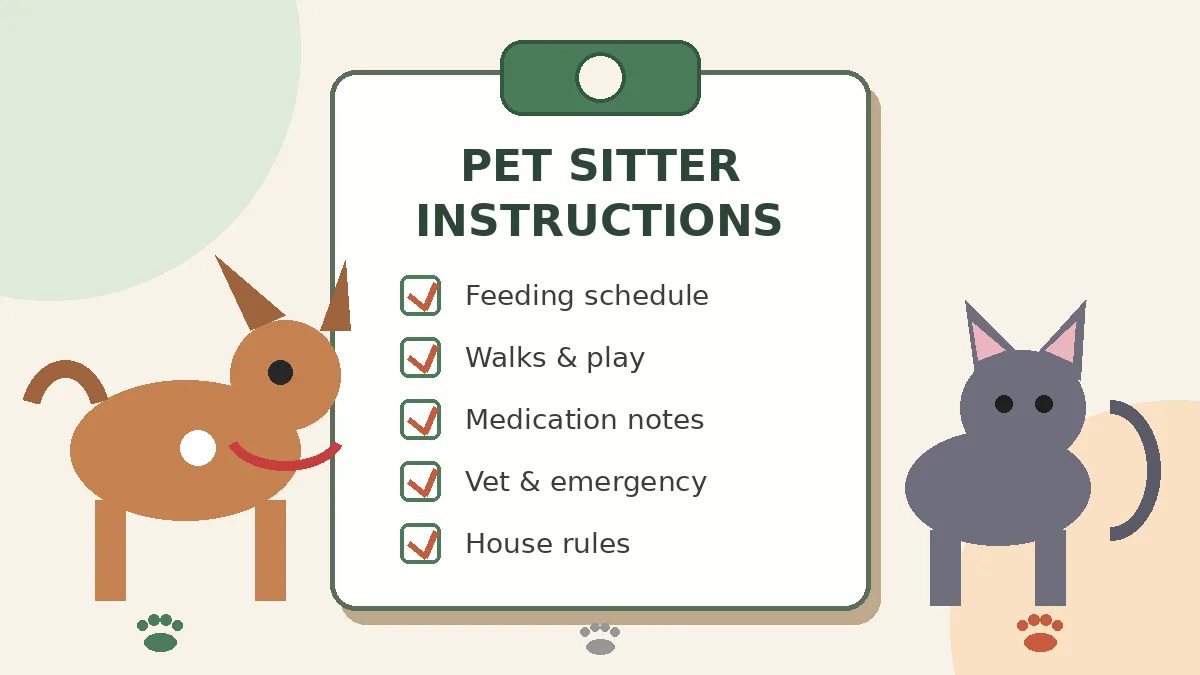
Essential Pet Sitter Instructions Template: Ensure Your Pet’s Comfort & Safety
Leaving a pet behind is never just about food and keys. Instead, comfort comes from a routine that feels familiar every day. A clear pet sitter instructions template protects that routine while you travel. Moreover, good pet sitting instructions remove guesswork during busy or stressful moments. Sitters therefore make calmer decisions, and pets settle much faster. Consequently, this guide gives you a complete, copy-ready template below. Additionally, each template section explains why that detail truly matters.
Think of this page as your full pet sitter handover in one place. Firstly, you will find simple guidance on detail and format. Secondly, the template itself covers feeding, medication, walks, and emergencies. Finally, special cases and common mistakes get their own honest sections. In short, you can copy the template, fill every blank, and leave confidently.
Why Do Written Pet Sitter Instructions Matter So Much?
Pets cannot explain their own habits, fears, or sore spots. Therefore, your written pet care instructions for sitter visits become their voice. Verbal briefings, by contrast, fade quickly after a long journey day. Furthermore, a sitter may visit several homes during one busy week. Written pet sitter notes, however, stay beside the food and lead. As a result, nothing important depends on memory alone.
Consistency also calms animals in a very practical way. For example, familiar feeding times help digestion and toilet habits stay predictable. Similarly, familiar walk routes reduce pulling, stress, and surprise encounters. Meanwhile, familiar words and games reassure a pet that life continues normally. Hence, detailed instructions protect comfort as much as physical safety. Indeed, routine is often the kindest gift you can leave behind.
Emergency value matters just as much as daily comfort. Suppose your pet swallows something unsafe late at night. Then your sitter needs vet details and permission guidance immediately. Without written notes, precious minutes disappear into searching and phoning. Conversely, a clear pet sitter emergency plan turns panic into steps. Ultimately, preparation is what makes a rare emergency manageable.
How Much Detail Do Sitters Actually Want?
Most sitters welcome more detail than owners expect to give. Nevertheless, they want that detail organised, short, and easy to scan. Long stories, for instance, hide the one fact that matters most. Therefore, use headings, lists, and exact times throughout your notes. Additionally, put urgent information first rather than burying it later. In contrast, save background stories for a relaxed chat beforehand.
Exact measurements deserve special attention in any pet sitting guide. For example, write the exact cup, scoop, or gram amount used. Vague phrases like a handful create real feeding errors quickly. Similarly, name the exact door, cupboard, and bowl for everything. Sitters also appreciate knowing which behaviours count as normal here. Consequently, describe normal appetite, energy, toileting, and sleep patterns plainly. Our guide to choosing pet food carefully, Zupreem Grain Free Ferret Food: A Critical Review, shows why exact food details matter.
Honesty helps a sitter far more than polished optimism. So admit the pulling, the hiding, and the stubborn moments. Moreover, mention triggers such as doorbells, thunder, or unfamiliar dogs. A warned sitter can then plan routes and rooms calmly. By contrast, surprises create the very incidents owners fear most. Finally, invite questions before departure rather than apologies afterwards.
The Complete Pet Sitter Instructions Template
Copy the template below into a document or notebook page. Then fill every field for each pet in your home. Admittedly, multi-pet homes need one pet basics block per animal. However, shared house rules and contacts need writing only once. Furthermore, keep names and times consistent across every single section. In short, clarity beats clever formatting at every single step.
Owner, Trip, and Contact Details
This opening block tells the sitter who decides what. Therefore, list your phone, your travel dates, and your return time. Additionally, name one local backup person for unreachable moments. As a result, help never depends on one silent phone.
- Owner name: ____________________
- Owner mobile and backup number: ____________________
- Dates away and expected return time: ____________________
- Where owner will be staying: ____________________
- Best way and best times to reach owner: ____________________
- Agreed update rhythm and channel: ____________________
- Spare key holder and neighbour contact: ____________________
Pet Basics for Each Animal
Basics help a sitter identify and handle each animal correctly. For instance, similar-looking cats become easy to confuse without descriptions. Moreover, temperament notes shape how a sitter approaches a nervous pet. Consequently, complete this block separately for every animal at home.
- Pet name and usual nickname: ____________________
- Species and breed: ____________________
- Age, size, and weight: ____________________
- Colour, markings, and photograph attached: ____________________
- Temperament in a few honest words: ____________________
- Microchip or registration details location: ____________________
- Known health conditions and allergies: ____________________
- Collar, harness, and lead location: ____________________
Feeding Schedule and Food Storage
Feeding errors are the most common sitter mistake by far. Hence, this section needs exact amounts, exact times, and exact places. Additionally, state clearly which foods and treats are never allowed. Meanwhile, note where opened food lives and how it seals. Learning what to tell your pet sitter starts right here.
- Food brand and exact type: ____________________
- Food storage place and sealing method: ____________________
- Morning meal time and exact amount: ____________________
- Evening meal time and exact amount: ____________________
- Scoop, cup, or scale used for measuring: ____________________
- Bowl location and feeding spot per pet: ____________________
- Preparation steps, such as soaking or warming: ____________________
- Allowed treats and daily treat limit: ____________________
- Forbidden foods and table scraps rule: ____________________
- What a refused meal looks like here: ____________________
- Step to follow after a refused meal: ____________________
Water Routine
Fresh water sounds obvious, yet bowls empty surprisingly fast. Therefore, state how often bowls need rinsing and refilling daily. Furthermore, mention any filtered water or fountain routine you use. As a result, hydration stays steady throughout your whole trip.
- Bowl or fountain location: ____________________
- Refill times and rinsing routine: ____________________
- Water type used at home: ____________________
- Fountain filter or cleaning notes: ____________________
- Extra bowls during hot weather: ____________________
Medication Notes
Medication notes demand the highest accuracy in this entire template. Crucially, record exactly what your vet prescribed, nothing more. Clear pet medication instructions also anchor the daily pet care routine. Always follow your vet’s written instructions for every single dose. Moreover, copy the label wording rather than summarising from memory. Consequently, fill these fields directly from the packaging itself. If anything conflicts, then ask your vet before departure.
- Medication name, copied from the label: ____________________
- Dose, exactly as your vet prescribed: ____________________
- Timing for each dose: ____________________
- Method your vet advised for giving it: ____________________
- Where the medication is kept: ____________________
- Storage needs, such as fridge shelf: ____________________
- Step after a missed or refused dose: ____________________
- Signs your vet asked you to watch for: ____________________
- Preventive treatments and last given dates: ____________________
- Vet phone number for medication questions: ____________________
Bathroom and Walk Routine
Toilet routines keep homes clean and pets relaxed all day. For dogs, therefore, list walk times, routes, and usual toilet spots. For cats, instead, list litter tray places and cleaning steps. Additionally, state where waste bags and litter supplies live. Clear dog sitter instructions and cat sitter instructions both belong here.
- First toilet break time each morning: ____________________
- Usual walk times and walk length: ____________________
- Preferred route and places to avoid: ____________________
- Usual toilet spots along the route: ____________________
- Lead, harness, and poo bag location: ____________________
- Off-lead rule for this pet: ____________________
- Litter tray locations for cats: ____________________
- Litter cleaning steps and frequency: ____________________
- Waste disposal place outside: ____________________
- Cleaning supplies for accidents: ____________________
Exercise and Play
Exercise protects sleep, digestion, and mood during your absence. However, every pet has limits that a sitter cannot guess. Therefore, describe favourite games, toys, and sensible session lengths. Similarly, note activities that overexcite or strain your pet. As a result, play stays joyful rather than risky.
- Favourite toys and where they live: ____________________
- Favourite games and usual play times: ____________________
- Sensible play session length: ____________________
- Activities to avoid completely: ____________________
- Signs the pet needs a rest: ____________________
- Calm-down routine after active play: ____________________
Veterinary Information
Vet details belong on the first page, not the last. Hence, copy the clinic name, address, and phone number carefully. Furthermore, add your pet’s record name if it differs. Reading about specialist veterinary expertise, such as Dr. Peter Rapoza: Unlocking the Secrets to Unmatched Medical Expertise and Care, shows why accurate records matter. Consequently, keep this block updated after every clinic change.
- Usual vet clinic name: ____________________
- Clinic address: ____________________
- Clinic phone number: ____________________
- Named vet, if your pet sees one: ____________________
- Name your pet is registered under: ____________________
- Medical records or booklet location: ____________________
- Permission note given to the clinic: ____________________
- Person authorised to make medical decisions: ____________________
Emergency Contacts and After-Hours Plan
Emergencies rarely happen during tidy clinic opening hours. Therefore, write the after-hours plan before you need it. Firstly, list the emergency vet contact information beside your own number. Secondly, state who decides when you cannot be reached. Finally, explain where the carrier and records stay overnight. Solid emergency vet contact information prevents dangerous delays.
- Owner emergency number: ____________________
- Backup decision-maker name and number: ____________________
- After-hours or emergency clinic name: ____________________
- Emergency clinic address: ____________________
- Emergency clinic phone number: ____________________
- Fastest route or transport note: ____________________
- Carrier or transport box location: ____________________
- Warning signs needing urgent vet advice: ____________________
- Payment or authorisation arrangement agreed: ____________________
- Trusted neighbour with a spare key: ____________________
House Rules for Doors, Alarms, Plants, and Appliances
House rules protect both the pet and the home itself. For example, one open door can undo every safety plan. Therefore, explain alarms, locked rooms, and escape-prone doors clearly. Additionally, flag plants, cables, and appliances that pose risks. Meanwhile, tell the sitter which comforts they may use. Planning home comfort while away pairs well with Heating Service Enchanted Home: The Ultimate Solution for Your Comfort Needs for household basics. Good house sitter instructions for pets always include this block.
- Entry method and spare key place: ____________________
- Alarm setting and unsettling steps: ____________________
- Doors and gates that must stay shut: ____________________
- Rooms the pet may and may not enter: ____________________
- Furniture and bed rules for the pet: ____________________
- Plants that must stay out of reach: ____________________
- Appliances to leave unplugged or unused: ____________________
- Heating, cooling, and lighting preferences: ____________________
- Mail, bins, and watering tasks, if any: ____________________
- Cleaning supplies location: ____________________
Comfort Items and Hiding Spots
Comfort items carry familiar smells that soothe anxious pets. Therefore, list the blanket, toy, or worn item that helps. Moreover, name the usual hiding spots a worried pet chooses. Consequently, a sitter can check hiding places calmly first. Unusual decorative pets even get a mention in Discover the Allure of Pink Pets & Petoskey Stones: Unveil Their Charm Today, although real pets need real reassurance.
- Favourite blanket or comfort item: ____________________
- Usual sleeping place, day and night: ____________________
- Usual hiding spots when nervous: ____________________
- Best way to coax the pet out: ____________________
- Sounds or music that calm the pet: ____________________
- Items that must never be washed mid-stay: ____________________
Behaviour Quirks and Fears
Quirks look charming to owners but confusing to newcomers. Hence, describe barking triggers, fears, and handling sensitivities honestly. Additionally, explain how your pet greets strangers and other animals. As a result, the sitter avoids situations that escalate stress. Indeed, this section prevents most avoidable incidents during stays.
- Known fears, such as thunder or fireworks: ____________________
- Reaction to doorbells and visitors: ____________________
- Behaviour around other dogs or cats: ____________________
- Body areas that dislike handling: ____________________
- Guarding habits around food or toys: ____________________
- Escape habits and door-dash risk: ____________________
- Calming steps that work for this pet: ____________________
- Words and cues the pet understands: ____________________
Departure and Return Checklist
A final checklist catches the small things everyone forgets. Therefore, work through it on departure morning, item by item. Furthermore, repeat the closing checks when you return home. Consequently, supplies, keys, and updates all end accounted for.
- Food supply counted for the whole stay: ____________________
- Medication supply counted and labelled clearly: ____________________
- Printed template placed beside the supplies: ____________________
- Digital copy sent to the sitter: ____________________
- Keys tested with the sitter present: ____________________
- Alarm and door routine demonstrated once: ____________________
- Vet and emergency numbers saved by sitter: ____________________
- First visit time confirmed in writing: ____________________
- Return-day handover time agreed: ____________________
- Key return and final update arranged: ____________________
What Mistakes Do Owners Make When They Leave Instructions for Pet Sitter Visits?
The biggest mistake is relying on a quick doorstep chat. However, doorstep chats vanish under travel stress and tiredness. Another frequent error involves assuming the sitter knows your home. For instance, cupboards, alarms, and quirks differ in every house. Therefore, demonstrate tricky locks and appliances before you leave. Similarly, label food bins when several pets eat differently.
Vague wording causes a second wave of avoidable problems. Words like plenty, some, and later mean different things daily. Instead, write numbers, clock times, and named places every time. Moreover, update old notes after any diet or medication change. Outdated instructions, in fact, can be worse than none. Finally, test the plan by reading it as a stranger. Pet owners planning trips, like those browsing Places To Visit In London In Summer, should finish notes before packing.
Some owners also hide problems out of embarrassment. Nevertheless, a sitter handles honesty far better than surprises. Pulling, snapping, hiding, and spraying all deserve one honest line. Consequently, the sitter can prepare rather than react badly. Additionally, share what failure looks like for your pet. For example, describe a refused meal versus a genuine emergency. That distinction, ultimately, guides calm and proportionate responses.
Should You Use Digital or Printed Copies of Your Pet Sitter Notes?
Use both formats, because each format covers different failure points. Digital copies, firstly, travel with the sitter everywhere they go. Moreover, digital files update instantly when plans change mid-trip. Printed copies, however, work during flat batteries and weak signal. Therefore, leave one printed set beside the food supplies. Additionally, tape the emergency block inside a kitchen cupboard door.
Version control matters more than fancy formatting here. So date every copy and delete outdated versions everywhere. Furthermore, send changes as one clear message, not scattered fragments. A shared note also lets the sitter tick off tasks. Meanwhile, a printed pet sitter checklist allows quick fridge-door scanning. In short, redundancy protects your pet when technology fails. Travellers packing smart, as in Discover the Magellan Travel Vest: Your Ultimate Travel Companion, already understand backup thinking.
How Should the Template Change for Special Cases?
Senior Pets
Senior pets need gentler pacing and closer observation daily. Therefore, note stairs help, ramp use, and slower walk expectations. Additionally, record appetite changes and sleep changes worth reporting. Mobility aids, warm bedding, and night toilet breaks matter greatly. Consequently, ask for honest updates rather than reassuring silence. Older pets staying home often benefit from steady, familiar care, much like the ethos behind Millennium Home Care Services: Elevating Comfort and Care for Your Loved Ones.
Puppies and Kittens
Young animals need tighter schedules and closer supervision overall. Hence, write toilet breaks, chew risks, and safe confinement clearly. Moreover, state which items a puppy may never reach. Socialisation rules also belong here, especially around unknown dogs. Finally, expect accidents and explain your usual cleaning response. Calm consistency, therefore, teaches faster than scolding ever will.
Multi-Pet Homes
Multi-pet homes fail most often at feeding time. Therefore, separate feeding spots and named bowls become essential details. Additionally, record which animals may share space unsupervised safely. Resource guarding, chasing, and food stealing deserve explicit notes. As a result, the sitter manages groups rather than guessing. One colour-coded page per pet simplifies everything further.
Medication-Critical Pets
Some pets must never miss a dose or meal timing. For those animals, medication notes deserve a separate front page. Furthermore, rehearse the giving method with the sitter beforehand. Always follow your vet’s written instructions during that rehearsal. Additionally, agree exactly which change triggers an immediate call. Consequently, nobody improvises around a medication-critical routine at home.
How Do You Hand Over the Template Well?
A short walkthrough turns paper instructions into confident care. Firstly, walk the home together and touch every item mentioned. Secondly, demonstrate one feeding and one door routine fully. Thirdly, let the sitter repeat the alarm steps back. Moreover, confirm the first visit time and update rhythm together. Finally, leave soon after, without long and anxious goodbyes.
Departure day works best when the plan feels boring. Pets sense owner tension quickly and mirror it closely. Therefore, keep voices calm and routines completely normal that morning. Additionally, place the printed template where you agreed beforehand. Then trust the pet sitter handover you prepared carefully. In short, preparation done early buys everyone a quieter trip.
Frequently Asked Questions
What Should a Pet Sitter Instructions Template Include First?
Contacts, pet basics, and emergency details should come first. Moreover, feeding and medication sections should follow immediately afterwards. Therefore, a sitter scanning quickly finds survival information instantly. House rules and comfort notes can sit later safely.
How Long Should Pet Sitting Instructions Be?
Length matters less than clarity and completeness here. Nevertheless, most homes fit everything into a few focused pages. For example, one page per pet plus shared house pages works. Consequently, scan-friendly lists beat long paragraphs every time.
Can One Template Cover Dogs and Cats Together?
Yes, one shared template can cover mixed animal households. However, complete separate pet basics and feeding blocks each time. Additionally, separate litter notes from walk notes very clearly. As a result, dog sitter instructions never blur into cat care.
Should You Leave a Vet Authorisation Note?
Yes, a short written authorisation note helps clinics act faster. Furthermore, tell your clinic beforehand that a sitter may call. Therefore, staff already expect questions during your trip dates. Finally, name your backup decision-maker on that note too.
How Often Should You Update Your Pet Sitter Checklist?
Update the checklist before every trip, without exception. Moreover, revise it immediately after any vet or diet change. Old medication notes, consequently, should never survive into new trips. A dated, fresh copy protects everyone involved.
What Is the Best Way to Share the Template?
Send a digital copy several days before you leave. Additionally, leave a printed copy beside the pet supplies. Therefore, the sitter can ask questions early and calmly. Last-minute sharing, by contrast, invites rushed misunderstandings.
Final Thoughts on Leaving Your Pet With Confidence
A thoughtful leave instructions for pet sitter plan changes everything. Your pet keeps familiar food, walks, games, and sleeping spots. Meanwhile, your sitter gains clear steps instead of difficult guesses. Moreover, emergencies become procedures rather than frightening improvisations. Therefore, copy this template, complete every field honestly, and update it often. Ultimately, careful notes are how love travels with you.




