
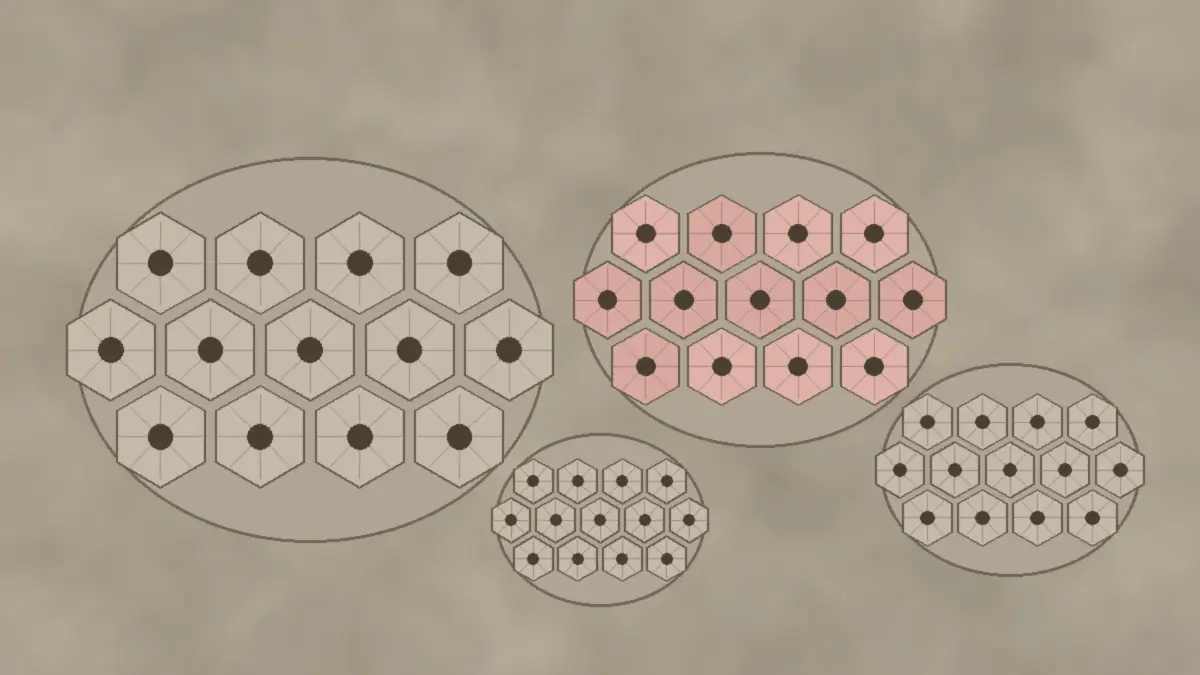
Pick up a dull gray pebble on a northern Michigan beach, splash it with lake water, and a hidden pattern suddenly blooms across its surface. Six-sided cells appear, each one holding a dark center with fine lines radiating outward like tiny suns. You are holding a Petoskey stone, a piece of fossilized coral older than the dinosaurs. Moreover, a lucky few hunters find a blush-pink version that collectors call a Pink Pet. This guide explains the stones, their colours, and the patient art of finding them. Additionally, you will learn how to polish and display your finds properly.
What Is a Petoskey Stone?
A Petoskey stone is a pebble of fossilized rugose coral from an extinct species called Hexagonaria percarinata. Each stone preserves part of a coral colony that once grew on an ancient reef. Furthermore, geologists class the stone as both a rock and a fossil at once. The city of Petoskey in northern Michigan lends the stone its familiar name. In 1965, Michigan officially named it the state stone, and collectors have prized it ever since. Consequently, the stone now symbolises the Great Lakes shoreline for many Michiganders.
Most specimens show soft gray, tan, or brown tones across a smooth, rounded surface. Glaciers ground those rounded shapes during the last ice age. Waves then tumbled the fragments further along the shore. As a result, beach finds usually feel smooth and fit comfortably in your palm. Sizes vary widely, from marble-sized chips to fist-sized cobbles and larger pieces. Indeed, a complete fossil colony head still sits in bedrock at some inland sites.
How Did These Ancient Corals Form?
About 350 million years ago, during the Devonian period, a warm shallow sea covered Michigan. The region sat near the equator then, under tropical sunlight and calm water. Coral polyps built colonies across the seafloor of that vanished ocean. Each polyp secreted a calcium carbonate cup, called a corallite, around its soft body. Neighbouring cups pressed tightly together as the colony expanded outward. Therefore, the cups settled into the six-sided shapes that define the stone today.
Eventually, sediment buried the dead reefs and turned their skeletons into limestone. The source rock is the Gravel Point Formation, part of the Traverse Group. Silica, calcite, and other minerals slowly replaced and filled the coral structure. Much later, Pleistocene glaciers plucked fragments from that bedrock and scattered them widely. Glacial movement ground off rough edges and dropped pieces across the northern Lower Peninsula. Finally, lake waves exposed fresh fragments along beaches, gravel pits, and road cuts.
What Are Pink Pets, the Rarest Petoskey Stones?
You may see the phrase Pink Pets in shop windows around Petoskey and Charlevoix. The nickname describes Petoskey stones that carry a distinct pink or rose hue. Iron, probably in the form of hematite, permeated the coral while it calcified. That iron stained parts of the skeleton pink during fossilisation. Sometimes the colour blushes through the whole stone, and sometimes it mottles only one patch. Researchers who studied these stones describe the pink colouration as genuinely rare.
Most Petoskey stones, by contrast, stay in the gray and tan range. Darker brown tones sometimes signal a higher petroleum content in the rock. A pink specimen therefore stands out instantly in any tray of polished stones. Collectors prize Pink Pets for jewellery, display bowls, and special gifts. However, you cannot order one from the beach on demand. Finding one simply takes luck, patience, and many hours of looking. Meanwhile, even a classic gray stone rewards the hunter who spots it first.
How to Identify a Petoskey Stone
Reliable identification starts with the pattern of tightly packed polygonal cells. Look for a honeycomb of six-sided corallites covering much of the surface. Each cell should show a darker central spot, the former mouth of the polyp. Fine lines, called septa, radiate from that centre toward the cell walls. Additionally, the pattern should continue in a regular, geometric way across the stone. Random pitting, holes, or sponge-like texture usually point to something else. For instance, porous twig-like fossils are often bryozoans rather than coral.
Dry Versus Wet: The Spray Bottle Test
Dry, a Petoskey stone hides in plain sight as ordinary gray limestone. Its pattern fades almost completely once the surface dries in the sun. Wet the stone, though, and the honeycomb pattern sharpens within seconds. Hunters therefore carry a small spray bottle or a bucket of lake water. A quick splash tests any promising pebble right where it lies. Similarly, rain turns an inland gravel pit into a surprisingly readable hunting ground. Polishing simply makes that wet look permanent on the finished stone.
Petoskey Stone or Charlevoix Stone?
Beginners often confuse Petoskey stones with their smaller-celled cousins, Charlevoix stones. Charlevoix stones come from Favosites, a tabulate coral with much tighter cells. Their honeycomb looks finer, denser, and often more irregular in outline. Petoskey cells, in contrast, are larger and show that clear dark eye. Horn corals offer another common mix-up along the same beaches. A horn coral is a solitary fossil, shaped like a small curved cone. It represents one polyp, whereas a Petoskey stone preserves a whole colony. Learning these three side by side speeds up your beach identification greatly.
Where to Find Petoskey Stones
The classic hunting ground runs around Petoskey and Little Traverse Bay in northern Michigan. Petoskey State Park, Magnus City Park Beach, and quieter stretches near Charlevoix all produce finds. Fisherman’s Island State Park, south of Charlevoix, offers long rocky shoreline and fewer crowds. Lake Huron shores also hold stones, especially around Alpena and the Rockport area. Inland spots matter too, because glaciers dropped fragments far from the lakes. Gravel pits, road cuts, and ploughed fields in the region sometimes reveal excellent specimens. Always, however, check permission before you search any inland ground.
Rocky and pebbly beaches consistently outperform broad sandy stretches for this hunt. Focus on the gravel bands where waves sort stones by size. Shallow water along the shoreline also hides stones that sand never covers. Polarised sunglasses cut glare and help the pattern show through ripples. If you are planning a wider trip, our guide to places to visit in summer in Michigan pairs nicely with a hunting weekend. Likewise, the places to visit in the Upper Peninsula reward travellers who extend the trip north.
When Is the Best Time to Hunt?
Spring is prime season, right after the lake ice breaks up and melts. Winter ice and storms churn the shoreline and heave fresh stones ashore. April through early June therefore gives hunters first pick of new material. The morning after any strong storm is also excellent, in any season. Waves rearrange the beach overnight and expose stones that yesterday hid underwater. Early mornings beat midday crowds on popular beaches near parking areas. Summer still produces finds, although picked-over sand near access points yields less. Autumn hunting stays good until the cold returns and ice reforms.
Cold water and wind demand respect during those shoulder seasons. Dress in layers, wear shoes with grip, and watch the weather before wading. Families often combine the hunt with a broader break, and our roundup of places to visit in the US for spring break offers pairing ideas. Similarly, anyone chasing slower shores may enjoy the best places to visit for rest and relaxation after a long beach walk. Either way, timing your hunt after ice or storms improves your odds noticeably.
How to Hunt Like a Patient Local
Slow down first, because fast walkers stride straight over good stones. Work a small patch of gravel thoroughly before you move along. Squat often, since the pattern reads better from directly above the stones. Then splash candidates with water and turn each one over. Many stones show their best face on the underside, away from sun bleaching. Keep looking near any first find, because stones often cluster together. Glaciers and waves deposited them in pockets rather than even spreads. A small bucket, a spray bottle, and comfortable footwear complete the whole kit.
Children usually take to the hunt quickly and spot low stones adults miss. The activity also suits anyone who enjoys slow, mindful time outdoors. Nature lovers comparing shorelines worldwide may browse the best nature places to visit in the world for future trips. Back home, travelling collectors with animals should plan care in advance. Our essential pet sitter instructions template helps you brief a sitter before a long hunting weekend. Likewise, the lighter pet sitter crossword guide entertains puzzle fans between beach days.
Collecting Rules and Beach Etiquette
Personal collecting is allowed on much Michigan state land, within clear limits. Michigan’s Department of Natural Resources sets an annual weight limit for stones taken from state-owned land. That limit applies to your total personal collecting, not to each single visit. Rules differ sharply by landowner, so check the current DNR guidance before every trip. National Park Service land is different again, and collecting there is prohibited. At Sleeping Bear Dunes National Lakeshore, for example, you admire stones and leave them in place. Private land, meanwhile, always requires the landowner’s permission first.
Etiquette matters just as much as the legal rules on a shared beach. Take only what the rules allow and leave plenty for the next hunter. Refill any holes you dig in gravel and avoid disturbing dune grass. Pack out litter, even when the litter is not yours. Additionally, respect nesting birds and other visitors along narrow shorelines. Photographing an oversized or unusual stone and leaving it is always an option. Overall, careful collectors protect the very beaches that make the hobby possible.
How to Polish a Petoskey Stone by Hand
An unpolished stone loses its pattern the moment its surface dries. Polishing locks that wet, glossy look in place permanently. Petoskey stone is mostly calcite, which rates only about 3 on the Mohs hardness scale. That softness makes hand polishing very achievable for a beginner. The same softness, however, makes aggressive tumbling or power tools risky. Patience, water, and a steady progression of grits do the real work. Most small stones take an hour or two of relaxed hand sanding.
What Do You Need for Hand Polishing?
Gather wet-or-dry silicon carbide sandpaper in a sequence of grits. A common sequence runs 80 or 220 grit, then 400, then 600. Very rough stones need the coarser start, while smooth beach stones can start finer. You also need a bowl of water for constant wetting. A scrap of denim, corduroy, felt, or leather forms the polishing pad. Aluminium oxide polishing compound goes on that pad at the final stage. Finally, add a towel, an old toothbrush, and a little unhurried time.
Step by Step Through the Grits
Wash the stone first with water and a brush to remove grit and sand. Next, wet-sand the whole surface with your coarsest paper until blemishes disappear. Keep the stone and paper wet throughout, and rinse your bowl often. Then move to the next finer grit and remove the previous scratches completely. Repeat that rhythm through 400 and 600 grit, checking the surface when dry. Skipping a grit leaves scratches that later stages cannot easily erase. If scratches remain, simply drop back one grit and repeat the stage.
After the finest sanding, dampen your cloth pad and sprinkle on polishing compound. Rub the stone with short, rotating strokes across the whole surface. The honeycomb pattern should deepen and gain a soft, glassy shine. Rinse the stone, dry it, and inspect it under a bright light. Dull patches usually mean one grit stage needs a second pass. Conversely, a finished stone holds its pattern proudly even when completely dry. That transformation is the moment most collectors quietly get hooked.
Displaying and Caring for Your Collection
Polished stones deserve better than a forgotten drawer or a dusty shoebox. A shallow bowl on a coffee table invites guests to pick pieces up. Glass jars group smaller finds and show several patterns at once. Larger polished pieces work well as bookends, paperweights, or garden accents. Jewellers also set cut cabochons into pendants, rings, and cufflinks. Keep labels with locality notes, because memory fades faster than stone. Notes about the beach and date make a collection far more interesting later.
Care is simple, since calcite is soft but forgiving in normal handling. Dust pieces with a soft cloth and rinse them in plain water occasionally. Avoid harsh chemicals, long soaks, and abrasive cleaners on polished surfaces. Also, store softer stones away from harder gems that could scratch them. A drop of mineral oil can refresh the sheen on an unpolished display piece. Above all, handle your oldest or rarest pieces, especially Pink Pets, with extra care.
Frequently Asked Questions
What exactly is a Petoskey stone made of?
A Petoskey stone consists mainly of calcite, the fossilised skeleton of colonial coral. Silica and other minerals sometimes fill parts of the original coral structure. Together, those minerals preserve the corallite pattern in fine detail.
Why does the pattern disappear when the stone dries?
A dry, rough surface scatters light and hides the fossil’s fine detail. Water fills tiny surface irregularities, so the pattern shows through clearly again. Polishing smooths the surface permanently, which gives the same effect without water.
Are Pink Pet Petoskey stones really that rare?
Yes, genuinely pink specimens are uncommon compared with gray and tan stones. Iron staining during fossilisation creates the colour, and most corals escaped that staining. Consequently, collectors treat a strongly pink stone as a special find.
Can you collect Petoskey stones in a national lakeshore?
No, National Park Service rules prohibit removing natural material from those lands. You may search, photograph, and admire stones there, but you must leave them. State land nearby follows Michigan DNR rules instead, including its weight limit.
How long does hand polishing take?
A small, smooth stone usually takes about an hour or two by hand. Rough or larger pieces can take considerably longer across several sessions. Working wet and progressing patiently through the grits gives the best result.
Why Collectors Keep Coming Back
Every Petoskey stone compresses an ancient tropical reef into a pocket-sized object. Its pattern records living polyps, vanished seas, and grinding ice sheets in one surface. Hunting adds fresh air, slow walking, and genuine surprise to that story. A Pink Pet then adds rare colour to an already unlikely survival story. Whether you polish one stone or fill a cabinet, the hobby stays wonderfully simple. All it asks is a shoreline, a spray bottle, and patient eyes. The next storm is already preparing your next find along the beach.




