
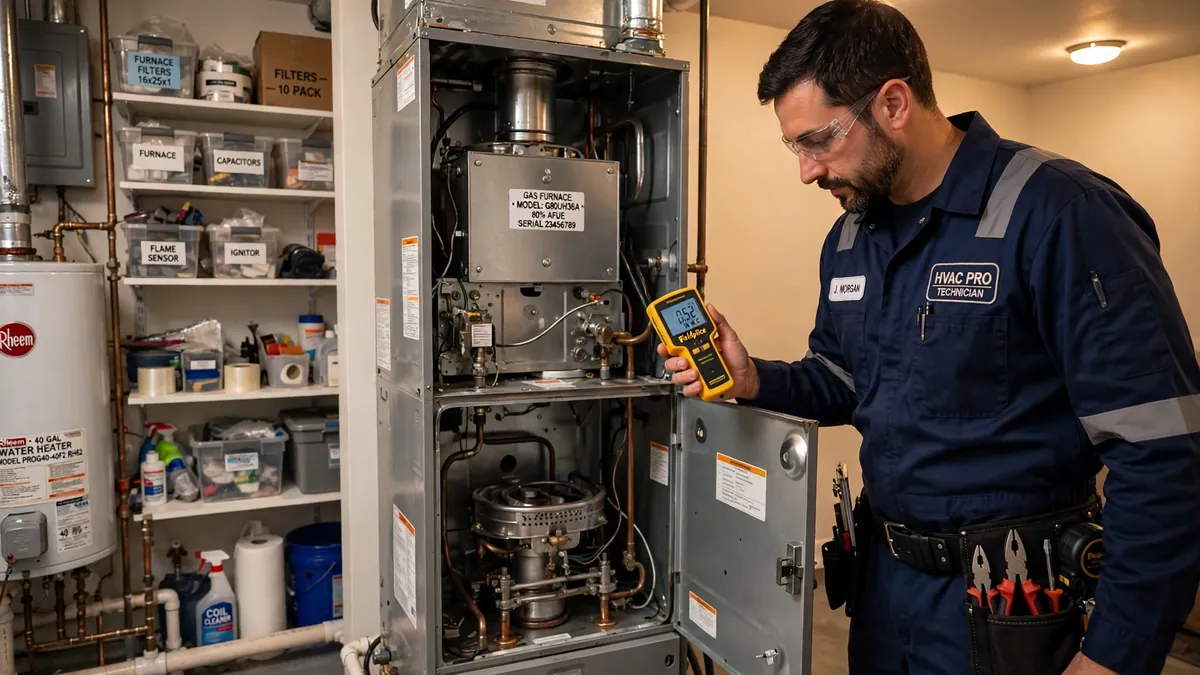
A cold house rarely fails without warning first. Usually, small clues appear weeks before a full breakdown happens. Perhaps rooms warm unevenly, or the system runs longer than before. Alternatively, a strange rattle starts each time the furnace fires. Good heating service turns those early clues into a clear plan. Consequently, you protect comfort, safety, and the equipment you already own.
This guide explains professional heating care in plain, practical language. Specifically, it covers furnaces, boilers, and heat pumps in ordinary homes. Moreover, it separates safe homeowner checks from work for trained technicians. Additionally, it shows how to judge repair against replacement calmly. Finally, it explains how to vet a heating contractor before you sign anything.
What Does Professional Heating Service Actually Cover?
Professional heating service means inspection, cleaning, testing, and adjustment. In essence, a technician checks how safely and cleanly your system makes heat. Furthermore, the visit checks how well warm air or hot water moves. Therefore, one appointment covers safety, performance, and reliability together.
Different systems need different attention during that visit, however. For example, a gas furnace needs burner and heat exchanger checks. Meanwhile, a boiler needs pressure, venting, and circulation checks instead. Similarly, a heat pump needs refrigerant, coil, and defrost checks. Understanding those differences helps you ask sharper questions later.
How Does Service Differ for Each System?
Furnaces heat air and push it through ducts around the home. Accordingly, technicians focus on burners, ignition, airflow, and the blower motor. Boilers heat water and send it through pipes, radiators, or floors. Hence, their checks centre on pressure, pumps, valves, and venting. Heat pumps move heat rather than creating it from fuel.
Each design fails in its own typical ways, naturally. Consequently, a good technician follows the manual for your exact model. Moreover, experienced crews record readings instead of relying on memory alone. Indeed, written readings let you compare performance from year to year. Our guide to HVAC installation, safety, and efficiency explores related system basics in more depth.
What Happens During a Heating Tune-Up?
A proper furnace tune-up follows a structured checklist every time. Firstly, the technician confirms the thermostat calls for heat correctly. Secondly, the visit tests ignition, flame quality, and safety shut-offs. Thirdly, the technician inspects electrical connections and measures motor performance carefully.
Cleaning forms the second half of a thorough tune-up. For instance, technicians clean burners, flame sensors, and blower compartments. Additionally, they clear condensate drains on high-efficiency furnaces where fitted. Furthermore, they check the filter and advise on its replacement schedule. As a result, the system starts the season clean and measured.
Why Does the Heat Exchanger Inspection Matter So Much?
The heat exchanger separates combustion gases from your indoor air. Therefore, cracks or heavy corrosion in it raise serious safety concerns. Specifically, damaged exchangers can allow carbon monoxide into living spaces. Carbon monoxide is colourless and odourless, so people cannot detect it themselves.
Technicians inspect the exchanger closely and test for carbon monoxide directly. Moreover, they check flue venting so exhaust gases leave the home properly. If a technician finds a cracked exchanger, expect a serious conversation. In that situation, safety rules the decision, not convenience or cost. Never run a system that a technician has flagged as unsafe.
How Often Should You Book Heating System Maintenance?
Most homeowners book an annual heating inspection before cold weather arrives. Early autumn works well because appointment books fill quickly later. Moreover, a pre-season visit leaves time to order parts calmly. Consequently, you avoid rushed decisions during the first cold snap.
Heat pump service usually comes before both main seasons, though. After all, they heat in winter and cool in summer. Boiler maintenance and furnace care generally suit one thorough visit each year. Nevertheless, heavy use, pets, or dusty renovations can justify extra filter checks. Your manual and your technician can confirm the right rhythm.
Consistent records make that rhythm easier to keep, fortunately. For example, note each visit date, filter change, and repair in one folder. Additionally, keep model and serial numbers with those service records. Such simple organisation reflects the wider lesson in our article on maintenance services and what consistent upkeep reveals about equipment health.
Which Checks Can You Safely Do Yourself?
Homeowners can handle several simple, low-risk checks confidently. Firstly, you can replace or clean the furnace filter as directed. Secondly, you can keep vents and radiators clear of furniture. Thirdly, you can test thermostat settings and replace its batteries.
Additionally, you can keep the area around equipment clean and dry. Moreover, you should check carbon monoxide alarms regularly and replace expired units. Gentle vacuuming around accessible vents also helps airflow stay free. However, stop at the cabinet door for anything involving fuel or wiring.
Which Jobs Belong to Professionals Only?
Gas lines, burners, and heat exchangers belong to trained technicians only. Similarly, refrigerant handling requires certification and specialist recovery equipment. Electrical testing inside the cabinet also carries real shock risks. Therefore, never open sealed panels or adjust gas pressure yourself.
Boiler pressure adjustments and venting repairs also need professional judgement. In fact, a small venting mistake can create a serious hazard. Likewise, control board diagnosis needs proper meters and model knowledge. Booking professional heating service for these tasks protects your warranty too. Many manufacturers expect documented maintenance from qualified providers, after all.
What Warning Signs Show a System Is Struggling?
Uneven heating is often the first sign homeowners notice. For example, one bedroom stays cold while another room overheats. Meanwhile, the system may run almost constantly without reaching the setting. Alternatively, it may switch on and off in short bursts. That pattern, called short cycling, deserves prompt professional attention.
Rising energy use without colder weather also signals declining performance. Furthermore, new noises rarely improve on their own over time. Banging, grinding, squealing, or rattling each point to different faults. Consequently, describe the sound carefully when you call for help. Accurate descriptions help technicians arrive with the right parts.
Which Smells and Sounds Need Urgent Help?
A brief dusty smell at season start can be normal, briefly. However, persistent burning smells need a shutdown and a professional check. Similarly, a rotten-egg odour near gas equipment needs immediate action. In that case, leave the home and contact your gas provider.
Yellow, flickering burner flames also differ from steady blue flames. Moreover, soot around a boiler or furnace suggests poor combustion. Frequent pilot outages or repeated safety lockouts send the same message. Therefore, treat combustion warnings as urgent, never as minor quirks. Home safety planning, including cover such as reliable fire insurance protection, supports, but never replaces, prompt repairs.
When Should You Repair, and When Should You Replace?
Age gives useful context for the heating repair vs replacement decision. Generally, ENERGY STAR suggests discussing replacement for furnaces or boilers over fifteen years. Similarly, it suggests reviewing heat pumps older than ten years. Nevertheless, age alone never decides the question on its own. Condition, repair history, and comfort matter just as much.
Repair usually suits a younger system with one clear, isolated fault. For instance, a failed igniter or sensor can be straightforward to fix. Conversely, repeated breakdowns in one season suggest deeper decline. Additionally, rising bills plus uneven rooms strengthen the replacement case. A trustworthy technician will show readings and explain both paths.
Parts availability can quietly tip the balance, too. Sometimes, older models lose manufacturer support and parts become scarce. Meanwhile, a major failure like a cracked exchanger changes everything. In contrast, a minor control fault rarely justifies a full replacement. Therefore, ask what the next likely failure is, not just this one.
How Do Filters and Thermostats Affect Comfort?
A clogged filter forces the system to work against resistance. As a result, airflow drops and rooms warm slowly and unevenly. Moreover, restricted airflow can overheat furnace components and trigger shutdowns. Regular furnace filter replacement is therefore the cheapest protection you control. Check the filter monthly during heavy use, at minimum.
Thermostats shape comfort just as strongly as the equipment itself. For example, poor placement near draughts or sunlight confuses temperature readings. Programmable thermostat models let heating follow your routine instead of running flat-out. Furthermore, a smart thermostat can highlight unusual run times early. Still, settings cannot fix mechanical faults hiding underneath, unfortunately.
Simple habits around both devices pay off steadily, overall. Firstly, buy the correct filter size and rating for your system. Secondly, avoid closing too many vents to redirect heat manually. Thirdly, review thermostat schedules when seasons or routines change. Such small steps support energy-efficient heating without any major spending. Comfort in a well-kept property, like the homes in our dream home guide to Marrowstone Island real estate, depends on these basics.
Which Habits Support Energy-Efficient Heating Every Day?
Sealing obvious draughts around doors and windows reduces wasted heat. Additionally, curtains and rugs can make cooler rooms feel warmer. However, never block radiators or vents to save energy deliberately. Blocked outlets unbalance the system and create cold spots elsewhere.
Lowering the thermostat slightly during sleep suits many households well. Moreover, consistent settings usually beat frequent large swings in temperature. Ceiling fans on low, reversed settings can push warm air downward. Consequently, rooms feel more even without raising the thermostat setting. These habits support professional heating system maintenance rather than replacing it.
Ductwork and airflow deserve attention in homes with forced air, too. For instance, visible duct joints can leak warm air into unused spaces. Similarly, furniture over floor registers quietly steals comfort every day. Our overview of air conditioning repair services shows how airflow problems affect cooling systems as well. Balanced airflow, ultimately, serves both seasons in a ducted home.
How Can You Vet a Heating Contractor With Confidence?
Start by verifying licensing and insurance for any heating contractor. Reputable firms share those documents willingly and without delay, normally. Additionally, look for recognised technician training, such as NATE certification. Experience with your specific system type matters greatly as well. A boiler specialist and a heat pump specialist differ, sometimes.
Next, compare written quotes from at least three providers, ideally. Each quote should name the work, parts, and warranty clearly. Moreover, detailed diagnoses explain what failed and why it failed. Vague quotes, by contrast, hide misunderstandings that surface later. The wider home services landscape in Meridian shows how competitive local markets reward clear, documented offers.
Which Red Flags Should Make You Walk Away?
High-pressure, today-only pricing is a classic warning sign, unfortunately. Similarly, demands for full payment in cash upfront deserve caution. A contractor who refuses written estimates also raises fair questions. Furthermore, anyone who condemns a system without testing it lacks credibility.
Trustworthy providers welcome questions about references and recent similar work. Moreover, they explain repair and replacement options without steering you unfairly. In-home trust matters across services, as readers of our guide on choosing a trusted partner for at-home care will recognise. Ultimately, you are inviting this person into your home and mechanical room. Choose someone whose paperwork and manner both earn that trust.
What Should You Expect on the Day of Service?
Clear access to the equipment makes the visit smoother for everyone. Firstly, move stored items away from the furnace or boiler. Secondly, secure pets in another room during the appointment. Thirdly, have your service records and model numbers ready nearby.
A professional visit ends with a clear summary, not a shrug. Specifically, expect findings, readings, and any recommendations explained in plain language. Additionally, expect honest urgency levels for each recommended repair item. Some items need action now, while others simply need monitoring. Finally, keep the invoice and report with your maintenance records.
Emergency heating repair follows a slightly different rhythm, of course. In that case, the technician stabilises safety first and restores heat second. Temporary fixes can sometimes bridge a cold night responsibly, however. Nevertheless, a cracked exchanger or gas leak ends that discussion immediately. Safety, once again, outranks speed in every emergency call.
A Simple Plan for Warmer, Calmer Winters
Think of heating care as a yearly rhythm, not a panic response. In autumn, book the tune-up and replace the filter. During winter, watch for uneven heating, noises, and short cycling. In spring, review repair notes and plan any bigger decisions calmly.
That rhythm turns an Enchanted Home heating goal into ordinary, manageable upkeep. Moreover, it spreads decisions across the year instead of stacking them urgently. Furthermore, documented care supports warranties, safety checks, and resale conversations later. Most importantly, it keeps small faults from becoming freezing emergencies.
Professional heating service, used wisely, is therefore less about dramatic rescues. Instead, it is about steady comfort, clear information, and safe equipment. Choose qualified help, keep your own simple checks current, and act early. Consequently, your home stays warm for the reasons you can explain.




