
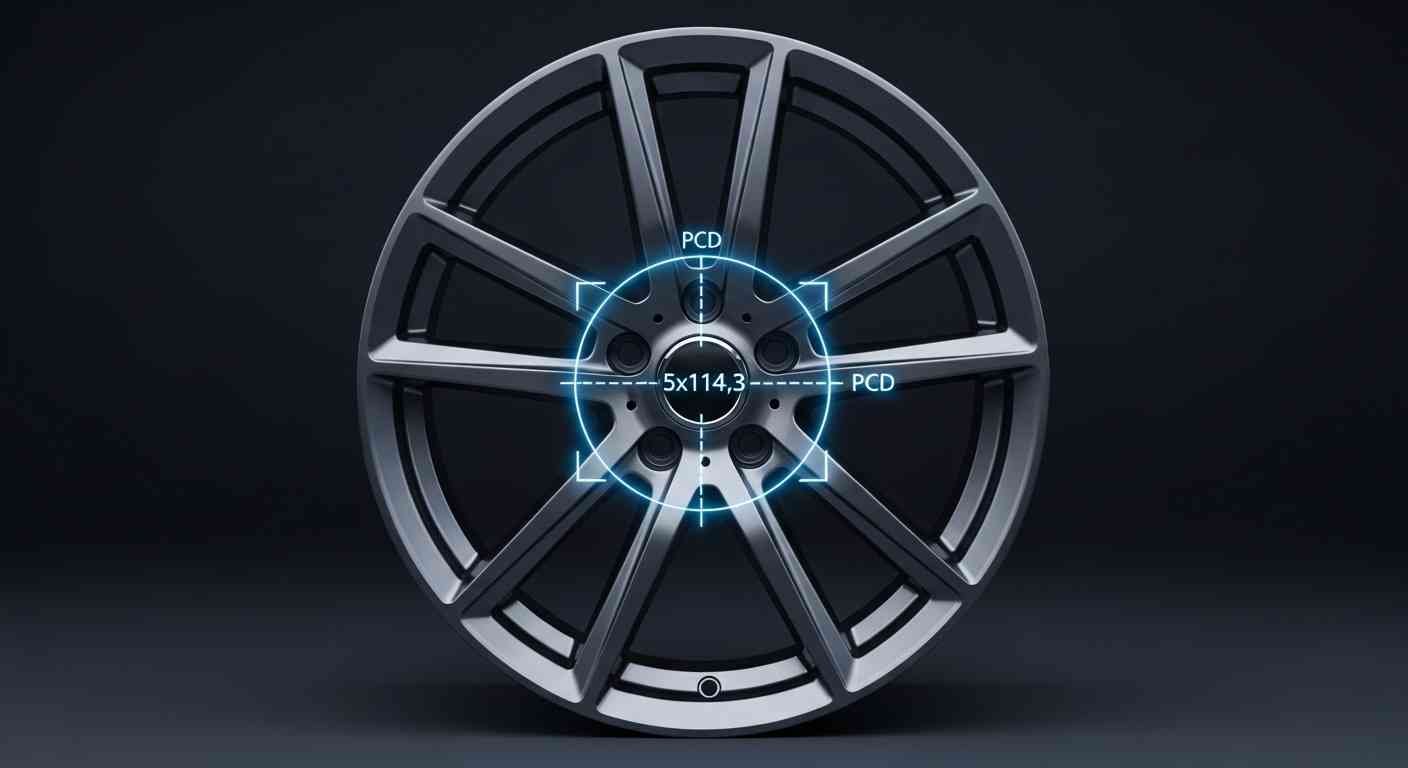
Selecting the correct wheel for a vehicle involves more than choosing the right diameter and design. One of the most critical technical specifications is the wheel bolt pattern, also known as the Pitch Circle Diameter (PCD), sometimes referred to as the bolt circle or lug pattern. The bolt pattern determines whether a wheel can mount securely onto the hub without compromising safety, alignment, or structural integrity. Incorrect PCD fitment can lead to vibration, uneven load distribution, premature component wear, and serious safety risks within the entire wheel hub assembly. For vehicle owners, workshop technicians, and automotive businesses, understanding bolt pattern measurements is fundamental to proper wheel installation and maintaining long-term mechanical durability.
This comprehensive guide explains what a car wheel bolt pattern is, how PCD works, how to measure it accurately, and why precision matters. It also explores related fitment considerations such as hub bore, offset, bolt type, thread pitch, and seat type (conical/ball/flat) to ensure complete technical clarity and full OEM specification compliance.
Understanding Car Wheel Bolt Pattern and PCD
A wheel bolt pattern refers to the number of bolt holes on a wheel and the diameter of the imaginary circle that passes through the center of those holes. This diameter is called the Pitch Circle Diameter (PCD), also known in technical terminology as the bolt circle diameter. Bolt patterns are typically expressed in a format such as 5×114.3 or 4×100. The first number indicates the number of bolt holes, sometimes called the stud pattern, and the second number represents the PCD measurement in millimeters.
For example, a 5×114.3 bolt pattern means the wheel has five bolt holes positioned evenly on a 114.3 mm diameter circle. This standardization allows manufacturers to design wheels that match specific hub configurations and maintain correct vehicle platform compatibility. However, even small deviations in PCD beyond acceptable tolerance range limits can prevent proper mounting. A difference of just a few millimeters can cause misalignment, improper torque seating, and increased shear force stress on studs.
Modern vehicles generally use four, five, six, or eight bolt configurations depending on vehicle type and axle load rating requirements. Passenger cars commonly feature 4-lug or 5-lug patterns, while SUVs and commercial vehicles may use 6-lug or 8-lug setups to support heavier loads and drivetrain demands.
Why Accurate Bolt Pattern Measurement Matters
Wheel mounting is a structural component of vehicle safety. When a wheel is mounted, the bolts or lug nuts secure it against the hub flange and wheel mounting face, ensuring even distribution of load during acceleration, braking, and cornering. If the PCD does not match precisely, the wheel may not sit flush against the hub surface or properly align with the hub pilot. This can cause lateral stress on wheel studs, uneven clamping force, and increased runout, which negatively affects rotational balance.
Incorrect bolt pattern installation can result in:
- Steering vibration at highway speeds
- Uneven brake rotor wear
- Premature wheel bearing failure
- Stud fatigue or breakage
- Compromised braking performance
- Excessive drivetrain stress
These risks become more significant in high-speed driving conditions or under heavy load. Precision in measurement ensures not only compatibility but also long-term mechanical reliability and stable wheel alignment.
How to Identify Bolt Pattern Format?
Bolt pattern notation follows a standardized format. Understanding how to read it helps prevent purchasing errors and ensures proper aftermarket fitment decisions.
4-Lug Pattern Example: 4×100
This configuration means there are four bolt holes positioned evenly on a 100 mm circle. Measuring a 4-lug pattern is straightforward because the holes are opposite each other, simplifying center-to-center measurement.
5-Lug Pattern Example: 5×114.3
Five-lug patterns are more complex because no two holes sit directly opposite one another. Measurement must be taken carefully to determine the correct PCD while accounting for acceptable tolerance limits.
6-Lug and 8-Lug Patterns
Six-lug patterns are measured similarly to 4-lug patterns, by measuring from the center of one hole directly across to the center of the opposite hole. Eight-lug configurations follow the same principle and are common in trucks and utility vehicles with higher axle load rating demands.
Step-by-Step Guide: How to Measure PCD Correctly
Accurate PCD measurement requires attention to detail and proper tools. A vernier caliper, digital caliper, or precise measuring scale is recommended for best results. Professional environments may also use a bolt pattern gauge template for verification.
Measuring 4-Lug and 6-Lug Bolt Patterns
For even-numbered bolt patterns (4, 6, or 8 lugs), measure from the center of one bolt hole directly across to the center of the opposite hole. This measurement equals the PCD.
To ensure accuracy:
- Measure from the inner edge of one hole to the outer edge of the opposite hole.
- Add the diameter of one bolt hole to compensate for edge measurement.
- Double-check measurement in millimeters.
- Confirm proper stud engagement depth once installed.
Consistency is essential because even minor miscalculations can result in ordering incorrect wheels and improper fastener grade application.
Measuring 5-Lug Bolt Patterns
Five-lug patterns require a different approach because there is no directly opposite hole. To measure correctly:
- Measure from the center of one bolt hole to the outer edge of the farthest bolt hole across.
- Alternatively, measure from the back of one hole to the center of the second hole skipping one hole.
- Use a bolt pattern gauge if available for professional accuracy.
- Verify measurement against manufacturer’s OEM specification sheet.
Digital calipers provide the most precise readings. Avoid estimating visually, as 5×112 and 5×114.3 patterns can appear similar but are not interchangeable due to strict tolerance limits.
Common Bolt Pattern Sizes in Passenger Vehicles
While bolt patterns vary by manufacturer and model, some measurements are widely used in the automotive industry.
- 4×100 – Common in compact cars
- 5×100 – Found in select sedans and hatchbacks
- 5×112 – Used in many European vehicles
- 3 – Extremely common across Asian and American vehicles
- 7 – Popular in SUVs and pickup trucks
Different manufacturers may standardize around certain PCDs based on platform engineering and load distribution calculations.
Bolt Pattern vs. Wheel Offset and Hub Bore
Understanding bolt pattern alone is not enough for proper wheel fitment. Three primary factors determine compatibility:
Bolt Pattern (PCD)
Ensures the wheel aligns with the hub’s bolt holes and maintains structural stability under load.
Wheel Offset (ET)
Offset refers to the distance between the wheel’s mounting surface and its centerline. Incorrect offset affects suspension geometry, steering response, and fender clearance. Closely related to offset is backspacing, which measures the distance from the mounting face to the inner wheel edge. Even with correct PCD, wrong offset or backspacing can cause rubbing or alignment issues and affect brake caliper clearance.
Hub Bore (Center Bore)
The hub bore is the diameter of the wheel’s center hole. It must match the vehicle’s hub size to achieve a proper hub-centric fitment. A mismatch results in a lug-centric setup, where lug nuts carry centering responsibility, potentially increasing vibration and runout. Using hub-centric rings helps maintain proper load distribution and reduce stress on studs.
All three elements must align for safe and proper installation.
Can You Change or Modify Bolt Pattern?
In certain cases, bolt pattern adapters are used to convert one PCD to another. These adapters bolt onto the existing hub and provide a new bolt pattern configuration. However, adapters increase spacer thickness, which alters effective offset and may impact suspension geometry and wheel alignment.
Wheel re-drilling is another modification option but is generally not recommended unless performed by specialized professionals using proper structural validation. Modifying a wheel hub assembly without engineering approval may affect strength ratings and compliance.
For daily driving vehicles, maintaining factory-specified PCD is strongly advised.
Tools Required for Accurate Measurement
Professional measurement ensures compatibility and reduces return rates for retailers. Recommended tools include:
- Digital caliper
- Vernier caliper
- Bolt pattern gauge template
- Manufacturer specification sheet
- Torque wrench
- Thread gauge for verifying thread pitch
Using appropriate tools improves precision, confirms correct seat type (conical/ball/flat) compatibility, and prevents installation issues.
Common Mistakes When Measuring Bolt Pattern
Several errors frequently occur during PCD measurement:
- Measuring from edge to edge without accounting for hole diameter
- Confusing inches with millimeters
- Assuming visual similarity equals compatibility
- Ignoring hub bore or offset specifications
- Overlooking required wheel torque sequence
- Failing to verify proper stud engagement depth
Precision and cross-verification are essential. Always confirm measurements before purchasing aftermarket wheels.
Bolt Pattern and Safety Compliance
Vehicle manufacturers design bolt patterns to match load distribution, braking force, suspension geometry, and drivetrain design. Regulatory standards ensure wheels meet structural requirements and defined tolerance ranges.
Professional installers must follow manufacturer torque specifications and re-torque after initial driving distance to maintain clamping force integrity. Proper bolt tightening sequence, typically in a star pattern, ensures even pressure distribution and prevents uneven stress across the mounting surface.
Practical Tips for Wheel Buyers and Workshops
When purchasing new wheels:
- Check owner’s manual for factory PCD specification
- Verify PCD with physical measurement if unsure
- Confirm offset, backspacing, and hub bore compatibility
- Ensure proper hub-centric fitment whenever possible
- Avoid “close enough” fitments
- Confirm correct fastener grade and thread pitch
Retailers should clearly list bolt pattern in millimeters and provide guidance regarding offset, backspacing, and hub bore to ensure full compatibility.
FAQs
1. What does a 5×114.3 bolt pattern mean?
It indicates five bolt holes arranged on a 114.3 mm diameter bolt circle. Both the lug count and PCD must match the vehicle’s OEM specification exactly.
2. Can I install wheels with a slightly different PCD?
No. Even minor deviations beyond tolerance range can cause improper seating, vibration, and increased shear force on studs.
3. How do I measure a 5-lug bolt pattern without special tools?
Measure from the center of one hole to the outer edge of the farthest hole across, but always verify with a caliper for precision.
4. Is bolt pattern the same as wheel size?
No. Bolt pattern defines stud configuration, while wheel size refers to diameter and width.
5. Does changing bolt pattern affect vehicle performance?
Yes. Using adapters changes effective offset and spacer thickness, which may influence suspension geometry and alignment.