
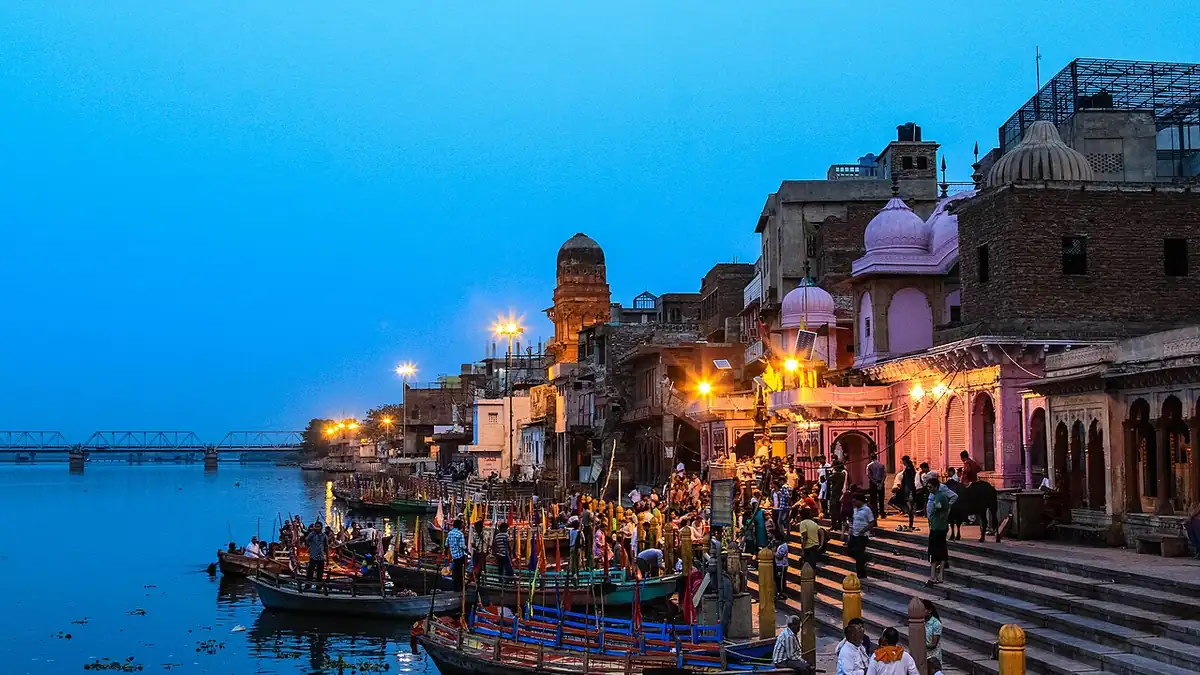
Some pilgrim towns ask you to slow down completely. Mathura and Vrindavan, however, reward an early start and a simple plan. Together, they form the heart of Braj, the land linked with Lord Krishna. Moreover, the two towns sit close to each other. Consequently, the best places to visit in Mathura and Vrindavan in one day fit into one honest route.
This guide follows that route in a realistic order. First, you begin in Mathura, where Krishna was born. Later, you move on to Vrindavan, where his childhood stories live on. Additionally, you will find food notes, customs advice, and pacing tips below. In short, this Mathura Vrindavan itinerary favours depth over rushing.
Can You Really Cover Both Towns in a Single Day?
Yes, you can, although you must choose carefully. Indeed, a Mathura Vrindavan one day trip works because the highlights cluster tightly. For example, three essential Mathura stops sit near each other. Similarly, several famous Vrindavan temples share the same old lanes. Therefore, walking and short local rides replace long drives.
Still, one day cannot hold every temple in Braj. Hundreds of shrines fill these towns, after all. Instead, focus on the places that tell the story best. Furthermore, leave breathing space between darshans for queues and rest. As a result, your day will feel full without feeling frantic.
- Morning in Mathura: Krishna Janmabhoomi, Dwarkadhish Temple, and Vishram Ghat.
- Midday pause: Lunch, rest, and the short drive to Vrindavan.
- Afternoon in Vrindavan: Banke Bihari Temple, ISKCON, Nidhivan, and nearby shrines.
- Evening finale: Keshi Ghat at dusk, then Prem Mandir when it is lit.
That sequence also respects how temple towns breathe. Many temples, for instance, grow quiet around midday. Hence, checking the day’s pattern locally helps enormously. Meanwhile, an evening finish in Vrindavan suits Prem Mandir perfectly. After all, its marble glows most beautifully after dark.
Morning in Mathura, Where the Story Begins
Mathura sightseeing makes most sense before the crowds build. Early streets, in fact, feel calmer and cooler. Besides, starting here follows Krishna’s life in order. Birth comes first, and childhood follows afterwards. Accordingly, pilgrims have followed this logic for generations.
Shri Krishna Janmabhoomi Temple Complex
Every Mathura journey should begin at Krishna Janmabhoomi. Devotees believe this complex marks Krishna’s birthplace. Specifically, tradition places his birth in a prison cell here. Consequently, the shrine carries deep emotional weight for Hindus. Moreover, the complex holds several temples and prayer spaces together.
Expect security checks at the entrance, for example. Therefore, travel light and keep valuables minimal. Photography rules, meanwhile, are strict inside sacred complexes. Always follow the instructions given on arrival. In addition, allow unhurried time once you enter. Rushing this darshan, frankly, misses its whole meaning.
Dwarkadhish Temple
Next, walk into the lively heart of old Mathura. Dwarkadhish Temple stands there as the town’s grand city temple. Indeed, its carved entrance and painted details reward a slow look. Furthermore, the surrounding lanes buzz with flower sellers and sweet shops. As a result, the visit blends devotion with everyday street life.
The temple honours Krishna as Dwarkadhish, king of Dwarka. Devotees, in particular, love its festive and colourful atmosphere. However, festival days bring especially dense crowds here. So, keep your group close and move patiently. Similarly, dress modestly and remove footwear where required. Those small courtesies, ultimately, matter in every temple town.
Vishram Ghat on the Yamuna
Afterwards, let the river slow your morning down. Vishram Ghat is Mathura’s principal ghat on the Yamuna. Tradition says Krishna rested here after defeating Kansa. Hence, its name means the ghat of rest. Moreover, the broad steps offer space to simply sit.
Boats drift along the water here, for instance. Temples and old buildings, meanwhile, line the riverfront beautifully. Additionally, the ghat marks a traditional parikrama starting point. Pilgrims, therefore, treat it as both beginning and end. In contrast, casual visitors often rush straight past it. Please do not make that same mistake.
Getting From Mathura to Vrindavan
Luckily, the move between the towns is straightforward. Vrindavan lies a short drive from Mathura. Local taxis, auto rickshaws, and shared options cover the route. However, traffic thickens near temple lanes and festivals. Consequently, build buffer time into your plan.
Within Vrindavan, walking often beats riding, in fact. Narrow lanes, for example, restrict larger vehicles completely. E-rickshaws, instead, handle many short hops between temples. Furthermore, walking reveals small shrines you would otherwise miss. Similarly, the lanes themselves hold much of Vrindavan’s charm. Take them slowly, and look around often.
Afternoon in Vrindavan, the Town of Childhood Stories
Vrindavan feels different from Mathura, and noticeably so. Mathura honours a birth, whereas Vrindavan celebrates a childhood. Consequently, its temples feel playful, intimate, and deeply musical. Chanting, moreover, spills from doorways across the old town. Indeed, the best places to visit in Vrindavan reward lingering.
Banke Bihari Temple
For most pilgrims, Banke Bihari Temple is Vrindavan’s soul. Here, Krishna appears in his beloved Banke Bihari form. Uniquely, a curtain opens and closes before the deity. Therefore, darshan comes in brief, powerful glimpses. Devotees, in fact, cherish that teasing rhythm deeply.
Be ready for joyful, intense crowds here, however. Lanes approaching the temple narrow considerably, for example. Additionally, attendants keep visitors moving through steadily. So, secure your belongings and stay patient. Photography, meanwhile, is restricted inside many Vrindavan temples. Always check locally, and never argue the rule.
ISKCON Krishna Balaram Mandir
In contrast, the ISKCON Krishna Balaram Mandir feels spacious and orderly. This white marble temple draws devotees from around the world. Moreover, its kirtan fills the hall with steady energy. Visitors, for instance, often sit quietly and simply listen. As a result, it offers a welcome midday reset.
The complex also honours ISKCON’s founder, Srila Prabhupada. His samadhi shrine, additionally, sits within the grounds. Furthermore, the temple’s calm helps families pace themselves. Children, in particular, appreciate its open courtyards. Hence, many travellers pair it directly with Banke Bihari. Together, the two temples show Vrindavan’s contrasting moods.
Nidhivan, Seva Kunj, and Radha Raman Temple
Later, seek out Vrindavan’s quieter, more mysterious corners. Nidhivan is a sacred grove of twisted trees. Devotees believe Krishna performs the Raas here nightly. Consequently, the grove empties and closes after dark. Moreover, its stillness feels powerful even in daylight.
Nearby, Seva Kunj carries similar Radha-Krishna associations. Tradition, for example, links it with Krishna serving Radha. Meanwhile, the Radha Raman Temple offers a different devotion. Established centuries ago, it houses a revered self-manifested deity. Furthermore, its worship follows careful, traditional discipline. Together, these stops deepen any tour of Vrindavan temples.
If time tightens, choose one of these three. Nidhivan, arguably, suits first-time visitors best. However, lovers of old temples may prefer Radha Raman. Either way, ask locally about current visiting patterns. Timings, after all, shift with festivals and seasons.
Keshi Ghat
Towards evening, return to the Yamuna at Keshi Ghat. This is Vrindavan’s best-known riverfront ghat. Tradition links it with Krishna defeating the demon Keshi. Moreover, its steps and arches photograph beautifully at dusk. Pilgrims, meanwhile, gather here for evening prayer by the water.
A short boat ride may tempt you here. If so, agree details clearly before boarding. Additionally, watch your footing on the old steps. Riverfront stone, in fact, can turn slippery. Finally, simply standing here as lamps appear is enough. Sometimes, stillness beats another rushed darshan.
Prem Mandir in the Evening
Save Prem Mandir for last, deliberately. This vast white marble temple celebrates divine love. Specifically, it honours Radha Krishna and Sita Ram. Moreover, carved panels across its walls retell Krishna’s life. Daylight, for example, reveals those carvings in fine detail.
Evening, however, transforms the whole complex completely. Lights wash the marble in changing colours. Furthermore, gardens and fountains add to the spectacle. Consequently, crowds gather as darkness falls. Arrive a little early, therefore, and settle in. Ending here gives a Mathura Vrindavan one day trip its finest finale.
A Sample One-Day Route That Actually Works
Plans help, but rigid schedules rarely survive temple towns. Instead, follow this sequence and flex the gaps. First, start early in Mathura with Janmabhoomi. Next, continue to Dwarkadhish Temple in the old lanes. Then, rest beside the Yamuna at Vishram Ghat.
Afterwards, eat lunch and rest during the midday lull. Many temples, indeed, pause around the middle of the day. Therefore, use those hours for travel to Vrindavan. Later, begin with Banke Bihari while energy remains. Subsequently, slow down at ISKCON and the smaller shrines.
Finally, close the day beside the river and marble. Keshi Ghat, for instance, suits the early evening mood. Prem Mandir, meanwhile, deserves the last slot. As a result, your route ends on light and music. That ending, honestly, stays with travellers for years.
Families planning other Indian pilgrim days may enjoy comparison. Our guide to places to visit in Rameshwaram in one day follows a similar rhythm. Likewise, temple towns reward early starts everywhere. Moreover, sacred geography shapes each route uniquely.
What to Eat During Your Day in Braj?
Food in Braj is simple, vegetarian, and deeply local. Most temple-area eateries, for example, serve sattvic meals. Those meals avoid onion and garlic in many kitchens. Furthermore, thalis offer an easy, filling midday choice. Lassi, meanwhile, refreshes travellers after hot temple lanes.
Above all, do not leave without tasting Mathura peda. This famous milk sweet defines the town’s food identity. Indeed, shops across Mathura sell boxes as offerings and gifts. Buy yours, however, from an established and busy shop. Freshness, consequently, is easier to judge there. Additionally, kachori breakfasts fuel many pilgrims before darshan.
Anyone extending into wider India trips will notice contrasts. Our roundup of top ten places to visit in Gujarat shows another rich food culture. Similarly, our guide to the best places to visit in Kerala during summer celebrates coastal flavours. Braj food, in contrast, stays rooted in milk and devotion.
If You Have Extra Time, What Should You Add?
Honestly, a single day leaves little spare time. Still, some travellers arrive the night before. Others, meanwhile, stay on after Prem Mandir. For them, Govardhan Hill offers a meaningful extension. Devotees revere this hill, which Krishna famously lifted. Moreover, pilgrims walk its sacred parikrama route.
Near Govardhan, Kusum Sarovar adds quiet beauty. Its historic pavilions and water tank, for example, invite reflection. However, reaching both sights needs extra driving time. Therefore, treat them as an add-on, not core itinerary. Cramming them in, consequently, would spoil the main day.
Gokul presents another gentle optional detour nearby. Tradition remembers it as Krishna’s early childhood home. Specifically, his foster parents raised him there in secret. Furthermore, its lanes feel quieter than Vrindavan’s centre. If your group loves the childhood stories, consider it. Otherwise, save Gokul for a slower return visit.
India rewards that slower return, generally speaking. Heritage lovers can explore our guide to places to visit in Khajuraho Madhya Pradesh next. Alternatively, our one-day guide to places to visit in Munnar in one day covers hill country. Each region, moreover, tells a very different story.
Practical Tips for a Respectful Visit
Firstly, dress modestly for every temple visit. Covered shoulders and knees, for example, show basic respect. Secondly, remove footwear wherever signs or customs require it. Additionally, carry a small bag for socks and essentials. Meanwhile, keep phones silent inside prayer halls.
Photography rules vary sharply between temples, however. Some courtyards allow pictures, whereas sanctums forbid them. Therefore, always check locally before raising a camera. Similarly, never photograph devotees without their clear permission. In fact, asking first prevents most awkward moments.
- Start early, because mornings bring cooler lanes and shorter queues.
- Carry water, although take care near sanctums and prayer spaces.
- Keep small notes handy, since small purchases happen often.
- Agree rickshaw fares beforehand, therefore avoiding confusion later.
- Check temple patterns on arrival, because festival days change everything.
- Move patiently in crowds, and keep elders and children close.
Crowds deserve one final, honest warning here. Janmashtami and Holi, in particular, draw enormous gatherings. Indeed, Braj celebrates Holi with unmatched colour and energy. However, a one-day plan becomes far harder then. If possible, choose an ordinary day for this route. Consequently, darshans will feel calmer and more personal.
Travellers combining Delhi with Braj can plan evenings separately. Our guide to the best places to visit in Delhi with family at night helps there. Likewise, families heading south may like our best places to visit in Bangalore with parents guide. Goa-bound readers, meanwhile, can browse places to visit near Miramar Beach Goa afterwards.
Frequently Asked Questions
What are the must-see places to visit in Mathura in one day?
Prioritise Krishna Janmabhoomi first, above all else. Next, add Dwarkadhish Temple in the old town. Finally, rest at Vishram Ghat on the Yamuna. Together, those three capture Mathura’s essence beautifully. Moreover, they sit close enough for one morning.
What are the best places to visit in Vrindavan on the same day?
Start with Banke Bihari Temple for its devotion. Then, slow down at the ISKCON Krishna Balaram Mandir. Additionally, visit Nidhivan or Radha Raman Temple afterwards. Later, pause at Keshi Ghat near dusk. Finally, end your evening at Prem Mandir.
How much time do you need in each town?
Give Mathura your morning, roughly speaking. Vrindavan, meanwhile, deserves the longer afternoon and evening. Indeed, its temples spread across more lanes. Furthermore, Prem Mandir alone rewards an unhurried evening. Therefore, avoid splitting the day into equal halves.
Can families with children manage this one-day trip?
Yes, families manage it with sensible pacing, certainly. Regular food and rest breaks, for example, help enormously. Moreover, ISKCON’s open spaces suit younger children well. However, Banke Bihari crowds need careful supervision. Consequently, keep little ones close in narrow lanes.
What should you check before you travel?
Check the festival calendar first, most importantly. Major festivals, indeed, transform crowds and temple patterns. Additionally, confirm the day’s arrangements locally on arrival. Weather, meanwhile, shapes how much walking feels comfortable. Therefore, plan footwear and water with care.
Final Thoughts on Your Day in Braj
A single day here works because the story is one. Mathura gives you Krishna’s birth and the river. Vrindavan, meanwhile, gives you childhood, music, and light. Moreover, the route between them stays short and simple. Consequently, even first-time visitors can follow it confidently.
So, arrive early and protect your evening for Prem Mandir. Walk the lanes slowly, and eat the peda warm-heartedly. Additionally, let a few unplanned temple bells redirect you. Sometimes, those small detours become the day’s treasure. Ultimately, the best places to visit in Mathura and Vrindavan in one day reward presence, not speed.




