
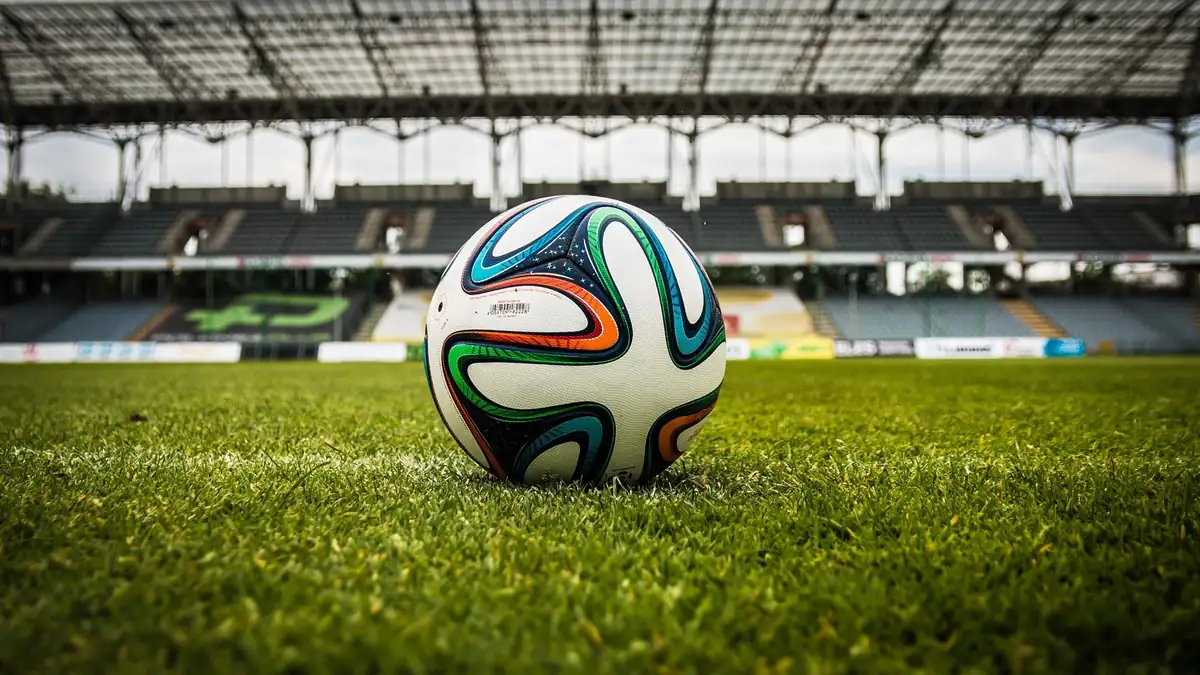
This guide explains how football works in plain language, from kick-off to the final whistle. Two teams share one pitch, one ball, and one clear aim. Each side tries to score more goals than the other side. Everything else in the game supports that contest, from the pitch markings to the referee’s job. New watchers can follow a match with ease once they grasp this system.
Football here means association football, the game most of the world calls football. Many people in North America call the same game soccer, however. The same basic laws govern school matches, local club matches, and large professional matches. Competition rules can add extra details, for example around substitutions or tiebreakers. This guide stays with general rules, therefore, because exact formats vary by competition.
What Is the Basic Idea Behind the Game?
Each team fields eleven players, including one goalkeeper. Players move the ball by passing, dribbling, and shooting. They mostly use their feet, although heads and chests also control the ball. Outfield players must not deliberately handle the ball, however. That single restriction shapes much of the game’s skill.
The team with more goals at the end wins the match. Equal goals mean a draw in many league matches. A draw still rewards both teams, because league tables award points across a season. Knockout matches need a winner on the day, however. Later sections explain extra time and penalty shoot-outs.
New watchers should track the ball first, then the space around it. Goals usually follow a gap opening up or a defender losing position. Teams also switch fast from defence to attack after winning the ball. In short, football rewards organisation, movement, and calm choices under pressure.
How Does a Match Begin, and How Long Does It Play?
A match begins with a kick-off from the centre spot. One team starts with the ball, while the other team waits in its own half. The kick-off team must play the ball forward under current laws. After a goal, the conceding team restarts play the same way. Each restart gives both sides a brief chance to reset.
Football match duration follows a standard pattern at senior level. A standard match lasts ninety minutes, split into two forty-five-minute halves. A short half-time break separates the two halves. The clock keeps running during play, however. Referees add time for stoppages such as injuries and substitutions.
Youth and amateur matches often use shorter halves. Competition rules set the length to suit the age group and level. Extra time and shoot-outs only apply when a competition needs a winner. The ninety-minute structure stays intact for ordinary matches, meanwhile. Referees control timekeeping throughout the match.
What Does the Pitch Look Like, and What Do Its Lines Mean?
A football pitch forms a rectangle, with one goal at each end. Touchlines run along the long sides, while goal lines run along the short ends. Play stops only when the whole ball crosses a line fully. A ball still touching the line stays in play, therefore. Close calls near lines often look dramatic for that reason.
Each half holds a penalty area, a large rectangle in front of the goal. A smaller goal area sits inside the penalty area. The penalty spot sits inside the penalty area as well. An arc outside the area marks the distance opponents must keep during penalties. Corner arcs mark the spots for corner kicks.
Pitch sizes vary within limits set by the laws. A local ground may use a smaller pitch than a large stadium. Youth pitches run smaller still, because smaller pitches suit developing players. The markings keep the same meanings at every size, however. Lines define restarts and special zones, not decoration.
What Are Football Pitch Positions, and How Do They Work Together?
Football pitch positions give each player a main job and a zone to protect. Goalkeepers guard the goal, defenders protect the area ahead of it, and midfielders link defence with attack. Forwards lead the search for goals. Modern players roam beyond starting spots, however. Positions describe starting duties, not cages.
Defenders usually include centre-backs in the middle and full-backs near the touchlines. Midfielders split into defensive, central, and attacking roles. Defensive midfielders shield the defence, while central midfielders control tempo. Attacking midfielders create chances near the opposing goal. Wide players stretch play toward the touchlines.
Forwards include strikers near the opposing goal and supporting forwards linking play. A lone striker needs service from midfield and wide areas. Goals rarely come from one player acting alone, therefore. Young players learn roles gradually, and youth sports programmes introduce team roles step by step. Only goalkeepers may deliberately handle the ball, and only inside their own penalty area.
What Counts as a Goal, and How Does Scoring Work?
How goals are scored in football follows one simple test. A goal counts only when the whole ball crosses the goal line fully. The ball must pass between the posts and under the crossbar. A ball bouncing on the line has not crossed fully, therefore. Referees award no goal in that case.
Goals can come from tap-ins, headers, long shots, or deflections. The scoring method matters less than the ball crossing legally. Officials disallow goals after offside, fouls in the build-up, or the ball leaving play. A goal cannot come directly from a throw-in, however. Corner kicks can produce goals directly.
Most goals follow sustained attacking play, not single moments of magic. Teams pass patiently to draw defenders out of shape. They attack quickly once a gap appears, for example. Set pieces also create many goals, because crowded penalty areas challenge defenders. Scoring rewards patience, movement, and accurate delivery.
What Is the Offside Rule, and Why Does It Confuse New Watchers?
This soccer offside rule explained simply starts with position, not cheating. A player stands offside when nearer the opposing goal line than both the ball and the second-last opponent. Officials judge that position when a teammate plays the ball forward. Standing offside alone breaks no rule, however. The player must also join active play.
Active play includes receiving the ball, interfering with an opponent, or gaining an advantage. A player standing offside while play moves elsewhere draws no penalty. No offside offence can follow a goal kick, a throw-in, or a corner kick. A player level with the second-last opponent also stays onside. Timing decides everything, therefore, because officials judge the pass moment, not the receipt moment.
Offside stops attackers camping beside the opposing goal and waiting for long balls. Without it, defences would hug their own goals constantly. The middle of the pitch would empty out as a result. Defenders hold a line together, meanwhile, while attackers time runs carefully. Offside works as a timing rule, in short.
What Counts as a Foul, and When Do Free Kicks Follow?
Football fouls and free kicks start with careless, reckless, or dangerous play. Tripping, pushing, holding, and striking opponents all count as fouls. Deliberate handball by an outfield player also counts as a foul. Fair shoulder-to-shoulder challenges for the ball stay legal, however. Referees judge intent, force, and effect together.
Most fouls lead to a free kick from the offence spot. Direct free kicks can fly straight at goal. Indirect free kicks must touch another player before a goal counts. Referees raise one arm for indirect free kicks, for example. Opponents must retreat a fair distance before the kick.
Free kicks near the opposing goal create major scoring chances. A skilled delivery can bend around a defensive wall. It can also pick out a teammate inside the penalty area. Free kicks deep in a team’s own half relieve pressure instead. Fouls therefore shape matches, because they stop attacks and hand over possession.
How Do Penalty Rules Work Inside the Penalty Area?
Football penalty rules carry a bigger consequence than the same foul elsewhere. A direct free kick offence inside the penalty area earns the attacking team a penalty. The taker places the ball on the penalty spot. The goalkeeper stays on the goal line, while other players wait outside the area and arc. A penalty therefore creates a clear chance against only the goalkeeper.
Takers usually shoot, although they may pass sideways to a teammate instead. Penalty takers must not touch the ball again until another player touches it. Goalkeepers must not leave the goal line early. A rebound after a save returns to open play, for example. Other players may then challenge normally.
Handball decisions inside the area attract close attention. Laws distinguish deliberate handling from accidental contact in different situations. Defenders learn to challenge carefully inside the area, meanwhile. One mistimed tackle can hand opponents a penalty. The penalty area works as a high-stakes zone, in short.
What Do Yellow and Red Cards Mean for a Player and a Team?
Football yellow and red cards give referees a clear discipline language. A yellow card cautions a player for unsporting behaviour, dissent, persistent fouling, or delaying a restart. A single yellow card leaves the player on the pitch. Cautioned players often play more carefully afterwards, however. Another caution in the same match brings dismissal.
Two yellow cards in one match equal a red card, and the player must leave. Straight red cards punish serious offences such as serious foul play or violent conduct. Referees also dismiss players for denying obvious goal chances by fouls. Offensive language and gestures can also earn straight red cards. Dismissed players cannot return, therefore, and teams continue short-handed.
Cards can affect later matches through suspensions under competition rules. A ten-player team usually defends deeper and attacks with fewer players. Referees at lower levels may settle minor incidents with a quiet word. Cards protect players and fairness, meanwhile, rather than serving as punishment alone.
How Do Throw-Ins and Corners Restart Play?
Football throw-ins and corners restart play after the ball leaves the pitch. A throw-in follows the ball crossing a touchline fully. The team that did not touch the ball last takes the throw. Throwers stand behind the touchline and use both hands. They deliver the ball from behind and over the head, with both feet grounded.
A throw-in cannot score directly, because another player must touch the ball first. Teams use throw-ins to keep possession or launch quick attacks. A corner kick follows the ball crossing the goal line off a defender, without a goal. Attackers place the ball inside the nearest corner arc. They usually drive it toward the penalty area.
Corners can produce goals directly, unlike throw-ins. Defenders must keep a fair distance from the corner arc. Attackers crowd the penalty area to attack deliveries, for example. Goal kicks mirror corners, because attackers touching the ball last concede goal kicks. Restarts keep games flowing with known starting points.
How Do Substitutions Work, and Why Do Coaches Make Them?
Football substitutions rules start simply, because one player replaces another during play. Referees must approve each change before the replacement enters. Leaving players exit at the nearest boundary point or as directed. Replacements wait at the halfway line until signalled. Competition rules set the allowed number, however, so tournaments vary.
Coaches substitute for fresh legs, tactical changes, injuries, or card protection. A coach may replace a tired winger with a faster player, for example. Another coach may add a defender to protect a narrow late lead. Substitutions can also change formations without changing overall approach. New players bring different strengths to familiar roles.
Timing matters greatly for substitutions. Half-time changes cost no playing time. Late changes can slow the game and help teams regroup. Early changes bring fresh energy sooner, meanwhile. Such early changes also leave less flexibility for later injuries. Substitutions work as tactical tools, in short, not mere replacements.
What Do Referee Signals Tell Players and Watchers?
Football referee signals turn arm movements into useful information. Referees point toward the team taking a free kick. They raise an arm for indirect free kicks. Referees point to the penalty spot for penalty kicks. Players learn these cues quickly, however. Watchers can read the next restart by watching the referee.
Assistant referees run along touchlines and help with offside and restarts. They raise flags for offside, throw-ins, corners, and goal kicks. A raised flag plus a point toward the defending half signals offside, for example. Flag directions indicate which team gains the restart. A fourth official manages substitutions and added time.
Video review assists referees in some competitions, but not at every level. Review covers clear errors in goals, penalties, direct red cards, and mistaken identity. Referees still make final decisions on the pitch, meanwhile. Video review advises officials rather than replacing them. Signals and review exist to clarify decisions.
How Do Formations Shape the Way a Team Plays?
Soccer formations explained simply start with numbers written from defence to attack. Four defenders, four midfielders, and two forwards form a four-four-two shape. Three defenders, five midfielders, and two forwards emphasise midfield control instead. Numbers describe starting shapes, however, not rigid patterns. Teams shift shape constantly during open play.
Formations balance defensive solidity, midfield control, and attacking threat. Extra defenders make teams harder to break down. Fewer attackers remain free, for example, when defences grow larger. Midfield numbers help teams keep the ball. Additional forwards increase scoring threat while exposing midfield.
Compact teams leave less space between their lines. Stretched teams cover more pitch but risk gaps. Team performance depends heavily on this balance. Precision in sport shows in passing accuracy and movement timing. Formations work as teamwork plans, in short.
What Happens When a Match Ends Level?
Football extra time and penalties settle knockout matches that end level. Many competitions play extra time after normal time. Extra time consists of two additional periods with a short break between them. The team ahead at the end of extra time wins. No further normal play follows, therefore.
Penalty shoot-outs decide matches still level after extra time. Teams take turns kicking from the penalty spot. Only the taker and opposing goalkeeper take direct part in each kick. Each miss raises pressure on the next kick, for example. Goalkeepers read takers, stay patient, and react quickly.
Some competitions skip extra time and move straight to penalties. Others replay early-round ties on another day. Finals normally need winners on the day, meanwhile. Tiebreaker formats vary by competition and change over time. New watchers should check competition formats, in short.
What Is the Difference Between Soccer and Football in Everyday Language?
The soccer vs football difference starts with naming, not rules. Most of the world calls association football simply football. Many people in North America call the same game soccer. Soccer comes from the word association, however. Neither word breaks any rule, because local habits drive naming.
Other codes also use the word football, which confuses new watchers. American football, rugby, Gaelic football, and Australian rules football form distinct games. The American version uses an oval ball and a downs system, for example. Rugby allows carrying the ball and tackling differently. Context matters enormously, therefore, because football often means the dominant local code.
Watching other codes still helps new fans understand shared ideas. Teamwork, territory, and scoring structure appear across many sports. Other team games offer useful contrasts in risk and time management. How people learn new systems can guide patient rule study. Names vary by place, meanwhile, while the game stays the same.
What Helps Football Teams Win Matches?
How football teams win matches goes beyond scoring one extra goal. Winning teams defend their goal, control transitions, and create good chances. They also convert at least some of those chances. A team can win with less possession, however. Compact defences and fast counter-attacks punish overcommitted opponents.
Chance quality matters more than chance quantity. A close-range shot with a clear view beats a hopeful long shot. A team creating three clear chances may win comfortably, for example. Set pieces, pressing, and organisation all contribute to goals. Discipline matters too, because red cards and careless penalties undo good work.
Consistent winning matters more over a season than one spectacular win. Reliable defending and tight-match wins lift league positions steadily. Memorable finishes in other sports show how late moments turn contests. Watchers also recall memorable finishes in other sports when late drama strikes. Teams win through organisation, chances, composure, and timely fortune.
How Can a New Watcher Follow a Match With Confidence?
New watchers should track the ball carrier first, then nearby defenders. Defender positions reveal whether attacks enjoy space or face walls. Goalkeeper positions also reveal danger, because advanced goalkeepers invite long shots. Structured watching builds understanding quickly, however. Each match becomes easier than the last.
Football rules for beginners make most sense in context, not lists. Offside clicks once watchers see attackers timed against defensive lines. Free kicks click once fouls stop promising attacks, for example. Commentary and graphics often name formations and explain decisions live. Replays help most, meanwhile, because second viewings reveal hidden movement.
Large tournaments draw huge crowds and travelling supporters. Tickets for major tournaments form part of many fans’ first live-match plans. Experienced friends can also explain decisions quietly during play. Football rewards patient watching, in short, from kick-off through the final whistle.




