
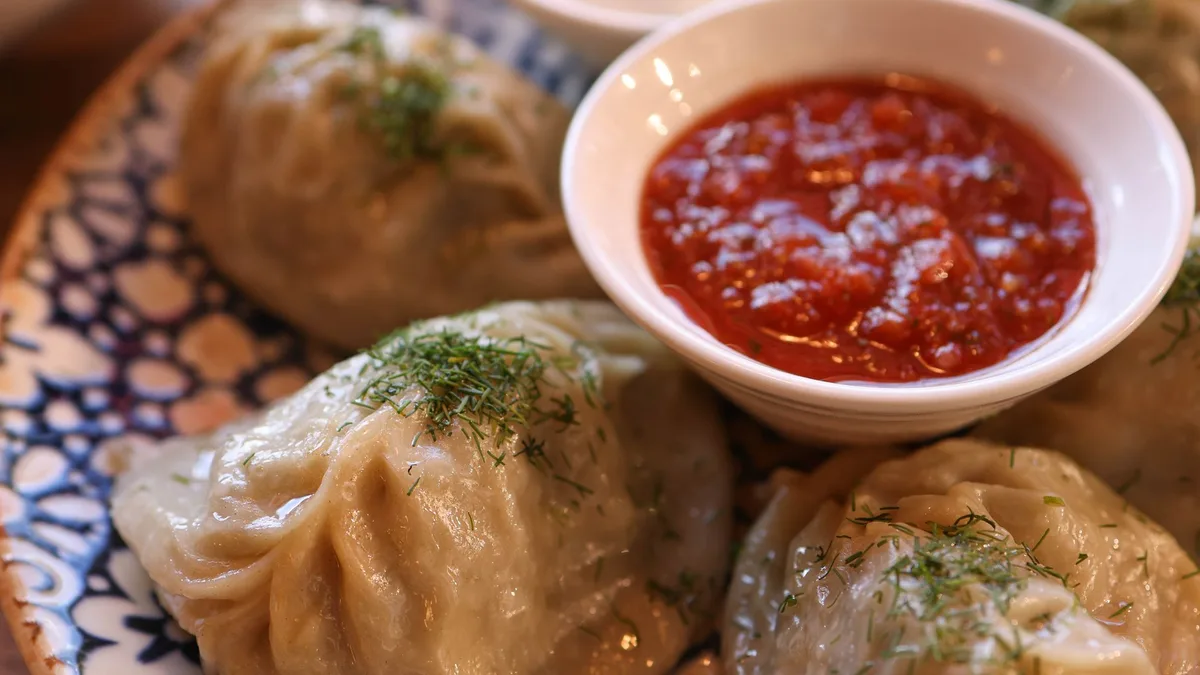
A dumpling looks simple from the outside. A small parcel of dough holds a filling, and the whole thing arrives hot on a plate or in a bowl. Behind that simplicity, however, sits a small system with several moving parts. Each part changes the result in its own way. This guide to how dumplings work explains that system from the ground up. It covers wrappers, fillings, seals, shapes, cooking methods, and sauces. No single trick explains a good dumpling. Instead, several choices work together, and understanding them makes every later encounter with dumplings easier to read.
Many people meet dumplings first as a finished dish. A plate arrives, steam rises, and the parcels look almost as if they grew that way on their own. In reality, each dumpling is the result of a chain of decisions. Someone chose a dough, rolled it thin, added a filling, sealed an edge, and picked a way to cook it. Change one choice, and the dumpling changes too. For example, a thicker wrapper gives a chewier bite. A thinner wrapper gives a more delicate bite. Both can be pleasant. They are simply different outcomes of the same system.
What Is a Dumpling, Really?
At its simplest, a dumpling is a filling wrapped in dough and then cooked. The dough forms a case. The filling sits inside that case. Heat then cooks both parts at the same time. That single idea covers an enormous family of foods. Some dumplings are small and crescent-shaped. Others are round and plump. Still others are large enough to fill a bowl on their own. Despite this variety, the shared pattern stays the same. Dough plus filling plus heat equals a dumpling.
The word itself can be slightly misleading. People often picture one fixed dish, yet dumplings vary enormously across kitchens and regions. Some are boiled in water or broth. Others are steamed, fried, or baked. In addition, fillings range from finely chopped vegetables to seasoned meat, seafood, cheese, fruit, or sweet pastes. Wrappers range from wheat dough to rice dough, potato dough, and other starch-based cases. Understanding that shared pattern matters far more than memorising any one variety. Once the pattern is clear, new varieties become easier to place.
How Do Dumplings Work as a System?
Think of a dumpling as four parts working together. The wrapper holds everything in place. The filling gives flavour, texture, and moisture. The seal keeps the filling inside during cooking. The cooking method decides how heat reaches both parts. If one part fails, the whole dumpling suffers. For instance, a weak seal lets filling escape into the cooking water. A wrapper that is too thick stays doughy inside. A filling that releases too much liquid can soften the wrapper from within. Balance, therefore, matters more than any single part.
Heat moves through a dumpling in a particular order. It first reaches the outside of the wrapper. It then travels inward through the dough. Finally, it reaches the filling at the centre. Meanwhile, moisture inside the filling turns to steam and helps cook the filling from within. This is why size matters so much. A small dumpling cooks through quickly. A large dumpling needs more time for heat to reach its centre. Consequently, makers match wrapper thickness, filling amount, and cooking time to the size they have chosen. Nothing here is accidental. Every choice answers the choice before it.
How Are Dumplings Made, Step by Step?
The question of how dumplings are made has a short answer and a longer one. The short answer is that dough is shaped into thin rounds, filling is placed in the centre, edges are sealed, and the parcels are cooked. The longer answer involves what happens at each stage. Dough must be soft enough to stretch without tearing. Filling must be firm enough to hold its shape during sealing. Sealing must be tight enough to survive cooking. Cooking must be gentle enough to cook the centre without breaking the case. Each stage, therefore, sets up the next one.
Most makers follow a similar rhythm. Dough is mixed, rested, and rolled thin. Rounds are cut or shaped one by one. A small amount of filling goes into the middle of each round. Edges are moistened lightly so they stick. Fingers then press, fold, or pleat the edges closed. Finally, finished dumplings rest briefly before cooking. Resting matters, because it lets the dough relax and the seal settle. In contrast, rushing straight from sealing to cooking can leave edges loose. Small habits like this separate a dumpling that holds together from one that falls apart.
Working in batches helps as well. Makers often shape a tray of dumplings before cooking any of them. This keeps the rhythm steady and stops early dumplings from drying out while later ones are shaped. Similarly, fillings are usually prepared before dough is rolled. That order keeps wet fillings from sitting too long on thin wrappers. Order, in other words, is part of the method. A calm sequence gives each part the attention it needs.
What Is Dumpling Dough, and Why Does It Matter?
This section offers dumpling dough explained in plain terms. Dumpling dough is a soft, pliable mixture built mainly from flour and water. Sometimes other ingredients join in, such as egg, oil, salt, or starch. The flour gives structure. Water binds the flour into a mass that can be rolled. Resting lets the dough relax, so it stretches instead of springing back. Rolling then turns that mass into thin sheets. Those sheets become wrappers. Dough, in short, is the raw material for the whole case.
Different doughs behave in different ways. Wheat dough stretches well and forms a chewy wrapper. Rice dough turns more delicate and slightly translucent when cooked. Potato dough feels soft and tender, almost pillowy. Starch doughs can turn clear and slippery. Each type suits a different dumpling style. For example, a chewy wheat wrapper stands up well to frying. A delicate rice wrapper suits gentle steaming. Choosing dough, therefore, is really choosing texture. The filling and cooking method then follow from that first choice.
Thickness matters just as much as dough type. A wrapper rolled too thick feels heavy and doughy. A wrapper rolled too thin tears during sealing or cooking. Makers aim for a middle ground. Edges often stay slightly thinner than the centre, since edges fold over and double up during sealing. That small detail prevents a thick, doughy rim. In addition, even thickness helps heat travel evenly. A wrapper with thin spots and thick spots cooks unevenly, and the eater notices the difference at once.
How Do Wrappers Change the Whole Dumpling?
Here is dumpling wrappers explained through one idea: the wrapper is both container and ingredient. It holds the filling, yet it also becomes part of the eating experience. A wrapper can be soft, chewy, crisp, slippery, or tender. It can taste wheaty, neutral, or slightly sweet. It can stay pale or turn golden. Each outcome comes from dough type, thickness, and cooking method combined. Change the wrapper, and the same filling tastes like a different dish.
Wrappers also control moisture. During cooking, they face water, steam, or hot oil on the outside. Inside, they face juices from the filling. A good wrapper resists both sides long enough for the filling to cook. It softens without dissolving. It firms without turning tough. This balancing act explains why wrappers are rolled thin but not paper-thin. Thinness lets heat pass through quickly. Strength keeps the parcel whole. Makers, therefore, judge wrappers by feel as much as by sight. A wrapper that stretches gently without tearing is ready.
Some wrappers are bought ready-made, while others are rolled fresh at home. Ready-made wrappers save time and give even thickness. Fresh wrappers give control over size and texture. Neither choice is automatically better. Instead, each suits a different situation. A busy kitchen may value speed and consistency. A slow cooking session may value the feel of fresh dough. In both cases, the wrapper must match the filling and the cooking method. That match, above all, decides whether the dumpling works.
What Goes Inside, and Why Does Filling Behave Differently?
This is dumpling fillings explained through behaviour rather than lists. A filling is the flavoured centre of a dumpling. It may contain vegetables, meat, seafood, cheese, beans, fruit, or a mixture of several things. Seasoning gives it character. Texture gives it interest. Moisture gives it juiciness. During cooking, however, filling does not simply sit still. It heats, softens, releases juices, and sometimes shrinks. Those changes affect the wrapper around it. A filling that releases a flood of liquid can soften its case. A filling that stays dry can feel crumbly.
Good fillings balance three qualities. Flavour should be bold enough to survive inside dough, since the wrapper dulls taste slightly. Texture should include some variety, such as soft pieces with a little bite. Moisture should be present but controlled. Chopping ingredients finely helps here, because small pieces pack together and cook evenly. Mixing also helps, because it spreads seasoning and binds loose pieces into a mass that holds its shape. Consequently, filling preparation takes real care. It is not an afterthought. It is half the dumpling.
Fillings also explain why dumplings suit so many eaters. Vegetable fillings give freshness and lightness. Meat fillings give richness and depth. Seafood fillings give a delicate, briny character, and seafood dishes show how often coastal kitchens build meals around such ingredients. Sweet fillings turn dumplings into dessert-like parcels. Savoury fillings turn them into a main dish or a snack. No single filling defines the family. Variety, in fact, is the point.
Why Does Shape Matter More Than Decoration?
Here is dumpling shapes explained without fuss: shape is not decoration first. Shape is engineering. A crescent folds filling into a compact parcel with a sealed curved edge. A round pouch gathers dough at the top and traps steam inside. A flat triangle stacks neatly and cooks evenly in a pan. A long roll slices into even pieces. Each shape answers a practical question. How should heat reach the centre? What keeps the seal intact during cooking? Where should the dumpling sit while it cooks? Beauty follows function, not the other way around.
Seals deserve special attention within shape. A simple pressed edge works well for boiled dumplings, since water surrounds them evenly. Pleated edges work well for steamed dumplings, because folds add strength where dough gathers. Twisted tops work well for pouches, because the twist closes the parcel firmly. Crimped edges work well for fried dumplings, because a firm rim resists hot oil. Shape, therefore, is really a set of answers to cooking problems. Makers choose shapes that suit their cooking method, not merely shapes that look pleasing.
Size plays a similar role. Small dumplings cook fast and suit shared plates. Medium dumplings balance filling and wrapper in each bite. Large dumplings feel substantial and often carry wetter fillings, since a bigger case holds more juice. Eaters notice size at once, because it changes the ratio of dough to filling. A tiny dumpling tastes mostly of wrapper. A large dumpling tastes mostly of filling. Neither ratio is wrong. Each simply gives a different experience, and makers pick the ratio they want.
How Do Dumplings Cook?
The question of how dumplings cook has several answers, because heat can arrive in different forms. Boiling surrounds dumplings with hot water. Steaming surrounds them with hot vapour. Frying surrounds them with hot oil. Baking surrounds them with hot air. Each form transfers heat at a different speed and gives a different surface. Boiling softens the wrapper evenly. Steaming keeps the wrapper tender and moist. Frying crisps the surface. Baking firms and colours the outside. Understanding dumpling cooking methods, therefore, means understanding heat itself.
Water-based cooking deserves a closer look. In boiling, dumplings float and tumble gently in hot liquid. Heat reaches every surface at once. Wrappers soften and fillings cook through. In steaming, dumplings sit above boiling water, and vapour carries heat to them. Wrappers stay moist without sitting in liquid. Fillings cook gently, and delicate wrappers keep their shape. Both methods suit soft, tender results. In contrast, oil-based cooking gives crispness. Hot oil drives moisture from the wrapper surface, and the surface turns golden and firm. That contrast explains much of dumpling variety.
Combination methods add another layer. Some dumplings start in a pan with a little oil, then finish with a splash of water under a lid. Steam then cooks the tops while the bases crisp. Other dumplings are boiled first and fried afterwards. Still others are steamed and then briefly browned. These two-stage methods give two textures in one bite: crisp below, tender above. They also show why cooking is a choice, not a rule. Makers pick the method that gives the texture they want, and they adjust heat and timing to suit the size of their dumplings.
What Is the Difference in Steamed vs Fried Dumplings?
The contrast in steamed vs fried dumplings comes down to heat, moisture, and surface. Steamed dumplings cook in moist heat. Their wrappers stay soft, smooth, and slightly glossy. Fillings stay juicy, because steam adds moisture rather than driving it away. Fried dumplings cook in dry, fierce heat. Their wrappers turn crisp, golden, and firm at the base or all over. Fillings still cook through, yet the eating experience feels richer and crunchier. Same idea, different physics, different pleasure.
Texture is not the only difference. Steaming suits delicate wrappers and subtle fillings, since gentle heat preserves fine flavours. Frying suits sturdier wrappers and bolder fillings, since crispness adds its own flavour. Health-minded eaters often prefer steaming, because it adds no oil. Eaters seeking crunch often prefer frying, because crispness satisfies a different craving. Neither method is superior in general. Each serves a different mood, a different filling, and a different wrapper. Makers, consequently, choose based on what they want the eater to notice first.
Some dumplings blur the line between the two methods. Pan-fried dumplings with a steamed finish offer both textures at once. Their bases crisp in oil, while their tops soften in steam. This hybrid shows how flexible dumpling cooking can be. It also explains why menu descriptions matter. Words like steamed, fried, or pan-fried tell eaters what to expect before the first bite. A cook who understands both methods can move between them freely. For a broader comparison of cooking approaches, two cooking methods compared shows how heat choices shape food in general.
How Do Gyoza Work?
The question of how gyoza work starts with their shape and cooking style. Gyoza are crescent-shaped dumplings with thin wheat wrappers and pleated edges. They are usually cooked by a two-stage method. First, they fry in a pan until their bases turn crisp and golden. Then, water is added and a lid goes on, so steam finishes cooking the tops and fillings. The result is a dumpling with two textures. Below, it crunches. Above, it stays tender. That contrast is the whole point.
Fillings for gyoza are typically finely chopped and well seasoned. Small pieces matter here, because thin wrappers and short cooking need fillings that cook through quickly. Pleats matter too, because they gather extra dough at the top and strengthen the seal. Flat bases matter as well, since gyoza sit upright in the pan and need steady contact with heat. Every feature serves the cooking method. Remove the flat base, and crisping becomes uneven. Remove the pleats, and sealing becomes weaker. Gyoza, therefore, show the dumpling system at its most tightly designed.
Gyoza also show how dumplings travel and adapt. They appear in home kitchens, small eateries, and larger restaurants, each with small variations in filling and seasoning. Travellers exploring Japan often meet them early, and places to visit in Japan give a sense of how food traditions sit within wider travel experiences. No single version counts as the only correct one. Instead, gyoza work because their system is sound: thin wrapper, fine filling, firm seal, and two-stage cooking. Change the filling, and the system still holds.
How Do Wontons Work?
The question of how wontons work starts with their wrapper. Wontons use very thin wheat wrappers, often square rather than round. Their fillings are small, finely chopped, and seasoned to taste bold in a small parcel. Shapes vary, from simple triangles to gathered pouches with twisted tops. Cooking varies too. Wontons may be boiled in water, simmered in broth, steamed, or fried until crisp. Their thin wrappers cook fast, so fillings must be fine and ready to cook through quickly.
Wontons in broth show the system at its most elegant. Broth surrounds each parcel with gentle heat and flavour. Thin wrappers soften almost at once. Small fillings cook through in the same short time. The eater gets wrapper, filling, and broth in one spoonful. Fried wontons show a different side of the same system. Hot oil turns thin wrappers crisp and golden. Fillings stay small and juicy inside. Same wrapper, same filling idea, yet a completely different bite. Cooking method, once again, decides the outcome.
Size is the secret behind wontons. Because each parcel is small, the wrapper-to-filling ratio stays balanced. Eaters taste dough and filling together, neither dominating the other. Small size also suits shared meals, since a bowl can hold many parcels. Travellers meeting Chinese food traditions often encounter wontons in broth or fried forms, and places to visit in China show how widely such traditions vary by region. Wontons, in short, prove that small parcels can carry big flavour when every part is matched.
What Does a Dumpling Varieties Guide Actually Cover?
A good dumpling varieties guide does more than list names. It explains why varieties differ. Some differ by wrapper. Others differ by filling. Still others differ by shape or cooking method. A guide that groups dumplings by these features helps eaters far more than a guide that merely names dishes. This is dumpling types explained properly: types are patterns, not just labels. Once eaters see the patterns, they can recognise a new variety at a glance, even when its name is unfamiliar.
Consider a few well-known examples. Jiaozi are crescent-shaped wheat dumplings with many fillings and cooking methods. Pierogi are half-moon dumplings from Central and Eastern European kitchens, often filled with potato, cheese, cabbage, or fruit, and places to visit in Poland in winter show how such hearty foods fit colder seasons. Ravioli and tortellini are small Italian pasta parcels with fillings, and places to visit in Italy give context for how pasta traditions vary by region. Momos are pleated dumplings from Himalayan kitchens, often steamed and served with sauces. Khinkali are large, twisted dumplings with juicy fillings. Each example follows the same system. Each differs in wrapper, filling, shape, or cooking.
Other varieties widen the picture further. Some dumplings use potato dough and taste soft and comforting. Others use rice dough and turn translucent when steamed. Sweet dumplings carry fruit or sweet pastes and suit dessert courses. Soup dumplings carry broth inside the parcel itself, so the first bite releases liquid as well as filling. No single cuisine owns the idea. Instead, many kitchens reached the same solution independently: wrap good filling in dough, seal it, and cook it. That shared solution, with local twists, is what makes dumplings a world food rather than a single dish.
How Do Dumpling Sauces Work?
Here is dumpling sauces explained through balance. A sauce is not a cover for a poor dumpling. It is a partner that adds what the dumpling lacks. Dumplings are mild by nature, since wrappers taste gentle and fillings sit sealed inside. Sauces add salt, sourness, heat, or richness from outside. A splash of vinegar brightens a rich filling. A little chilli adds warmth. A savoury soy-based dip adds depth. A creamy dip softens a crisp dumpling. Each sauce changes the bite without changing the dumpling itself.
Sauces also solve a practical problem. Dumplings are eaten one by one, and each bite should taste complete. Dipping lets eaters adjust flavour parcel by parcel. One dumpling may get a light dip. Another may get a bolder one. Sauces, therefore, give control to the eater. They also add moisture, which helps dry or crisp dumplings feel more complete. In addition, sauces add aroma. Herbs, garlic, ginger, citrus, and spices in a dip reach the nose before the dumpling reaches the mouth. That aroma shapes expectation, and expectation shapes taste.
Matching sauce to dumpling matters. Delicate steamed dumplings suit light, clean dips that do not overwhelm them. Bold fried dumplings suit stronger sauces that stand up to crispness. Rich meat fillings suit sour or sharp dips that cut through richness. Vegetable fillings suit savoury dips that add depth. Sweet dumplings suit creamy or fruity accompaniments rather than salty ones. No rule here is absolute. Eaters, ultimately, should trust their own taste. A sauce that pleases the eater is doing its job, whatever tradition suggests.
Why Do Dumpling Traditions Differ Around the World?
This is dumpling traditions explained through local answers to shared problems. Every kitchen that makes dumplings faces the same questions. What flour grows nearby? What fillings are available? How do people cook at home? What occasions call for special food? Answers differ by place, and dumplings differ with them. Wheat regions favour wheat wrappers. Rice regions favour rice wrappers. Potato regions favour potato dough. Cold climates favour hearty fillings. Warm climates favour lighter ones. Dumplings, in other words, record local life in edible form.
Occasions shape traditions as well. Some dumplings belong to festive meals, where families gather to shape parcels together. Shaping becomes a shared activity, and children learn by watching hands at work. Other dumplings belong to everyday meals, where speed and simplicity matter most. Still others belong to street stalls, where small size and quick cooking suit eating on the move. In each setting, the dumpling system bends slightly. Fillings change. Sizes change. Cooking methods change. The core idea, however, stays recognisable across all of them.
Traditions also travel with people. When families move, dumplings move with them. New ingredients enter old recipes. Old techniques meet new kitchens. Fillings adapt to local markets. Wrappers adapt to local flours. Over time, a dumpling that began in one place gains cousins in many others. That journey explains why similar parcels appear under different names. It also explains why no single version should be treated as the standard. Dumplings belong to many kitchens at once, and that shared ownership is part of their charm.
How Can You Read a Dumpling Like an Eater?
Reading a dumpling starts with looking before tasting. Wrapper colour hints at cooking method. Pale and glossy suggests steaming. Golden and crisp suggests frying. Soft and matte suggests boiling. Shape hints at filling and origin. Crescents suggest pan cooking. Pouches suggest steaming. Twisted tops suggest juicy fillings. Size hints at the dough-to-filling ratio. Small parcels promise balance. Large parcels promise filling. These clues, taken together, tell eaters much of the story before the first bite.
Tasting adds the rest of the story. The first bite should reveal wrapper texture, then filling flavour, then the balance between them. A wrapper that tears cleanly shows good dough and sealing. A filling that tastes seasoned throughout shows careful mixing. Juices that stay inside show a firm seal. Sauces then adjust the picture, adding brightness or heat where needed. If something feels off, the system explains why. A doughy centre suggests a wrapper too thick. A burst parcel suggests a weak seal. A dry filling suggests too little moisture. Diagnosis, therefore, becomes possible for any eater, not only for cooks.
Everyday eating benefits from this way of reading food. Dumplings appear in home kitchens, shared meals, and casual outings, and noticing how they work turns a simple meal into a small lesson. Similarly, smarter food choices for busy days show how understanding food helps people choose well under time pressure. Dumplings reward that attention richly. They are small, varied, and full of craft. Once eaters understand wrappers, fillings, seals, shapes, and cooking, every dumpling becomes easier to enjoy and easier to judge. That understanding, ultimately, is what this guide set out to give.
the art of crafting dumplings is not just about the choice of ingredients; it also encompasses the techniques employed during cooking. Just as with dumplings, where the method of steaming, boiling, or pan-frying can dramatically alter the final product, understanding the principles behind heat application is crucial. For instance, the Maillard reaction—responsible for that enticing golden-brown crust—plays a vital role in enhancing flavors across various cooking methods. Exploring the intricacies of how dry-heat cooking works can further illuminate the relationship between cooking techniques and culinary outcomes, revealing how different methods can elevate even the simplest dishes to gastronomic heights. Thus, both dumplings and other culinary creations thrive on a foundation of informed decision-making, where every choice, from wrapper to cooking method, contributes to the final flavor profile and texture.




