
Most heart disease does not begin with chest pain. It begins quietly, as plaque builds inside the coronary arteries over many years. A person can feel fit, eat reasonably well, and still carry disease that no routine check has spotted. Cleerly Health exists for exactly that blind spot. The company applies artificial intelligence to a heart scan called coronary CT angiography, and it turns those images into a detailed map of plaque. As a result, doctors can see not only whether an artery has narrowed, but also how much plaque is present and what that plaque is made of.
This guide explains what Cleerly does in plain language. You will learn how the scan works, what the analysis measures, and who usually discusses this kind of testing with a doctor. You will also see how the approach compares with older tools such as a calcium score. Above all, the article keeps one boundary clear from the start. This is general information about a technology, not medical advice for any individual reader.
What Is Cleerly Health?
Cleerly Health is a health technology company focused on coronary artery disease. Its software analyses images from a coronary CT angiography scan, often shortened to CCTA. The scan itself is a familiar hospital test, and it uses contrast dye plus a CT scanner to picture the heart arteries. Cleerly adds an analysis layer on top of those pictures. In other words, Cleerly does not replace the scan, and it does not replace the clinician who ordered it.
Instead, the software studies every vessel in the coronary tree. It traces the artery walls, finds plaque deposits, and measures them one by one. A standard visual read, by contrast, depends heavily on what a human eye notices in the moment. Two skilled readers can also describe the same narrowing in different ways. Software measurement, therefore, brings a useful consistency to the process. The clinician still interprets the findings, yet the starting point is now a quantified report rather than an impression alone.
Why Plaque Matters More Than a Simple Blockage Percentage?
For decades, heart care often revolved around one question. How blocked is the artery? That question still matters, because a severe narrowing can limit blood flow and cause symptoms. Still, it tells only part of the story. Many serious cardiac events begin at spots that were not severely narrowed beforehand. The plaque there ruptures, a clot forms, and blood flow stops suddenly.
Plaque type helps explain that risk. Calcified plaque is hardened material, and it tends to be more stable. Non-calcified plaque is softer, and low-attenuation plaque is a soft, lipid-rich form that clinicians watch closely. A scan that only counts calcium can therefore miss the softer deposits entirely. When doctors know the mix of plaque types, they can judge the picture with far more nuance. That fuller picture is the core promise behind Cleerly Health and similar tools in preventive cardiology.
How Does the Cleerly Process Work?
Step One Is a Standard CCTA Scan
The journey starts at an imaging centre or hospital that offers cardiac CT. Staff place an intravenous line, usually in the arm, and contrast dye flows through it during the scan. The dye makes the coronary arteries stand out clearly against the surrounding tissue. Sometimes, staff also give medicine to slow the heart rate slightly, because a steadier heartbeat produces sharper images. The scan itself is quick and noninvasive, and no surgery or hospital stay is involved.
Preparation varies between centres. For example, some teams ask patients to avoid caffeine beforehand, and others check kidney function before using contrast. Anyone with a contrast allergy should raise it early, because the team may adjust the plan. After the scan, patients usually return to normal activities the same day. Anyone who feels sudden severe symptoms at any point, meanwhile, needs urgent care rather than a routine scan, and guides on emergency medical conditions evaluations explain why fast assessment matters in those moments.
Step Two Is the AI Plaque Analysis
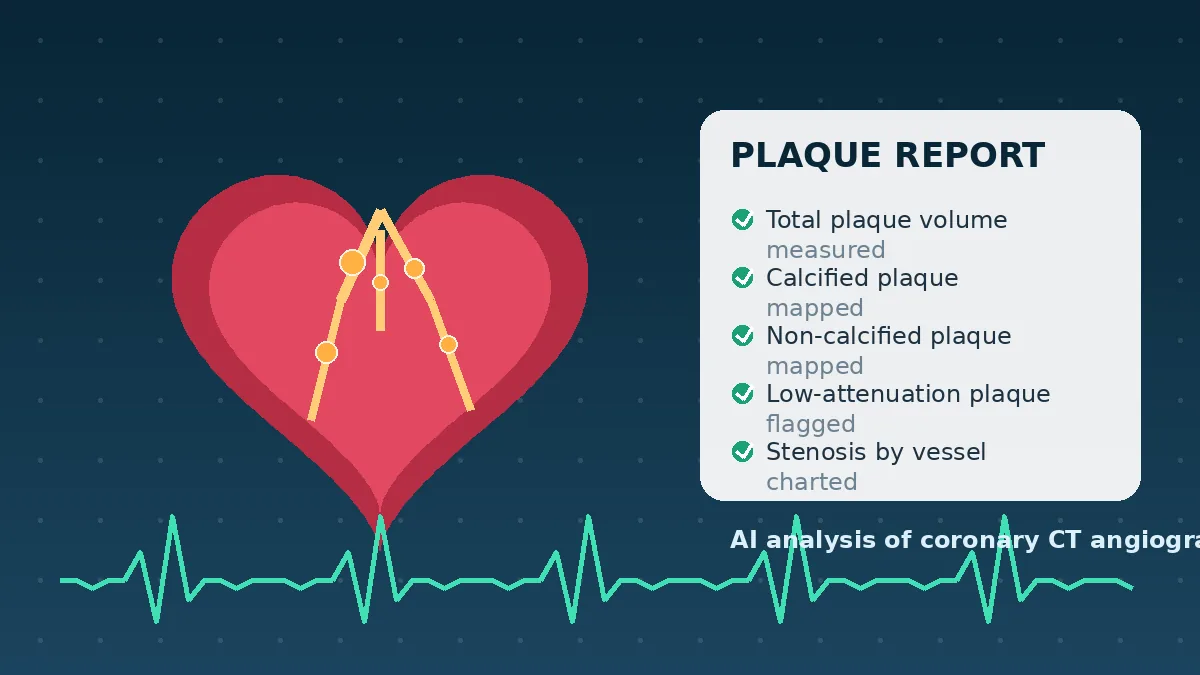
After the scan, the image files travel to the Cleerly analysis platform. The software segments the coronary arteries and identifies the inner lumen and the vessel wall. Then it locates plaque along each vessel and measures its volume. It also classifies plaque by composition, separating calcified, non-calcified, and low-attenuation portions. Finally, it measures stenosis, which is the degree of narrowing at each affected spot.
The output reads like a map rather than a single score. A clinician can see total plaque burden, a breakdown by vessel, and the locations that deserve the closest attention. In practice, that structure changes the follow-up conversation. Instead of debating a rough percentage from memory, doctor and patient can discuss measured plaque in specific arteries. Similar imaging advances have reshaped other fields too, as coverage of the latest glaucoma treatment breakthroughs shows for eye care.
Step Three Is a Conversation With Your Clinician
A report alone changes nothing. Its value appears when a clinician places it beside your history, symptoms, blood pressure, cholesterol, and family background. Together, those pieces form a proper heart disease risk assessment. The clinician may then adjust medicines, suggest lifestyle changes, order more tests, or simply schedule monitoring. Equally, a reassuring result may support a watchful plan rather than extra intervention.
Comprehensive centres increasingly build that conversation into routine care. A profile of Monument Health Taylorsville as a hub of comprehensive care shows how joined-up services help patients move from a test result to a clear plan. That joined-up step matters, because a detailed plaque map deserves an equally careful explanation.
What Does a Cleerly Report Actually Measure?
The report centres on plaque quantification, which means measuring plaque instead of merely noting its presence. Total plaque volume gives an overall burden figure for the coronary tree. A per-vessel breakdown then shows where that burden sits. Plaque composition adds the next layer, because soft and hard deposits carry different implications. Stenosis measurements complete the picture by showing how much each deposit narrows the channel for blood.
- Total plaque volume across all coronary arteries combined
- A vessel-by-vessel breakdown, so no single artery hides inside an average
- Calcified plaque volume, covering the hardened and generally stable deposits
- Non-calcified plaque volume, covering softer material that calcium scoring misses
- Low-attenuation plaque volume, covering the soft lipid-rich deposits clinicians monitor closely
- Stenosis severity at each lesion, expressed as measured narrowing rather than a guess
Over time, repeat measurement can also show change. A clinician can compare a later scan with an earlier one and see whether plaque burden has grown, stabilised, or eased. That comparison supports honest conversations about whether a treatment plan is working. It does not, on its own, prove that any single change caused the difference.
How Is Cleerly Different From a Calcium Score?
A coronary artery calcium score is a simpler CT test. It counts hardened calcium in the artery walls, and it produces a single number. That number helps estimate risk, especially in people without symptoms. However, the test cannot see soft plaque at all. A person can therefore record a calcium score of zero and still carry non-calcified plaque. Younger patients face this gap most often, because their plaque has had less time to harden.
CCTA with AI analysis looks at the arteries directly. It shows soft plaque, hard plaque, and the narrowing each deposit causes. The trade-off is complexity, since CCTA uses contrast dye and involves more preparation than a calcium scan. Neither test suits everyone, and neither replaces clinical judgement. A doctor weighs symptoms, risk factors, and prior results before recommending either path. In short, the calcium score offers a quick snapshot, while the Cleerly approach offers a detailed survey.
Who Might Discuss Cleerly Testing With a Doctor?
No single profile fits every candidate, and only a clinician can judge suitability. Still, certain situations commonly prompt the conversation. Adults with a strong family history of early heart disease often ask for a clearer picture. People with borderline cholesterol results may also want evidence before committing to long-term medication. Others have chest discomfort that standard tests have not explained. In each case, direct plaque evidence can sharpen a decision that risk calculators leave fuzzy.
Lifestyle context matters as well. Smoking history, diabetes, high blood pressure, and chronic stress all feed arterial plaque buildup over time. Stress deserves a mention of its own, because long working hours and poor sleep quietly strain the heart. Practical writing on turning the page to a healthier mind covers that mental side of long-term health honestly. Heart health, after all, is never only about arteries.
What Are the Limits of AI Heart Imaging?
Honest limits protect readers better than hype. AI in cardiology supports clinicians, and it does not diagnose anyone by itself. Image quality also matters, because a racing heartbeat or heavy calcium can blur the pictures. Contrast dye is unsuitable for some patients, and CT scanning involves radiation exposure that clinicians weigh carefully. Availability varies too, since not every imaging centre offers this analysis yet.
Cost and insurance coverage vary widely as well, so patients should ask about both before booking. A finding of plaque also needs proportion. Plaque is common with age, and its presence does not mean an event is certain or near. Equally, a clean scan does not grant immunity or cancel healthy habits. The technology sharpens one part of risk assessment, and the rest of care still matters just as much.
How Does Cleerly Fit Into Everyday Heart Care?
Think of the analysis as one instrument in a larger orchestra. Blood tests, blood pressure checks, exercise, food, sleep, and medicines all play their parts. A detailed plaque map can motivate change, because abstract risk becomes visible and personal. Many people find a measured result easier to act on than a general warning. Clinicians can then match the intensity of prevention to the burden they actually see.
Follow-up support often decides whether good intentions last. Home-based services help some patients stick with monitoring and medication routines, as this look at Millennium Home Care Services describes for elderly and recovering patients. Choosing ongoing support carefully matters too, and guidance on why to choose a trusted partner in at-home care sets out the questions families should ask. Daily habits at home, in the end, carry prevention further than any single scan.
Small habits compound quietly. Regular walking, home-cooked meals, and consistent sleep support the same arteries the scan pictures. Mental sharpness plays a supporting role as well, since routines stick better when life feels manageable. Even light activities help structure a healthier day, and research on how puzzles shape cognitive well-being shows how small daily rituals support the mind. A scan can start the change, yet habits sustain it.
Questions to Ask Before Booking a Scan?
- Why are you recommending a CCTA scan for me at this stage?
- What will the plaque analysis add beyond my current risk estimates?
- How should I prepare, and do my medicines or allergies affect the scan?
- Who will explain the report to me, and when will that happen?
- What happens next under each possible result, including a clear scan?
- What will the scan and analysis cost me, and does my coverage apply?
Clear answers to those questions signal a well-run service. Vague answers, by contrast, are a reason to pause and seek a second opinion. A good clinician welcomes the questions, because an informed patient follows a plan far more reliably. Take notes during the discussion, and ask for the report in writing afterwards.
Frequently Asked Questions
Is the Cleerly scan a different scan from a normal heart CT?
No, the scan itself is a standard coronary CT angiography examination. Cleerly adds an AI analysis of those images afterwards. You attend one appointment, and the extra work happens on the image files rather than on you.
Does a Cleerly result diagnose heart disease on its own?
No, the analysis supports a clinician rather than replacing one. Your doctor combines the plaque findings with symptoms, history, and other tests. Only that combined picture can guide diagnosis and treatment decisions safely.
Can a calcium score of zero still miss plaque?
Yes, a calcium score counts only hardened plaque. Soft, non-calcified plaque does not appear in that number at all. For that reason, doctors sometimes look deeper when symptoms or family history raise concern.
Does finding plaque mean I will have a heart attack?
No, plaque is common, and many people with plaque never have an event. The finding simply gives your clinician better information for prevention. Treatment, habits, and monitoring all shape what happens next.
Should I book this test without talking to a doctor first?
No, start with your own doctor or cardiologist. That conversation confirms whether CCTA suits your situation and health history. It also ensures someone qualified will explain the results and plan any follow-up.
The Bottom Line on Cleerly Health
Cleerly Health represents a genuine shift in how clinicians can study coronary arteries. Instead of estimating risk from population averages alone, doctors can measure a patient’s actual plaque. They can see its volume, its type, and the narrowing it causes, vessel by vessel. That evidence supports calmer, more personal decisions about medicines, habits, and monitoring.
Keep the promise in proportion, though. The technology does not prevent events by itself, and it does not suit every patient or every budget. Its real strength is clarity, offered at a stage when prevention still has room to work. If heart disease runs in your family or your risk feels uncertain, raise the topic at your next appointment. A short conversation with your own doctor is the right first step, and a measured plaque map may be the second.
This article is general information about a heart imaging technology. It is not medical advice. Please discuss heart-health testing, symptoms, and treatment choices with your own doctor or cardiologist.