
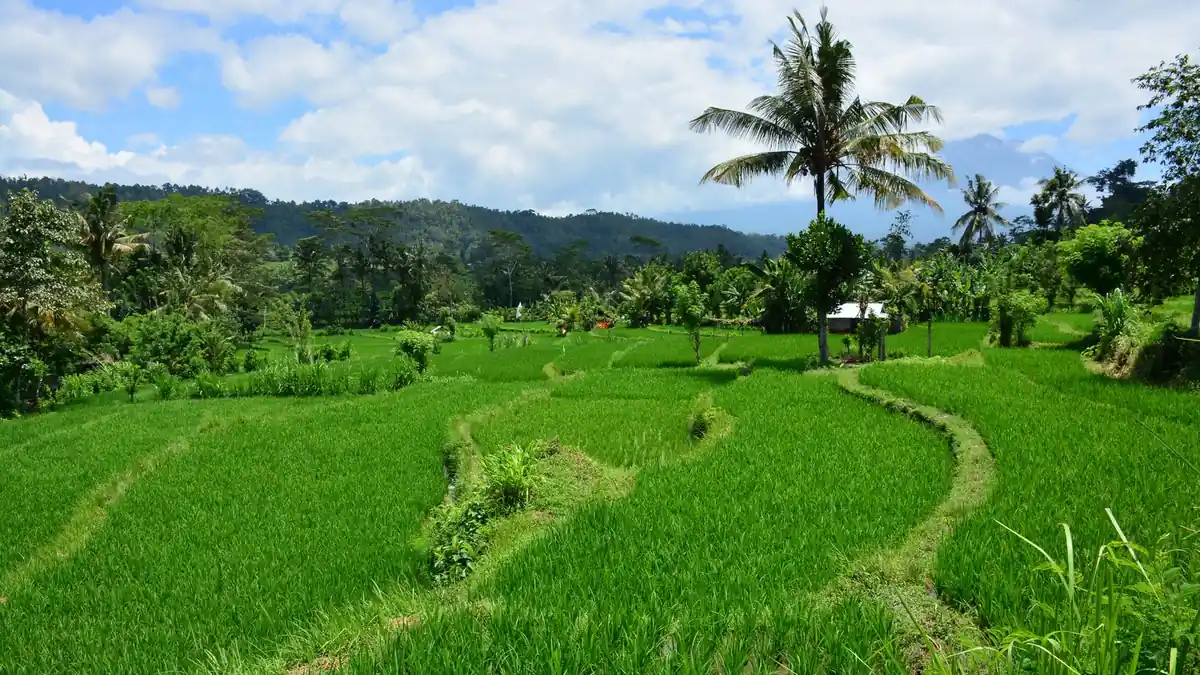
Most first Bali trips collapse into one long traffic jam. However, the island rewards a completely different shape of week. This bali itinerary 7 days plan skips the south-coast scrum entirely. Instead, you sleep inland, then east, then high in the northern hills.
Your three bases are Ubud, Sidemen and Munduk. Firstly, Ubud gives you culture, food and easy day trips. Then Sidemen slows everything down among rice fields and weaving villages. Finally, Munduk cools the whole trip with waterfalls, crater lakes and mountain air.
Consider this a bali itinerary without kuta from start to finish. Kuta, Seminyak and Canggu never become bases here at all. Moreover, the route moves one way, so you never backtrack across the island. A south-coast stay appears later only as an optional extension.
This is also a 7 day bali itinerary first time visitors can follow confidently. Every transfer below uses honest, approximate driving ranges in general terms. Furthermore, each day stays geographically sensible, with no zigzagging between distant regions.
What does this bali itinerary 7 days route look like at a glance?
Think of the week as three short stays joined by scenic transfers. Each base change happens once, and each move heads somewhere genuinely new. The table below shows the whole shape in seconds.
| Day | Main focus | Roughly driving time? | Overnight base |
|---|---|---|---|
| Day 1 | Arrive and settle into Ubud | Airport transfer only | Ubud |
| Day 2 | Tegalalang terraces and Tirta Empul | Short local hops | Ubud |
| Day 3 | Ubud town, ridge walk and culture | Mostly on foot | Ubud |
| Day 4 | Transfer east with Besakih Temple | A half day with stops | Sidemen |
| Day 5 | Sidemen valley, Tirta Gangga, Lempuyang | Local day-trip driving | Sidemen |
| Day 6 | Transfer north via Jatiluwih terraces | The longest day on the road | Munduk |
| Day 7 | Munduk waterfalls, twin lakes, depart | Departure transfer afterwards | Depart, or extend |
Honest drive-time framing matters more than false precision in Bali. Roads here wind through villages, hills and slow local traffic daily. Therefore, a short distance on the map can still take a while. Treat every range in this guide as a fair, general guide.
Similarly, the order of bases protects your energy across the week. Ubud comes first because arrivals feel easiest in a lively town. Meanwhile, Sidemen suits the middle, once you have found your feet. Munduk, finally, ends the trip quietly, far above the coastal heat.
How to split nights in Bali without backtracking?
The how to split nights in bali puzzle frustrates many first-timers. Too many bases waste whole mornings on packing and checkout queues. However, too few bases turn every sight into a long return drive. Three bases across seven nights hit the balance almost perfectly.
So this plan splits the week as Ubud three, Sidemen two, Munduk two. Firstly, three Ubud nights give the town two full, unhurried days. Secondly, two Sidemen nights allow one temple day plus proper valley time. Two Munduk nights, meanwhile, protect the waterfall day from any rushing.
Alternatively, some travellers squeeze in a fourth base for novelty. Moreover, every extra move repeats the same packing and settling routine. Overall, fewer bases with better locations beat constant motion every time.
Readers comparing slower Asian trips may enjoy our guide to where is the best place to visit in Malaysia afterwards. Malaysia rewards the same base-and-explore approach on longer routes.
Where to stay in Bali first time bases that actually work?
The where to stay in bali first time bases question has one clear answer here. Sleep in Ubud, Sidemen and Munduk, in exactly that order. Furthermore, choose your exact street or village lane with equal care. A good base in the wrong corner still wastes precious hours.
In Ubud, stay within an easy walk of the town centre. You then reach restaurants, spas and evening performances entirely on foot. However, avoid lanes directly beside the busiest central junctions if possible.
Sidemen, by contrast, is a valley rather than a single village. Guesthouses spread along the river and among the rice fields there. Moreover, the view matters more than the address in Sidemen.
Munduk spreads along a highland ridge road above the lakes. Small hotels and homestays cluster near the village centre there. In addition, the altitude brings cool evenings and misty early mornings. Pack a light layer, because highland nights feel nothing like Ubud.
Bali private driver vs grab vs scooter: what works where?
The bali private driver vs grab vs scooter debate confuses almost everyone. Worse, the right answer changes completely between Ubud and the rural bases. Therefore, this section gives clear rules for each region separately. Copy them, and transport stops being a daily decision altogether.
Firstly, a private driver suits inter-base transfers and full sightseeing days. Drivers handle mountain roads, parking, fuel stops and local etiquette for you. Moreover, one driver for a transfer day often becomes your best guide.
Secondly, ride-hailing apps work well in Ubud for short hops. Grab and similar services cover central Ubud and the airport corridor reliably. However, pickup rules and local transport customs vary between neighbourhoods here.
Rural Sidemen tells a very different transport story, though. App coverage thins out quickly once you leave the main towns. Consequently, your guesthouse or a local driver becomes the practical option there. Arrange tomorrow’s car tonight, because spontaneous pickups rarely happen in the valley.
Munduk, similarly, rewards planning over improvisation every single time. Waterfalls and lake viewpoints sit scattered along steep highland roads there. Furthermore, phone signal can fade between the ridges and valleys. A booked local driver removes the stress from every Munduk outing.
Scooters, finally, suit only confident, properly licensed and experienced riders. Ubud traffic feels chaotic, and highland roads turn steep and slippery. Moreover, wet-season rain arrives fast and makes rural corners genuinely treacherous. If riding feels even slightly doubtful, choose the driver instead.
Travellers weighing up regional trips may compare our guide to the best place in Thailand to visit for contrast. Bali’s challenge is traffic and terrain, never raw distance itself.
When should you go, and what paperwork comes first?
Chasing the best time to visit bali dry season conditions helps enormously. The dry months generally bring clearer skies, calmer roads and greener terraces. Moreover, waterfalls flow strongly early in the dry season after wet-season rain.
Wet-season trips still work, but they demand a looser daily plan. Rain usually arrives in bursts, often during the afternoon hours. Therefore, start sightseeing early and keep evenings flexible in those months. Mountain roads around Munduk, especially, deserve extra care after heavy rain.
Before arrival, sort the bali tourist levy and e-visa on arrival basics. Bali charges foreign visitors a tourist levy under a regional scheme. Separately, many nationalities can use an e-visa or visa-on-arrival route. Check the current official requirements for your own passport before travelling.
Importantly, rules and systems change, so rely on official channels only. This guide deliberately states no levy amount or visa fee figure. Instead, confirm the latest process shortly before your departure date.
Day 1: arrive, settle in and feel Ubud working
Use Days 1 to 3 as a complete ubud itinerary 3 days plan. Day one, however, begins gently after your flight and airport transfer. The drive inland takes a while, especially through afternoon traffic. Therefore, plan nothing fixed for your arrival day at all.
Check in, shower, and then walk your immediate neighbourhood slowly. Notice the small offerings placed daily on pavements and doorsteps everywhere. Furthermore, let the gamelan practice sounds and incense set the week’s tone.
Choose dinner somewhere simple near your hotel on night one. Balinese dishes like babi guling and fragrant sate reward the curious. However, keep the evening short after a long travel day.
Day 2: Tegalalang terraces and the Tirta Empul temples
Day two heads north from Ubud into the famous green amphitheatre. These simple tegalalang rice terrace tips make the visit far better. Firstly, arrive early, while the light stays soft and cool. Secondly, wear shoes with grip, because the paths turn muddy.
Tegalalang’s terraces curve steeply down into a palm-filled valley. Moreover, farmers still work these fields daily around the visitors. Stay on the paths, and never step into planted rows for photographs.
Afterwards, continue to Tirta Empul, one of Bali’s most atmospheric temples. Worshippers purify themselves under a row of fountains in the pools. Visitors may observe respectfully, or join only with proper local guidance. Meanwhile, your driver’s sarong and etiquette advice prove invaluable here.
Return to Ubud by mid-afternoon for a slower second half. In addition, an early traditional dance performance makes a memorable evening. Sleep early again, because tomorrow explores Ubud itself on foot.
Day 3: Ubud on foot, from ridge walk to monkey forest
Day three stays in town, giving your legs a driving-free day. Start with the Campuhan Ridge Walk in the cool early morning. Furthermore, the whole walk feels peaceful before the day heats up.
Back in town, wander the lanes around the palace and lotus pond. Small galleries, craft shops and cafes fill the central streets. Moreover, Ubud rewards anyone who explores beyond the main roads.
Later, visit the Sacred Monkey Forest Sanctuary at the town’s edge. Long-tailed macaques roam the ancient, moss-covered temple grounds freely there. However, keep food, sunglasses and loose items firmly secured at all times. The monkeys are bold, quick and entirely uninterested in your objections.
Finish the day with a cooking class or a long dinner. Fans of quieter Asian journeys may enjoy our look at places to visit in Japan off the beaten path later. Tomorrow, meanwhile, this itinerary leaves the crowds behind properly.
Day 4: transfer to Sidemen with Besakih Temple en route
Day four moves you east, from busy Ubud into open country. Your besakih temple east bali visit anchors this transfer day beautifully. The road climbs gradually towards the slopes of Mount Agung ahead.
Besakih, known as Bali’s mother temple, spreads across the mountainside. Terraced courtyards and shrines climb in tiers above the valley below. Moreover, the complex remains a living centre of worship, not a museum. Dress modestly, wear your sarong properly, and follow local guidance throughout.
Clouds often wrap Agung’s summit by the middle of the day. Therefore, an earlier arrival usually rewards you with clearer mountain views. Afterwards, the road descends through villages into the Sidemen Valley.
Check into your Sidemen guesthouse by the late afternoon ideally. Then simply sit and watch the light move across the terraces. Treat Days 4 and 5 together as your practical sidemen bali guide. Few first evenings anywhere feel as calm as this one.
Day 5: Sidemen valley walks, weaving and the east coast temples
Day five balances a slow valley morning with a temple-packed afternoon. Start early with a guided walk through the rice fields nearby. Local guides explain the subak irrigation system that waters every terrace. Furthermore, you will cross small rivers and pass farmers at work.
Back in the village, visit a traditional weaving workshop afterwards. Sidemen is known for songket and endek cloth, woven by hand. Watching a loom in action changes how you see every textile market.
After lunch, take the tirta gangga and lempuyang day trip eastwards. Tirta Gangga is a former royal water palace of pools and fountains. Visitors step across ornamental ponds on stepping stones between carved statues.
Lempuyang Temple, by contrast, offers drama on a grand scale. Its famous split gate frames Mount Agung perfectly on clear days. However, queues for that photograph can grow extremely long at times. Decide honestly whether the photo matters more than your afternoon does.
Return to Sidemen for your final valley evening afterwards. Dinner options stay simple here, and that simplicity suits the place. In addition, the night sky often sparkles without town light pollution. Travellers chasing calm may enjoy our collection of the best places to visit for rest and relaxation too.
Day 6: the long, beautiful transfer north via Jatiluwih
Day six is the week’s longest drive, so embrace it calmly. The route crosses the island’s waist towards the northwestern highlands. However, one magnificent stop breaks the journey exactly where it should. The jatiluwih rice terraces turn a transfer day into a highlight.
Leave Sidemen after breakfast and settle in for winding roads. Moreover, your driver will know the sensible coffee and stretch stops. This is a day for scenery, not for squeezing in detours.
Jatiluwih covers a vast amphitheatre of terraces beneath Mount Batukaru. The landscape forms part of a UNESCO-listed cultural landscape of subak farming. Furthermore, marked walking trails loop through the paddies at different lengths.
After Jatiluwih, the road climbs steadily into cooler highland country. Lakes appear through the trees as you near the Bedugul area. Then the final stretch winds up towards Munduk’s ridge-top village. Arrive by late afternoon, ready for mountain air and an early night.
Nature lovers comparing world trips may enjoy our roundup of the best nature places to visit in the world later. Jatiluwih earns its place in that company through sheer scale alone. Few farmed landscapes anywhere feel this harmonious or this ancient.
Day 7: Munduk waterfalls and lakes, then your onward journey
Day seven belongs to munduk waterfalls and lakes entirely. Start after breakfast with the viewpoints above the famous twin lakes. Lake Buyan and Lake Tamblingan sit side by side below. Moreover, morning mist often drifts across both surfaces before clearing slowly.
Then walk down into the forest towards Banyumala Twin Waterfall. Two streams pour over a fern-covered cliff into a clear pool. Swimming is possible when conditions allow, so bring swimwear just in case. Afterwards, the climb back up will warm you through completely.
Alternatively, choose the Munduk waterfall trail linking several falls nearby. Paths wind through clove, coffee and cacao plantations between each cascade. Furthermore, local guides add real value on these slippery forest trails.
After lunch, your onward transfer begins whenever your plans demand. The drive back down towards the airport takes a few hours generally. Therefore, never schedule a tight flight straight after this itinerary. Either depart late, or add a night somewhere south first.
What temple etiquette should you follow everywhere in Bali?
Temples shape daily life across every base on this route. Therefore, respectful behaviour matters far more than perfect photography here. Firstly, wear a sarong and sash, covering your legs and waist. Secondly, cover your shoulders, and avoid entering inner sanctuaries unless invited.
Furthermore, never step over offerings placed on the ground anywhere. Walk around them instead, even on busy pavements and temple steps. Moreover, keep your voice low during ceremonies and prayers around you. If a ceremony blocks your path, wait patiently or detour gracefully.
Women who are menstruating are traditionally asked not to enter temples. Signs at major temples explain this custom clearly to visiting guests. In addition, climbing onto shrines or walls for photographs is unacceptable. Your driver or guide will happily explain any specific local rules.
City-break fans planning further afield may like our guide to what are the best places to visit in Singapore next. Singapore organises its temples and districts with typical precision, though. Bali’s sacred life, by contrast, spills organically into everyday streets.
Could you add the south coast afterwards as an extension?
Perhaps the surf, beach clubs or a resort spa still call you. This itinerary answers that craving honestly, as an extension only. Add your southern nights after Munduk, never before or between bases. That way, the inland route keeps its clean one-way shape throughout.
Uluwatu suits dramatic cliffs, temple sunsets and serious surf watching. Sanur, meanwhile, offers a calmer beach and easy island boat trips. Moreover, one or two southern nights rarely need any itinerary planning. Simply rest, swim, eat well and enjoy the change of scene.
However, do not let the extension swallow the inland days. The whole point of this plan is Bali beyond the crowds. Furthermore, most travellers later remember Sidemen mornings longer than beach clubs. Protect the three bases first, then extend only with leftover time.
Readers building a bigger bucket list may enjoy our guide to top places to visit outside of the US afterwards. Bali beyond Kuta deserves a high place on any such list. This route shows exactly why, one quiet valley at a time.
Frequently asked questions
Is seven days in Bali enough for a first trip?
Seven days are enough for one region done properly, not everything. This route covers the centre, east and north in genuine depth. However, the southern beaches and offshore islands need separate time. Treat this week as a superb first chapter, not the whole story.
How long do the drives between Ubud, Sidemen and Munduk take?
Each transfer takes a good part of its day, honestly. Ubud to Sidemen runs a couple of hours on mountain roads. Sidemen to Munduk, via Jatiluwih, becomes the longest leg overall. Plan stops, start reasonably early, and never trust map estimates blindly.
Can you do this bali itinerary without kuta on public transport?
Public transport between these three bases is limited and slow. Local buses and bemos rarely match a seven-day schedule reliably. Therefore, private drivers remain the practical backbone of this exact route. Within Ubud itself, however, walking and apps cover most needs.
Do you need to book drivers and guesthouses in advance?
Booking ahead helps greatly during the dry, busiest months especially. Sidemen and Munduk have fewer rooms than Ubud’s huge selection overall. Moreover, good local drivers get reserved quickly in peak season too. Secure your bases first, then arrange each transfer driver calmly.
What should you pack for Ubud, Sidemen and Munduk?
Pack light layers, because the three bases have different climates. Ubud feels warm and humid through most of the day. Munduk, by contrast, brings cool, misty evenings in the highlands. Add grippy walking shoes, rain protection and a respectful temple sarong.
Final verdict on seven days beyond the Kuta crowds
This bali itinerary 7 days route works because it respects geography. You move once through the centre, east and north, without backtracking. Moreover, every base offers a completely different Bali from the last. That variety, ultimately, is what seven well-planned days should deliver.
Still, the plan asks for two honest commitments from you. Firstly, accept slower roads and start your sightseeing days reasonably early. Secondly, resist adding bases, beach detours or extra islands mid-route. Discipline keeps this itinerary relaxed instead of breathless and fragmented.
Follow it, and Bali will feel spacious, green and deeply welcoming. Temples will ground you, terraces will slow you and waterfalls will refresh you. However, the quiet Sidemen mornings may stay with you longest. That is the Bali the south-coast crowds rarely get to meet.




