
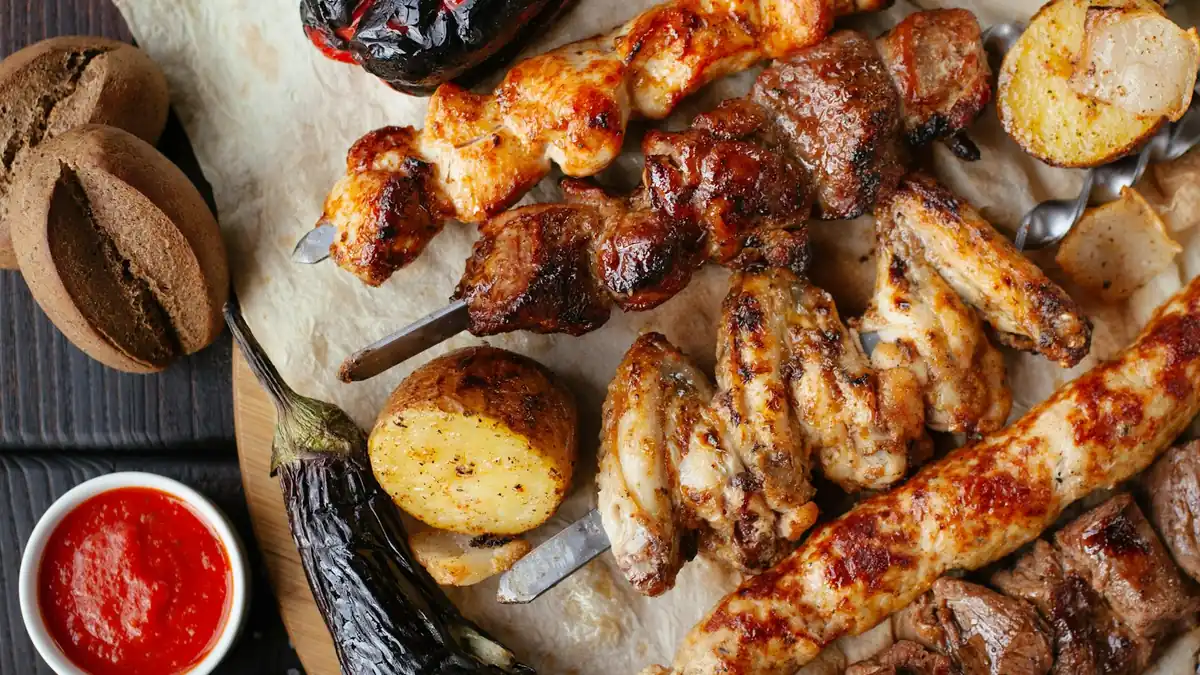
Put a tray of vegetables into a hot oven, and something quietly remarkable starts to happen. Edges turn golden, surfaces crisp, and aromas deepen in a way that boiling never produces. Understanding how dry-heat cooking works means understanding that single transformation, because dry heat does far more than simply warm food through. It dries surfaces, browns them, concentrates flavour, and changes texture from the outside inward. Once you grasp that system, roasting, grilling, and frying stop looking like separate tricks. Instead, they reveal themselves as variations on one idea, each using a different heat source to reach a similar result.
Many guides treat these methods as isolated entries in a list, and consequently beginners memorise names without seeing connections. This guide takes a different path. It compares dry-heat methods side by side, explains why each one browns, crisps, or dries food, and shows how small changes in heat, air, fat, and time shift the outcome. By the end, you should be able to look at an unfamiliar method and predict how it will behave, rather than relying on guesswork.
What Is Dry Heat Cooking, and What Makes Heat Dry in the First Place?
So what is dry heat cooking, exactly? In simple terms, it means cooking food with heat that arrives through hot air, hot fat, direct flame, or a heated surface, without surrounding the food with water or steam. An oven roasts with circulating hot air, a grill cooks with radiant heat from below or above, and a pan fries with hot fat and a heated base. Each route differs in detail, yet all of them share one defining feature. Water is not the main carrier of heat, and therefore surfaces can dry out enough to brown.
That drying step matters more than most cooks realise. As long as a surface stays wet, its temperature struggles to climb past the point where water turns to steam. Browning reactions, on the other hand, need a hotter, drier surface before they gather pace. Dry heat removes surface moisture first, and then the exposed surface can heat further, darken, and develop new flavours. Grasping dry heat vs moist heat therefore starts with one question: does this method dry the surface, or does it keep it wet?
A useful way to picture the whole family is to think of heat travelling in three ways. Conduction moves heat through direct contact, such as food touching a hot pan or a grill grate. Convection carries heat through moving air or fat, such as currents inside an oven or bubbles around food in hot oil. Radiation sends heat across a gap without contact, such as glowing coals warming food from below or an overhead element browning a top surface. Most dry-heat methods combine all three, but each one leans on a different mix. Roasting leans heavily on convection, grilling leans on radiation, and pan cooking leans on conduction. That mix explains much of what follows.
Why Does Dry Heat Brown Food When Moist Heat Does Not?
Browning sits at the heart of dry-heat cooking, and the best-known browning process goes by the name of the Maillard reaction cooking writers often mention. Named after a French chemist, this reaction happens when proteins and sugars in food meet strong, dry heat and rearrange into hundreds of new flavour compounds. Toasted bread crust, a seared steak surface, and roasted coffee all owe much of their character to this chemistry. It does not switch on like a light, however. Instead, it gathers speed as surfaces dry and heat rises, which is why pale, damp food browns slowly while dry, hot food colours quickly.
Caramelisation adds a second route to colour, and it works differently. Here, sugars themselves darken under heat, even without proteins joining in. Roasted carrots sweeten and darken partly for this reason, while onions turn amber as their natural sugars respond to sustained heat. Both processes can run at once in the same pan or oven, and consequently a single dish may carry layered flavours from each. Moist cooking limits both routes, because water keeps surfaces cooler and wetter. That contrast explains why steamed vegetables taste clean and bright, while roasted ones taste deep and savoury.
Texture follows the same logic. Dry heat draws moisture from outer layers, so crusts form, skins tighten, and edges crisp. Inside, meanwhile, heat travels inward more slowly, softening starches and proteins at its own pace. A good dry-heat result therefore balances two journeys: a fast, drying change outside, and a slower, gentler change inside. Problems usually arrive when those journeys fall out of step, for example when the outside burns before the inside softens, or when the inside overcooks while the outside stays pale.
How Roasting Works, From Oven Air to Golden Edges?
Learning how roasting works begins with the oven itself, since the oven acts as a chamber of hot, moving air. Food sits on a tray or rack, hot air circulates around it, and heat reaches every exposed surface at once. Because air transfers heat less fiercely than direct contact or hot oil, roasting tends to be a slower, more even method. That gentleness suits larger pieces and mixed trays, where time allows heat to travel inward while surfaces gradually dry and colour.
Airflow shapes the result in ways that are easy to overlook. Food crowded onto a tray traps steam between pieces, and therefore neighbouring surfaces stay damp and pale instead of browning. Spacing pieces apart, on the other hand, lets hot air reach each surface and carry moisture away. A rack can help further, because it lifts food above pooled juices and exposes the underside to circulating air. Even turning pieces partway through matters, since it gives shaded sides their turn in the moving heat.
A practical roasting vegetables guide can be summed up in principles rather than fixed instructions. Cut pieces to roughly similar sizes so they cook at a similar pace, give them room on the tray, and let surfaces dry before they enter the oven. Oil helps here, not as a flavour trick alone, but as a medium that fills tiny gaps between food and tray and carries heat evenly across uneven surfaces. Salt drawn out in advance can also help, because a drier surface browns sooner. Watch colour and texture rather than the clock alone, since ovens, tray materials, and piece sizes all shift timing.
What Separates Roasting From Grilling in Practice?
The debate around roasting vs grilling often confuses beginners, because both methods use dry heat and both produce browning. The real difference lies in where heat comes from and how fiercely it arrives. Roasting surrounds food with hot air inside an enclosed chamber, so heat arrives from all directions at a moderate pace. Grilling, in contrast, places food close to an intense heat source, usually below or above, so one side receives powerful radiant heat while the other side stays cooler. That asymmetry gives grilled food its signature charred marks and smoky edge.
Distance explains much of the contrast. Move food closer to glowing coals or an overhead element, and radiant heat intensifies sharply, browning surfaces fast. Pull food further away, and the same source cooks more gently, behaving almost like roasting. Grilled food also loses moisture differently, because intense direct heat drives surface water off quickly while the interior may still be catching up. Roasted food, meanwhile, dries more gradually, which suits thicker pieces that need time for heat to reach the centre.
Smoke adds another layer to grilling that roasting rarely provides. When juices drip onto a hot source, they vaporise and rise back toward the food, carrying aromatic compounds with them. Fat dripping onto coals can flare, and those brief flames add char in uneven patches. Some cooks welcome that rugged character, while others manage it by moving food to a cooler zone. Either way, smoke and flare belong to the grilling system itself, not merely to the food being cooked. Recognising that distinction helps explain why grilled flavours resist imitation in an oven.
How Do Grilling Techniques Differ From Each Other?
A proper grilling techniques explained overview starts with the two broad patterns cooks use: direct and indirect heat. Direct grilling places food straight over the heat source, which suits thinner pieces that cook through quickly. Indirect grilling places food beside the heat source, with a lid closing over the top, so hot air circulates around the food much like roasting. Many experienced cooks combine both patterns, searing over direct heat first and then finishing over indirect heat. That combination shows how fluid the boundary between methods can be.
Lid position changes the system further. An open grill behaves like a radiant heater, cooking mainly the side facing the source. A closed lid traps hot air and smoke, turning the grill into a small oven with radiant heat added underneath. Consequently, closing the lid raises the surrounding air temperature and speeds cooking from all sides. Opening it again returns control to direct radiant heat. Understanding that switch gives cooks a simple lever for managing thick pieces, flare-ups, and uneven browning.
Resting matters after grilling for a reason rooted in heat movement. When food leaves intense heat, its outer layers remain hotter than its centre, and heat continues travelling inward for a while. Juices also redistribute as fibres relax, so cutting immediately can spill moisture that would otherwise stay put. A short rest therefore lets temperatures even out and textures settle. That pause belongs to the method, not to fussiness, and it applies just as much to roasted food as to grilled food.
Why Does Baking Belong in the Dry-Heat Family at All?
Baking sometimes puzzles newcomers, because breads and cakes seem far removed from roasted vegetables or grilled meat. Yet baking vs roasting reveals a shared system with different goals. Both methods use an enclosed chamber of hot air, and both rely on drying surfaces and browning crusts. Baking simply applies that system to batters and doughs, where heat must also raise, set, and structure soft mixtures. Roasting, by contrast, applies the same chamber to foods that already hold their shape.
Inside a baking dough, several changes overlap in a busy sequence. Gases expand, starches absorb moisture and swell, proteins set into a firm network, and the outer crust dries and colours. Early in baking, the surface stays soft enough to stretch as gases expand, which is why bread rises before its crust firms. Later, the crust dries, hardens, and browns, locking the shape in place. That sequence explains why opening an oven door too early can disturb rising, while steady heat supports it.
Steam plays a surprising supporting role even inside this dry-heat method. Many bakers introduce moisture early, because a damp oven surface keeps crusts flexible while dough expands. As baking continues, the oven dries out again, and the crust can crisp and colour. Far from contradicting the dry-heat idea, this detail sharpens it. Baking remains a dry-heat method overall, but skilled bakers manage moisture moment by moment, using dampness early and dryness late to shape the final crust.
What Happens When Food Meets a Hot Pan?
Pan cooking brings conduction to the foreground, because food touches a heated surface directly. That contact transfers heat far faster than still air, so surfaces brown quickly and cooks gain fine control over timing. Sautéing explained in plain terms means cooking smaller pieces quickly in a shallow layer of hot fat, with frequent movement keeping surfaces in contact with the pan. Stirring and tossing serve a practical purpose here, since they expose fresh surfaces to heat and prevent any one side from scorching.
Searing meat explained properly needs a small correction to a popular myth. Searing does not seal juices inside, despite what many older guides claim. Instead, it creates a browned, flavour-rich crust through the same drying and browning chemistry described earlier. Juices still move and escape during cooking, and resting still matters afterwards. What searing genuinely provides is flavour, colour, and texture on the surface, which then contrasts with the interior. That honest framing helps cooks judge searing by what it actually delivers.
Pan temperature behaves as a balancing act rather than a fixed setting. A pan that is too cool lets moisture pool, so food steams in its own liquid instead of browning. A pan that is too hot, meanwhile, can scorch surfaces before interiors catch up. Crowding the pan causes the first problem, because each new piece adds moisture and drags the pan temperature down. Cooking in smaller batches, therefore, often browns better than filling the pan at once. Listening helps too, since a steady sizzle signals active surface drying, while silence suggests steaming.
How Do Frying Methods Compare as Heat Systems?
A clear frying methods explained overview treats oil as a heat-transfer medium, not merely as an ingredient. Hot oil surrounds food, fills surface gaps, and carries heat evenly across irregular shapes. That even contact explains why fried coatings crisp so uniformly. Shallow frying uses a modest layer of oil, so food cooks partly through contact with the pan and partly through oil clinging to its lower half. Turning becomes essential, because only the submerged portion receives the full force of the oil at any moment.
Deep frying surrounds food completely, and consequently heat arrives from every direction at once. Coatings set quickly in that environment, forming a crisp shell that slows moisture loss from inside. That shell explains the contrast fried food is famous for: a crunchy exterior with a steamy interior. Oil temperature still matters as a system, because cooler oil soaks into coatings instead of crisping them, while overheated oil darkens coatings before interiors cook. Fresh oil, dry surfaces, and uncrowded batches all support steadier results.
Air frying works on a different principle, despite its name, because no bath of oil surrounds the food. Instead, a fan drives very hot air rapidly around food in a small chamber, combining intense convection with a light coating of oil on surfaces. Results can resemble frying when coatings are thin and surfaces are dry, but the system remains closer to rapid roasting. Recognising that kinship prevents confusion. Air frying earns its place in the dry-heat family through hot, moving air, not through immersion in fat.
Which Dry-Heat Method Fits Which Food, and Why?
Choosing among dry heat cooking methods becomes easier once you think in terms of thickness, moisture, and surface area. Thin, tender pieces suit fierce, fast methods such as grilling or sautéing, because heat reaches the centre before surfaces overcook. Thick pieces suit gentler, surrounding methods such as roasting or indirect grilling, because time allows heat to travel inward. Delicate coatings suit immersion in hot oil, because even heat sets the coating before it can fall apart. Each pairing follows from heat physics, not from tradition alone.
Dry heat cooking examples make the pattern concrete. Roasted root vegetables develop sweet, caramelised edges because slow surrounding heat dries and browns their surfaces gradually. Grilled flatbreads blister quickly because radiant heat strikes one side with intensity. Sautéed mushrooms shrink and darken as their moisture escapes and their surfaces meet hot fat. Fried coatings turn crisp because hot oil sets starches fast. Despite their different appearances, all four examples share the same sequence: surface drying, browning, and interior change at different speeds.
A simple cooking methods list helps organise the family without flattening its variety. Roasting uses surrounding hot air, grilling uses close radiant heat, baking uses hot air to set doughs and batters, sautéing uses fast pan contact with movement, searing uses intense pan contact for crust, shallow frying uses partial oil immersion, deep frying uses full oil immersion, and air frying uses rapid hot air with a light oil coating. Viewed together, these methods form a spectrum from gentle surrounding heat to fierce direct heat. Placement on that spectrum predicts browning speed, crispness, and drying risk.
What Does Dry Heat Cooking Temperature Mean as a System?
Talk of dry heat cooking temperature often misleads, because a single number cannot capture what happens inside an oven, above coals, or in a pan. Ovens cycle on and off, pans cool when food lands in them, and grill heat varies sharply with distance from the source. Temperature therefore works better as a range of conditions than as a precise dial reading. Low, gentle dry heat dries slowly and suits long, even cooking, while high, fierce dry heat browns fast and suits thin or small pieces. Moderate heat sits between those poles, balancing browning against interior cooking.
Food itself changes the effective temperature, which complicates matters further. Wet surfaces hold temperatures down while water evaporates, so browning waits until drying catches up. Dense pieces absorb heat slowly, so their centres lag behind their surfaces. Fatty surfaces, meanwhile, can brown faster because fat transfers heat efficiently and reaches higher temperatures than water. Skilled cooks therefore read food, not dials alone. Colour, sound, aroma, and resistance to pressure all signal where a piece sits in its cooking journey.
Equipment adds its own variation to the system. Dark trays absorb radiant heat and brown undersides faster than pale trays, while thin pans swing in temperature more sharply than heavy ones. Oven shelves change exposure, because lower shelves sit closer to bottom heat and upper shelves catch more top heat. None of these details requires new equipment, however. Simply knowing they exist lets cooks adjust placement, batch size, and timing with confidence, rather than blaming a method that was never at fault.
What Goes Wrong With Dry Heat, and What Does Each Failure Teach?
Dry-heat failures teach the system better than successes do, because each one points to a specific imbalance. Pale, soggy surfaces usually signal trapped steam, whether from crowding, wet surfaces, or a pan that never grew hot enough. Burnt outsides with raw centres usually signal heat arriving too fiercely for the thickness involved. Dry, tough results usually signal moisture lost faster than flavour developed, often because thin pieces spent too long under strong heat. Each symptom therefore suggests its own correction, rather than a vague call to try harder.
Uneven browning offers another useful lesson. Hot spots in ovens, uneven coal beds, and warped pans all create zones of stronger and weaker heat. Rotating trays, moving food between zones, and turning pieces partway through all compensate for that unevenness. Similarly, resting food after cooking corrects a temperature gradient that fierce heat creates, letting outer and inner layers meet in the middle. Small habits like these matter more than dramatic gestures, because dry-heat cooking rewards steady management over sudden intervention.
Oil deserves attention in failure analysis too, since it behaves as both helper and hazard. Too little oil leaves gaps between food and pan, so contact stays patchy and browning turns blotchy. Too much oil at the wrong moment can splatter, smoke, or soak into coatings. Reused oil darkens faster and smokes sooner, because food particles and breakdown products accumulate in it. Watching oil colour, aroma, and behaviour therefore gives early warnings, long before a dish reaches the point of no return.
Where Else Do You Meet Dry Heat Beyond Your Own Kitchen?
Dry heat shapes food far beyond home kitchens, and noticing it elsewhere sharpens your eye. Restaurant kitchens rely on the same systems, with grills, ovens, and pans arranged so different methods run side by side during service. A seafood grill, for instance, uses fierce radiant heat for thin fillets, while an oven nearby roasts larger pieces more gently. Readers curious about dining out can explore how restaurants present these dishes, for example through the Hempstead seafood restaurant experience and the best Brockway restaurants guide. Both show how professional kitchens frame food that dry heat helped create.
Different dining traditions also highlight different corners of the family. Some kitchens lean on open flames and char, while others lean on ovens and slow browning, and menus often reveal those preferences in their language. The Pacifico Chinese restaurant in Hialeah, the Ocha restaurant in Stamford, and the Straw Hat restaurant in Anguilla each describe dining experiences where cooking style shapes what reaches the table. Meanwhile, outdoor cooking brings grilling into home life, and spaces built for it, such as those in the Rockford outdoor living guide, show how grilling often sits at the centre of outdoor gathering. Food choices at home connect too, since methods change how everyday meals feel, a theme explored in smarter food choices tips.
How Can You Read Any Dry-Heat Method at a Glance?
After comparing so many methods, a simple mental checklist helps you read any new one quickly. First, ask where heat comes from: surrounding air, radiant source, hot fat, or heated surface. Next, ask how fiercely it arrives, and whether one side cooks faster than the other. Then ask what happens to surface moisture, because drying unlocks browning while trapped steam blocks it. Finally, ask how thickness and time interact, since thin pieces forgive fierce heat while thick pieces demand patience. Those four questions cover most of what matters.
That checklist also explains why dry heat rewards attention more than memorised settings. Ovens differ, pans differ, and ingredients differ, so no single rule survives every kitchen unchanged. Cooks who watch colour, listen for sizzling, and notice how surfaces dry will adapt faster than cooks who follow numbers blindly. In addition, cooks who understand the system can improvise, swapping a grill for a hot pan or an oven for indirect grill heat when circumstances change. Flexibility grows directly from understanding, not from collecting more gadgets.
Ultimately, dry heat earns its place in cooking because it creates flavours and textures that moist heat cannot. Browning builds savoury depth, drying builds crispness, and controlled heat builds contrast between crust and interior. Roasting, grilling, baking, sautéing, searing, and frying each deliver those rewards through a different route, yet all of them obey the same underlying system. Learn that system once, and every method in the family becomes easier to read, easier to control, and easier to enjoy.




