
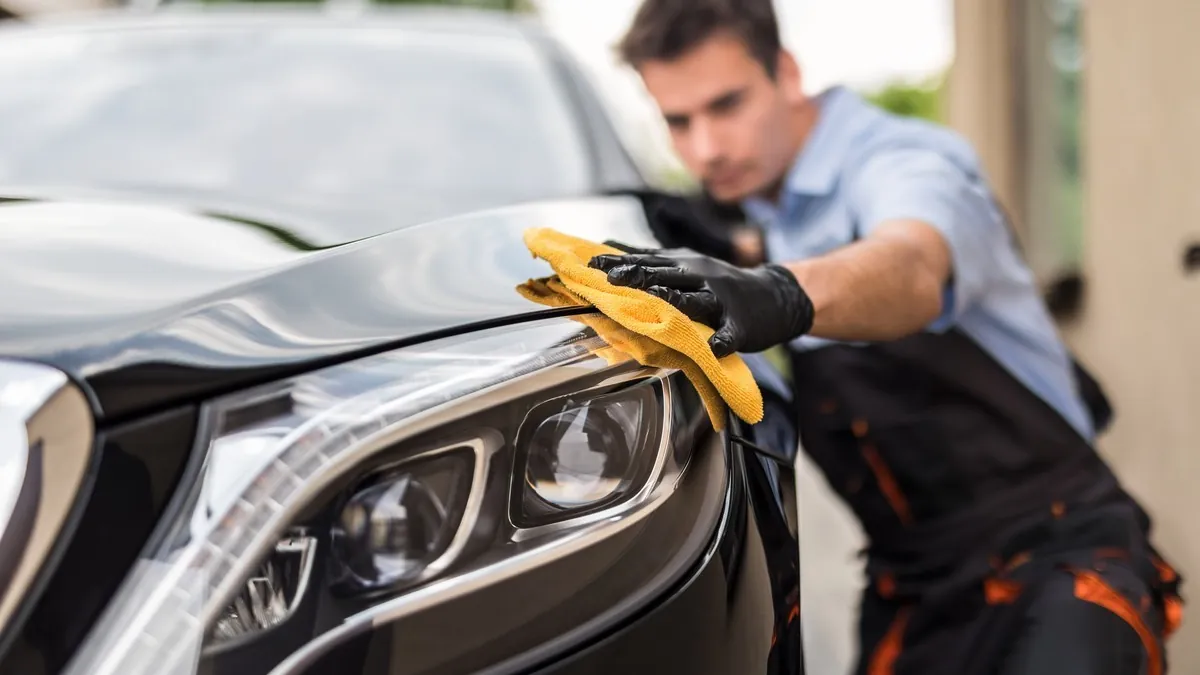
A freshly waxed car looks different in daylight. Firstly, the paint looks deeper and more even. Secondly, water rolls off the panels instead of sitting flat. However, that glossy finish is only part of the story. In fact, car waxing basics matter because wax changes how paint deals with rain, dust, and sun. Therefore, this guide explains wax in plain terms, without product hype or jargon.
Many drivers wax out of habit, yet few stop to ask what the layer actually does. Similarly, many drivers confuse wax with polish, or wax with a sealant. Consequently, they may buy the wrong product, or wax far more often than they need to. This article clears up those points, step by step.
What Does Car Wax Do?
What does car wax do? In short, wax leaves a thin protective layer on top of clear coat. That layer is sacrificial, which means it takes the wear instead of your paint. For example, rain, dust, bird droppings, and road grime land on wax first. As a result, washing becomes easier, because dirt has less grip on a smooth surface.
Wax also changes how water behaves on paint. On a waxed panel, water tends to bead into round drops. On an unwaxed panel, water often spreads into a flat sheet. Meanwhile, that beading effect is useful, but it is not the whole point of waxing. Above all, wax is about adding a temporary barrier and a smoother surface.
Another job of wax is shine. A clean, waxed surface reflects light more evenly than dull, rough paint. Therefore, colours can look richer after waxing, even when the paint itself has not changed. However, wax does not repair paint. In contrast, it simply covers the surface with a fresh, even layer.
Think of wax as a raincoat for paint. The raincoat keeps you drier, but it does not fix a torn jacket underneath. Similarly, wax protects the surface for a time, but it wears away with washing, weather, and use. Consequently, waxing is a repeating task, not a one-time fix.
What Is Wax, and What Is It Not?
Car wax is a protective coating applied after washing. Traditionally, it was based on natural waxes, often carnauba. Nowadays, many products blend natural wax with synthetic ingredients. In addition, some products sold as wax are closer to sealants in how they behave. For that reason, labels alone can mislead beginners.
Wax is not a cleaner, although some products combine cleaning agents with wax. Wax is not a polish, and it is not a repair for deep scratches. Furthermore, wax is not a permanent shield. Instead, it is a short-to-medium-term layer that needs renewal.
Your car maker’s manual is the best starting point for care advice. Firstly, it may warn against certain products or methods for your paint or trim. Secondly, it may give washing guidance that affects how long wax lasts. Therefore, check the manual before trying a new product, especially on matte paint, wraps, or special finishes. When in doubt, ask a qualified professional for advice.
What Is the Car Wax vs Polish Difference?
The car wax vs polish difference causes more confusion than almost any other car-care topic. Polish and wax sound similar, yet they do opposite jobs. Polish works on the paint surface itself. Wax, in contrast, sits on top of it.
Polish usually contains fine abrasives, or chemical cleaners, that smooth the surface. As a result, polish can reduce light swirl marks and dullness by levelling tiny imperfections. However, polishing removes a very small amount of clear coat each time. Consequently, it should not be done as often as waxing.
Wax, on the other hand, adds a layer rather than removing one. It fills tiny surface texture for a short time, which can make paint look smoother. Meanwhile, wax does not cut into clear coat in the way polish does. For example, a car can be waxed several times a year, while frequent polishing would be unwise.
A simple way to remember the order is this: polish first, wax second, when both are needed. Firstly, polishing prepares the surface. Secondly, waxing protects that surface. In short, polish corrects, and wax protects. Mixing up that order is a common beginner mistake.
What Is the Car Wax vs Sealant Difference?
The car wax vs sealant difference is subtler, because both products protect paint. In general terms, wax is the older, more traditional option. A sealant is usually a synthetic product designed to bond to paint and last longer. Therefore, sealants often suit drivers who want longer gaps between applications.
Natural carnauba wax vs synthetic sealant is the classic comparison here. Carnauba wax is praised for a warm, deep-looking shine. Synthetic sealants, in contrast, are often praised for durability and water resistance. However, neither type is a clear winner for every driver. Instead, the right choice depends on how often you want to reapply, and what finish you prefer.
Sealants can also feel different to apply. Some need a longer curing time before they can be buffed or exposed to rain. Wax, meanwhile, often hazes faster and buffs off sooner. For that reason, always follow the instructions on the product you are using. Above all, do not assume every product behaves like the last one you tried.
This article stays focused on waxing alone. A separate guide, Car Paint Protection Types Explained: Wax, Sealant, Ceramic and Film, covers the wider protection landscape by name. That guide is the place to compare broader options, while this article teaches wax itself.
Does Waxing Protect Car Paint From UV?
Does waxing protect car paint from UV? The honest answer is partly, but not completely. Wax adds a barrier that can slow the effects of sun exposure. For example, a waxed surface may shed water and dirt more easily, which reduces grime baking onto hot paint. As a result, paint may stay cleaner and glossier for longer.
However, wax is not a sunblock for cars. Sunlight still reaches paint, and wax itself breaks down under strong sun. Consequently, wax alone cannot stop fading, oxidation, or clear-coat damage over many years. In addition, a car parked outdoors all day faces far more sun than a garaged car.
Shade parking, regular washing, and timely re-waxing all help together. Similarly, removing bird droppings and tree sap promptly matters, because heat can bake contaminants onto paint. Therefore, think of wax as one part of sun care, not a complete solution. For deeper sun-damage guidance, your car maker’s manual and a qualified detailer can advise on your paint type.
Can Wax Hide Scratches on a Car?
Can wax hide scratches on a car? Sometimes it can hide very light marks, but only briefly. Wax fills tiny surface texture, so fine swirl marks may look softer after waxing. However, that effect fades as the wax wears away. In contrast, deeper scratches that catch a fingernail will still show through wax.
This distinction matters, because false hope leads to wasted effort. For example, layering more wax over a deep scratch will not level the paint. Similarly, wax will not restore paint that has already worn through to primer or metal. Therefore, treat wax as a finishing step, not a repair.
If a scratch worries you, inspect it in good light first. Light surface marks may improve with careful polishing, followed by wax. Deeper damage, on the other hand, may need professional assessment. In short, wax improves appearance, but it does not replace repair.
How Long Does Car Wax Last?
How long does car wax last? There is no single answer, because wax life depends on type, weather, washing, and parking. In general terms, a traditional wax layer may last a few weeks to a few months. A synthetic product may last longer, but it still wears away over time. Consequently, any claim of a fixed lifespan should be treated with caution.
Washing habits have a large effect. Frequent washing, especially with strong detergents, can strip wax faster. Gentle washing with a car-specific shampoo, in contrast, tends to preserve the layer longer. Meanwhile, rain alone does not remove wax at once, but repeated exposure still wears it down.
Climate matters too. Strong sun, heat, road salt, and heavy rain all shorten wax life. A car kept in a garage, on the other hand, may hold its wax layer much longer. Therefore, two drivers using the same product can get very different results. Your own beading test, covered below, is a better guide than a calendar date alone.
How Often Should You Wax a Car?
How often should you wax a car? As a starting point, many mainstream guides suggest waxing at least twice a year. Seasonal waxing, in spring and autumn, is a popular routine. However, that minimum suits garaged cars and gentle climates best. For many drivers, waxing every three to four months is a more realistic rhythm.
Firstly, consider your parking. A garaged car may need wax only twice a year. Secondly, consider your washing routine. Frequent washers may need to re-wax sooner. Thirdly, consider your climate and road conditions. Harsh sun, salt, or constant rain all argue for more frequent waxing.
The question of how often to wax a car parked outside deserves its own answer. An outdoor car faces sun, rain, dust, and bird droppings every day. Therefore, outdoor cars often need waxing every two to three months, or whenever beading fades. In addition, a quick inspection after washing will tell you more than a fixed schedule.
The best routine is simple: wax when the signs say so, and use the calendar as a reminder. For example, set a seasonal reminder, then check beading before deciding. As a result, you avoid both under-waxing and pointless over-waxing. Above all, consistency beats perfection here.
How Can You Build a Simple Re-Wax Calendar?
A re-wax calendar does not need to be complicated. Start with two anchor points in the year, such as spring and autumn. Then add a check after every few washes. Meanwhile, note the date of each wax in your phone or service book. Consequently, patterns become clear over time.
Garaged cars can often follow the twice-a-year anchor points alone. Outdoor cars, in contrast, may need an extra mid-summer or mid-winter session. Similarly, cars driven daily in harsh weather may need checks more often. Therefore, adjust the calendar to your car, not to someone else’s routine.
Seasonal changes are a useful trigger. Before a wet or sunny season, a fresh wax layer helps paint shed water and dirt. After that season, check whether beading has faded. In short, let seasons prompt a check, and let the check decide the wax.
Keep the calendar realistic. Waxing too often wastes time and product, while waxing too rarely leaves paint unprotected. For that reason, a check-based routine usually beats a rigid date. Finally, record what you used and how it performed, so future choices get easier.
How to Tell If Car Wax Has Worn Off?
How to tell if car wax has worn off? Look for a small checklist of signs, rather than guessing. Firstly, water stops beading and starts sheeting flat. Secondly, the paint looks duller after washing, even when clean. Thirdly, dirt seems to stick harder, and washing takes more effort.
Other signs include water spots that linger, and a rough feeling when you run a clean hand over washed paint. However, roughness can also come from bonded contaminants, not just wax loss. Therefore, use several signs together, not one alone. For example, faded beading plus dullness is a stronger signal than either sign on its own.
Panel-by-panel differences are normal. Horizontal panels, such as the bonnet and roof, often lose wax first. They face more sun and rain than vertical panels. Meanwhile, lower panels may lose wax faster from road spray and washing. Consequently, check several panels, not just one easy spot.
If you are unsure, do the beading test below before re-waxing. That test takes a minute, and it avoids waxing a layer that is still healthy. In addition, it helps you learn how long wax lasts on your own car.
What Is the Water Beading Test Car Wax Owners Use?
The water beading test car wax owners use is delightfully simple. Spray or pour clean water onto a washed panel, then watch what happens. On waxed paint, water forms tight, round beads that roll off easily. On unwaxed paint, water spreads into a flat sheet and clings to the surface.
For a fair test, wash the panel first and let it dry lightly. Dirty paint can bead or sheet for unrelated reasons. Similarly, test in shade, so water does not dry before you can read it. Then compare the bonnet, roof, and a door panel, since wear varies by panel.
Read the result in stages, not as pass or fail. Tight beads mean the layer is healthy. Flat, lazy beads mean it is fading. A flat sheet with no beads at all means it is largely gone. Therefore, partial beading is your cue to plan a re-wax soon, not necessarily today.
Beading is a guide, not a guarantee. Some sealants sheet water by design, even when protection remains. Wax, however, usually beads when fresh. Consequently, combine beading with looks and wash feel. Together, those clues give a reliable picture.
Should You Wash a Car Before Waxing?
Should you wash a car before waxing? Yes, always. Wax seals in whatever sits beneath it, including dirt and grit. Therefore, waxing a dirty car can trap particles against paint. As a result, those particles may cause fine marks when you buff.
Wash in shade, with a car-specific shampoo and clean wash tools. Rinse thoroughly, then dry the panels before waxing. Meanwhile, check for bird droppings, sap, or tar that washing alone may not remove. Those spots need gentle, separate attention before wax.
Drying matters more than beginners expect. Water left on panels can dilute wax or cause uneven hazing. For that reason, use a clean microfibre drying towel and work panel by panel. In short, clean and dry first, wax second, every time.
Related routine care helps too. For example, what happens if wheel alignment is skipped after a tyre change shows how one skipped job can affect other parts of car care. Similarly, waxing works best as part of a steady routine, not as a rushed one-off.
Can You Wax a Car in Direct Sunlight?
Can you wax a car in direct sunlight? It is best to avoid it. Hot panels make wax dry too fast, which can leave streaks and stubborn haze. In addition, wax may bond unevenly when the surface is very hot. Consequently, buffing becomes harder, and the finish can look patchy.
Shade, a garage, or a cooler part of the day all work better. Early morning or late afternoon often gives cooler panels. Meanwhile, touch a panel before starting: if it feels hot, wait. That simple check saves a lot of rework.
If shade is unavailable, work in small sections and follow product instructions closely. However, do not rush the hazing stage, and do not let wax bake onto hot paint. Therefore, patience matters more than speed here. When panels cool, the job gets easier and the result looks better.
Do New Cars Need Waxing?
Do new cars need waxing? New paint often arrives in good condition, but it still benefits from protection. Factory paint and clear coat are not a wax layer. Therefore, a new car can still gain from a fresh protective coat after its first proper wash.
That said, new cars do not need urgent waxing on day one. Firstly, inspect the paint in good light. Secondly, wash it gently and check for transport marks or dealer-applied coatings. Thirdly, check your car maker’s manual for any waiting period or product advice. Some manuals give specific guidance for new finishes.
If a dealer coating is already present, adding wax on top may be unnecessary. In that case, ask what was applied, and follow its care guidance. Otherwise, a gentle first wax after washing is a sensible start. In short, new does not mean protected forever.
How to Apply Car Wax by Hand?
How to apply car wax by hand? Start with a clean, dry car in shade. Use a clean foam or microfibre applicator, and apply a thin, even layer. Work one panel at a time, using overlapping straight lines or small circles. Meanwhile, keep the layer thin: more wax does not mean more protection.
Thin layers haze more evenly and buff off more easily. Thick layers, in contrast, waste product and leave stubborn residue. For example, a hazy, even film is the goal, not a thick white crust. Therefore, reload the applicator lightly, and spread the wax until it almost disappears.
Work methodically around the car, panel by panel. Avoid unpainted trim, rubber seals, and textured plastic where possible, since wax can leave white marks there. In addition, keep wax off glass if the product is not meant for it. Finally, let the wax haze as the instructions direct before buffing.
Hand application suits beginners well, because it is slow and controlled. Machine application can be faster, but it needs more skill. Consequently, hand waxing is the safer starting point for most drivers. Above all, take your time and enjoy the process.
How to Buff Car Wax Off Properly?
How to buff car wax off properly? Wait until the wax has hazed, then use a clean, dry microfibre towel. Fold the towel into a flat pad, and buff with light, even pressure. Work panel by panel, turning the towel often to a clean side. As a result, residue lifts cleanly instead of smearing.
Check your work in different light. Indoor light can hide streaks that daylight reveals. Therefore, step back and inspect each panel after buffing. If a hazy patch remains, buff again with a fresh towel side, rather than adding more wax.
Stubborn residue often comes from applying too much wax, or buffing too early. In that case, patience and a clean towel usually solve it. However, do not scrub hard, since pressure can mar paint. Similarly, avoid dirty towels, which can drag grit across the surface.
Finish by checking edges, badges, and panel gaps for trapped residue. A soft detailing brush or a clean towel corner can clear those spots. Meanwhile, stand back and look at the whole car. A good buff leaves an even shine, with no cloudy patches.
What Mistakes Do Beginners Make When Waxing?
Beginners usually make a handful of avoidable mistakes. Firstly, they wax a dirty car, trapping grit under the layer. Secondly, they apply wax too thickly, making buffing a chore. Thirdly, they wax in hot sun, then fight streaks and haze.
Another common mistake is using the wrong towel. Old, rough towels can leave fine marks on paint. Therefore, use clean microfibre towels kept aside for paintwork. In addition, wash those towels without fabric softener, since residue can reduce their effectiveness.
Skipping the manual is another quiet error. Your car maker’s manual may warn about certain finishes or products. For example, matte paint needs different care from gloss paint. Consequently, a quick manual check can prevent an expensive mistake.
Finally, many beginners expect wax to fix everything. Wax improves looks and adds protection, but it does not repair deep damage. Therefore, keep expectations realistic, and seek professional help for paint damage. That honesty saves time, money, and disappointment.
How Do You Maintain Wax Between Applications?
Maintenance between waxes is mostly about gentle washing. Wash regularly, so dirt does not build up and bond to paint. Use a car-specific shampoo, and rinse before contact washing. Meanwhile, dry panels after washing to reduce water spots.
Quick checks help too. After washing, glance at beading on the bonnet and roof. If beads still look tight, the wax is likely healthy. If beading fades, plan a re-wax soon. As a result, you catch wear early, before paint looks dull.
Remove contaminants promptly. Bird droppings, sap, and road tar should not sit for days. Soak them gently, then wash the area, rather than scrubbing dry. In addition, avoid harsh household cleaners on paint, since they can strip wax fast.
Routine checks pair naturally with other car care. For instance, car wheel bolt pattern explained, and how to measure PCD correctly is a useful read when you are already inspecting wheels and tyres. Similarly, choosing tyres for daily use versus off-road use shows how driving style changes care needs. Wax care follows the same logic: match the routine to how you use the car.
When Should You Ask a Professional for Help?
Most waxing is easy DIY work, but some situations call for help. Deep scratches, peeling clear coat, and widespread dullness need assessment first. A professional can tell whether paint needs polishing, repair, or simply a fresh wax. Therefore, do not keep waxing over damage that keeps getting worse.
Special finishes also deserve expert advice. Matte paint, wraps, and freshly resprayed panels all have their own care rules. Your car maker’s manual is the first check, and a qualified detailer is the second. Meanwhile, avoid experimenting with strong products on those surfaces.
If you are short on time or shade, a professional detail can be a sensible option. A good detailer will wash, prepare, and wax methodically. However, ask what products and steps are included, so you know what to maintain afterwards. In short, professional help is a complement to DIY care, not a replacement for it.
Local service context can help when choosing help. For example, Martinez Complete Auto Service, expert vehicle care you can trust and Tommy’s Auto Service, trusted car care experts for every vehicle illustrate the kind of general auto-service reading drivers often pair with routine care. Likewise, Manakin Auto Service, your trusted partner for exceptional vehicle care and Expert Arboretum Auto Service, your trusted solution for all vehicle needs show how service guides sit alongside DIY guides. Above all, choose help based on reputation and clear advice, not promises alone.
What Should Your First Waxing Session Look Like?
Your first session should be calm and unhurried. Firstly, wash and dry the car in shade. Secondly, gather clean applicators and microfibre towels. Thirdly, read the product instructions fully before opening the container. That preparation prevents most beginner problems.
Next, apply wax thinly, panel by panel, and let it haze. Then buff with a clean towel, checking each panel as you go. Meanwhile, note how long hazing takes in your conditions. Consequently, your second session will feel much easier.
Afterwards, do a beading test and note the date. That record becomes your baseline for future checks. For example, if beading fades after two months outdoors, you know your real interval. Therefore, your calendar stops being a guess and starts being evidence.
Finally, enjoy the result, but keep perspective. Wax is maintenance, not magic. Regular washing, timely re-waxing, and prompt contaminant removal will do more than any single session. In short, small, steady habits keep paint looking its best for years.




