
Cherry blossom season in Japan is short, mobile, and gloriously unpredictable. Each spring, a wave of pink travels the length of the country. You can watch it arrive, peak, and fade within roughly a week per city. Consequently, smart planning matters more here than almost anywhere else. This guide teaches a system rather than a fixed date. Moreover, the system works in any year, warm or cool.
Most guides hand you a simple list of famous trees. However, a list cannot tell you when those trees will flower. Bloom timing shifts with winter cold, spring warmth, and sudden rain. Therefore, this article follows the bloom itself, from south to north. Along the way, you will learn forecasts, strategies, and backup plans. In addition, you will find honest etiquette advice for crowded parks.
Think of the season as a slow parade crossing Japan. Okinawa opens the show in January, in typical years. Hokkaido closes it in May, roughly four months later. Between those bookends, mainland cities share a few intense weeks. For example, Tokyo and Kyoto usually peak around early April. Your job, simply, is to stand where the parade passes.
When is cherry blossom season in Japan?
So, when is cherry blossom season in Japan for most travellers? For the famous mainland cities, the typical window runs from late March to mid April. Tokyo, Kyoto, and Osaka usually sit inside that core window. Nevertheless, the honest national answer stretches from January to May. Latitude, altitude, and tree variety stretch the season enormously. Coastal cities bloom earlier than mountain towns nearby, for instance.
Somei yoshino dominates parks and castle grounds across Honshu. This pale pink cultivar became Japan’s shared national clock. Forecasts track it because nearly every city plants it widely. Meanwhile, other varieties quietly extend the season at both ends. Early types flower weeks before somei yoshino opens. Similarly, late types hold colour after the main wave fades.
How does the bloom front travel from south to north?
Picture a pink front creeping northwards, week by week. Locals call this moving line the sakura front. Warm southern air wakes the trees first, naturally. Cooler northern springs then delay each following stage. As a result, one flight north can rescue a missed peak. Equally, one train south can fix an early arrival.
Okinawa starts everything, far ahead of the mainland. Okinawa’s January cherry blossom, earliest in Japan, colours castle ruins and hillsides. A different variety, kanhizakura, produces deeper pink, bell-shaped flowers. Its season typically runs from mid January into February. Admittedly, Okinawa feels separate from the classic sakura story. Still, it proves how long Japan’s blossom calendar really runs.
The table below gives typical windows only, never promises. Every year shifts these dates by days, sometimes weeks. Use it for choosing regions, not for booking fixed sightseeing days.
| Region | Typical first bloom | Typical full bloom |
|---|---|---|
| Okinawa | Mid January | Late January |
| Kyushu | Mid to late March | Late March to early April |
| Kansai, including Kyoto and Osaka | Late March | Early April |
| Kanto, including Tokyo | Late March | Late March to early April |
| Mountain areas, including the Yoshino slopes | Late March to mid April | Early to mid April |
| Tohoku | Mid April | Mid to late April |
| Hokkaido | Late April to early May | Early to mid May |
Kyushu usually opens the mainland season in March. Kansai and Kanto follow closely, often within days. Tohoku then carries the front through mid and late April. Finally, Hokkaido closes the mainland story in May. Mountain districts complicate this neat picture, admittedly. For instance, high valleys can lag their cities by weeks.
What do kaika and mankai mean in a sakura forecast?
Two Japanese words unlock every forecast you will read. Kaika means first bloom, the day sample trees open their first flowers. Mankai means full bloom, when most buds stand open together. Every sakura forecast lists kaika first bloom and mankai full bloom, city by city. Official sample trees anchor these announcements in each city. Observers check the same marked trees every spring, traditionally.
Full bloom usually follows first bloom by roughly a week. Warm spells can compress that gap to days, however. Cold snaps, in contrast, can stretch it noticeably longer. Therefore, a forecast first-bloom date is not your target date. Aim instead for the days around predicted full bloom. Moreover, keep two flexible days either side of that target.
How long do cherry blossoms last?
So, how long do cherry blossoms last at their best? Full bloom typically lasts about a week, weather permitting. Rain and strong wind can strip petals within days. Calm, cool weather, meanwhile, can stretch the show slightly. Locals cherish this brevity rather than complaining about it. Indeed, impermanence sits at the heart of the whole tradition.
Your viewing arc actually runs longer than the peak itself. Buds swell, open slowly, reach mankai, then fall like snow. Many visitors quietly love the falling-petal stage most. Petal-covered moats and pink rivers look stunning, for example. Consequently, arriving just after full bloom is rarely a disaster. Only heavy rain truly ends a city’s season early.
Which timing strategy fits your trip best?
Three broad strategies cover almost every sensible trip. Firstly, peak-chasers move northwards with the front itself. Secondly, early birds target February and early March blossoms. Thirdly, late planners aim for April and May in the north. Each approach trades certainty, crowds, and cost quite differently. Furthermore, you can blend strategies inside one longer trip.
Why chase the peak as it moves north?
A cherry blossom itinerary, chasing the bloom north week by week, maximises your odds. You start in Kyushu or Kansai in late March, typically. Then you ride fast trains northwards, following forecast updates. Each move buys you a fresh town at its best moment. Admittedly, this style demands flexible bookings and light luggage. Nevertheless, it turns one peak week into three or four.
Rail passes and refundable rooms suit this strategy well. Fixed group tours, in contrast, cannot react to weather shifts. Check forecasts every few days while you travel, moreover. Move when a city passes mankai, not before it peaks. Similarly, skip any city where rain has already stripped trees.
Why arrive early for Kawazu and plum blossom?
Kawazu, early blooming sakura in February on the Izu Peninsula, anchors the early strategy. This small town’s trees flower weeks before Tokyo’s somei yoshino. A festival atmosphere builds along its river each February, typically. Meanwhile, plum blossom quietly covers February and early March nationwide. Ume flowers carry rich scent and deep pink or white colour. Many shrines host plum festivals long before sakura headlines begin.
Early trips also dodge the season’s worst crowding. Hotels outside peak weeks usually feel noticeably calmer. You trade peak certainty for space, scent, and quiet paths. For example, Atami and other Izu towns also bloom early. Consequently, an early trip still delivers real blossom, just different blossom.
Why stay late for Tohoku and Hokkaido?
Late April shifts attention firmly towards northern Honshu. Hirosaki Castle cherry blossom, Tohoku’s late-season star, peaks weeks after Tokyo fades. Petals later fill its moats, creating famous pink water carpets. Aomori and Akita also reward travellers in mid to late April. In addition, northern crowds thin compared with Kyoto’s peak weeks.
Then May belongs to Hokkaido, Japan’s final blossom frontier. Hokkaido cherry blossom in May centres on Goryokaku, Hakodate’s star-shaped fort. Cherry trees ring the star fort’s moats and ramparts. Sapporo’s parks typically follow Hakodate by several days. Therefore, a May trip can still be a genuine sakura trip. Moreover, spring in Hokkaido brings cool, bright, spacious days.
Which bases match each stage of the season?
Treat each famous spot as one stage in a moving season. Places matter here through timing, not through sightseeing lists. A base earns its place when its peak matches your dates. Consequently, the same park can disappoint or delight completely. Timing, rather than fame, decides what you actually see.
Why does Tokyo reward flexible day plans?
Among Tokyo cherry blossom spots, Ueno Park, Meguro River and Shinjuku Gyoen show three distinct moods. Ueno hosts lively, crowded, festival-style viewing under dense trees. Meguro River, in contrast, suits evening walks beneath lantern-lit branches. Shinjuku Gyoen offers lawns, space, and many tree varieties. Those varieties, importantly, stagger its bloom across more days. Therefore, the garden forgives slightly early or late arrivals.
Base in Tokyo during its typical late March to early April window. Day trips then reach early or late pockets nearby. For instance, Kawazu sits within reach for an early-season escape. Equally, mountain areas near the city bloom a little later. This flexibility makes the capital a forgiving first base.
How do Kyoto and Osaka fit the same bloom week?
For Kyoto cherry blossom, the Philosopher’s Path and Maruyama Park reward unhurried walkers. Canal-side trees line the path between quiet northern temples. Maruyama Park, meanwhile, centres on one beloved weeping cherry tree. Evening illuminations there draw gentle, picnic-style crowds, typically. Use Kyoto as a timing base, not a checklist marathon. Slow mornings under blossom beat rushed temple collecting, honestly.
Nearby Osaka usually peaks within days of Kyoto. Osaka Castle Park cherry blossom viewing feels open, festive, and spacious. Thousands of trees surround the castle across broad grounds. Mint grounds and riverbanks nearby extend the city’s options further. Moreover, Osaka’s transport links make northward escapes easy. Consequently, Kansai works beautifully as one combined base.
Why does Mount Yoshino bloom in stages?
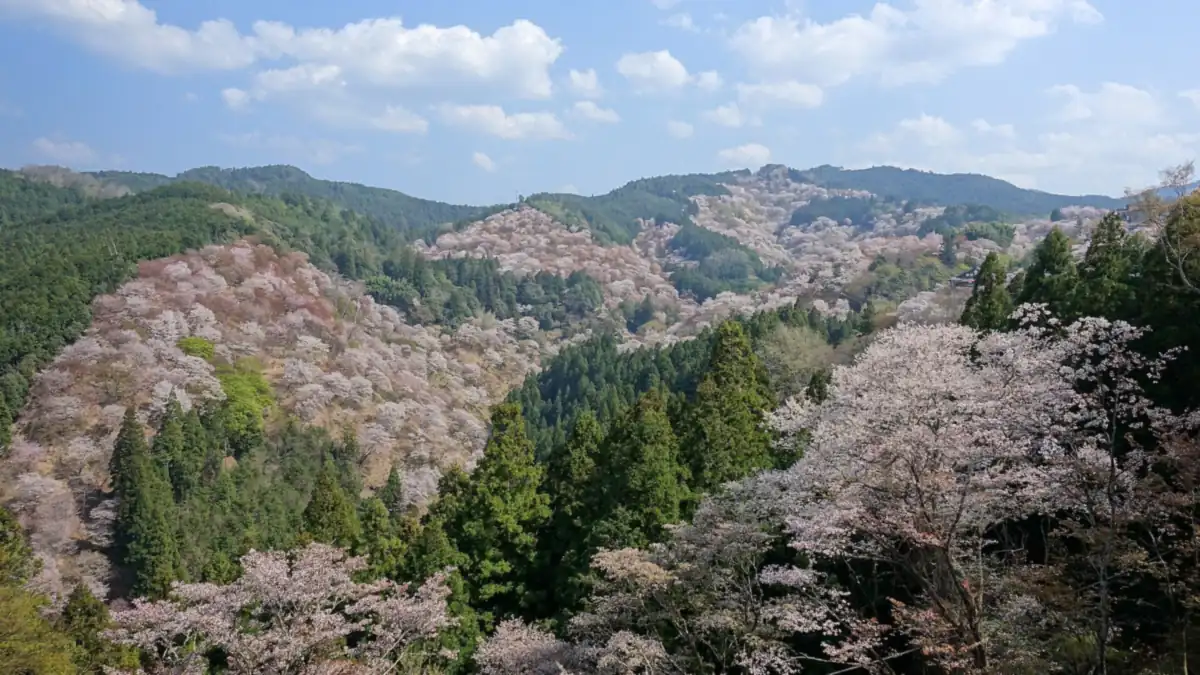
Mount Yoshino, cherry blossom mountain in Nara prefecture, works differently from city parks. Roughly 30,000 trees are said to cover its slopes. They climb through four zones, from lower town to summit. Each zone peaks days after the one below it. As a result, Yoshino’s season stretches far longer than Tokyo’s. A single visit can combine buds, peak, and falling petals.
Trains from Osaka or Kyoto reach Yoshino conveniently. Stay overnight if you can, and walk at dawn. Morning mist over pink ridges feels unforgettable, admittedly. Our guide to places to visit in Japan off the beaten path pairs well with a Yoshino detour. Similarly, walkers may enjoy the best nature places to visit in the world afterwards.
What can you do if you arrive a week early?
Early arrival feels disappointing only at your original destination. Your booked city may still show tight, green buds. However, blossom almost certainly exists somewhere within reach. Head south, head downhill, or switch to early varieties. Warm coastal towns usually lead their inland neighbours clearly. For example, the Izu Peninsula often flowers well before Tokyo.
Plum blossom provides the other great early-season fallback. Ume trees flower through February and into early March. Shrines and gardens celebrate them with their own festivals. In addition, early sakura varieties open in many city parks. Ask tourist information staff which parks currently flower locally. Local knowledge beats national headlines during these shoulder weeks.
What can you do if you arrive a week late?
Late arrival, equally, rarely means a ruined trip. Petals may cover your first city, yet peaks continue northwards. Ride the shinkansen towards Tohoku for fresh full bloom. Alternatively, climb into cooler mountains near your base. Altitude delays flowering just as latitude does, usefully. For instance, Yoshino’s upper zones outlast its lower slopes.
Falling petals also deserve respect as a spectacle themselves. Hirosaki’s moats famously turn pink after peak bloom passes. Currents gather fallen petals into pink rafts on the water. Meanwhile, double-flowered yaezakura varieties open later in many parks. These fluffy late blooms extend city seasons quietly. Consequently, a late trip often becomes a richer, calmer trip.
How should you read the official forecast each spring?
Official forecasts begin appearing each January, typically. The Japan Meteorological Corporation publishes city-by-city bloom predictions. Its forecasts estimate kaika and mankai for sample trees nationwide. Updates then refine those estimates as spring approaches. Weather companies publish rival forecasts with similar methods, moreover. Comparing two forecasts gives a wiser range than trusting one.
Read forecasts as probabilities, never as fixed appointments. A warm fortnight can pull bloom forward by days. Conversely, a cold snap can pause opening buds entirely. Check again one week before departure, and once after landing. Then adjust day trips, not your whole itinerary, in response. This habit separates calm travellers from disappointed ones, ultimately.
Spring timing skills transfer across the whole region, incidentally. Korea’s blossom season follows Japan’s by days, roughly. Our overview of what places to visit in South Korea helps readers planning a combined spring trip.
What does thoughtful hanami etiquette look like?
Hanami simply means flower viewing, Japan’s beloved spring ritual. Understanding hanami flower viewing etiquette makes crowded days pleasanter for everyone. Groups picnic beneath trees in parks across the country. Blue tarps, shared food, and laughter define classic hanami scenes. Visitors join warmly, provided they respect a few customs.
Firstly, never shake branches or pull blossom towards cameras. Petals fall naturally soon enough without any human help. Secondly, take every scrap of rubbish home with you. Many parks provide few bins during festival periods. Thirdly, arrive early if your group wants a prime spot. Saving space all day with unattended tarps annoys neighbours greatly.
Respect roots, ropes, and any fenced or signed areas. Some treasured trees are old, fragile, and carefully supported. Keep paths clear, and keep music at neighbour-friendly volumes. In addition, check alcohol and barbecue rules park by park. Rules differ between cities, parks, and temple grounds, admittedly. Finally, greet the people beside you, and share the shade.
When should you book hotels for the season?
Booking hotels for cherry blossom season rewards early, flexible decisions. Peak weeks in Kyoto and Tokyo fill remarkably fast. Many travellers reserve refundable rooms many months ahead. Refundable rates matter because bloom dates shift yearly. Therefore, flexibility protects you better than false precision. Book the region first, then refine neighbourhoods later, calmly.
Stay near a major station on your northward route. Easy train access turns forecast changes into simple adjustments. Moreover, consider splitting stays between two regional bases. A Kansai base plus a Tohoku base covers most scenarios. For broader timing ideas, see our guide to the best place to visit this time of year. Seasonal thinking, once learned, improves every future trip.
What does a flexible northbound itinerary look like?
Ten to fourteen days suit a proper northbound chase. Shorter trips should pick one region and time it well. The outline below shows shape only, not fixed dates. Shift every stage as forecasts update during your trip.
Begin in Kyushu or Kansai as their typical window opens. Spend three or four nights absorbing the first peak slowly. Move next into Tokyo or the Yoshino slopes, conditions allowing. Then ride north into Tohoku as its castles approach mankai. Finish, if dates allow, beside Goryokaku’s star-shaped moat in Hakodate. Each stage, importantly, can stretch or shrink by two days.
One-base travellers can adapt the same thinking daily. Use day trips south, north, uphill, or downhill as needed. Forecasts tell you which direction currently holds the peak. In fact, locals plan weekends exactly this way every spring. Your advantage is simply more free days than local workers.
Why does chasing the bloom beat fixing one date?
Fixed-date trips gamble everything on one city’s week. Chasers, instead, spread their chances across regions and altitudes. They also meet the season in several distinct moods. Buds in one town, mankai in another, petals somewhere else. This variety becomes the real souvenir of the journey. Moreover, the method works even in unusually early years.
Spring rewards flexible planners far beyond Japan, too. Our spring guides to places to visit in New England in spring and places to visit in Texas in spring follow similar seasonal logic. Readers planning wider trips may browse the top places to visit outside of the US as well. Finally, pack patience alongside your camera each spring morning. Cherry blossom season in Japan always rewards those who follow, not force, its timing.




