
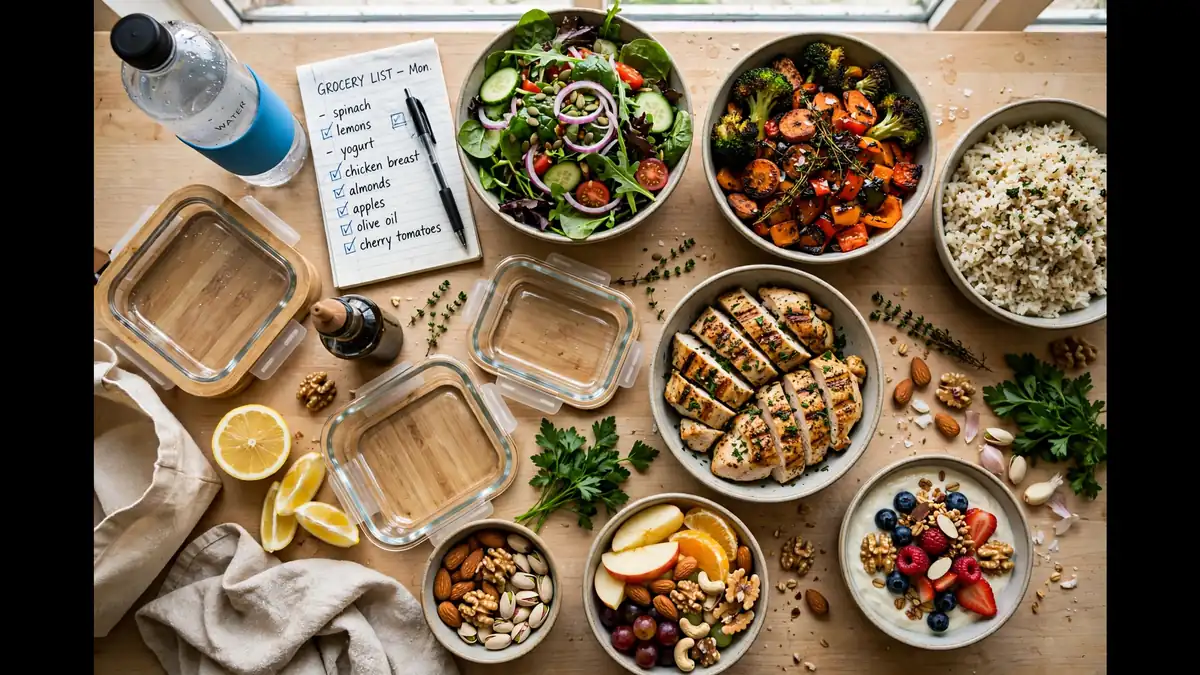
Smarter food choices rarely come from willpower alone on a busy day. Instead, good decisions usually come from simple systems set up earlier. Indeed, a stocked fridge and a short plan beat good intentions.
Work, family, study, and errands all compete for the same hours. Consequently, food often becomes whatever is fastest, closest, or already open. However, a different pattern is possible without cooking from scratch daily. Moreover, that pattern does not require perfection, expensive ingredients, or complicated rules.
This guide shares practical habits for women with packed schedules and full lives. Firstly, it covers planning and meal prep for busy women in realistic steps. Secondly, it explains labels, protein, fibre, snacks, and hydration in plain language. Finally, it shows how to handle grocery trips and eating out calmly.
Please treat this article as general lifestyle information for everyday planning. Specifically, it is not dietary or medical advice for any individual condition. Therefore, speak with a qualified professional about personal health concerns or special needs.
Why Busy Days Make Food Decisions Harder
Hunger and tiredness make every decision feel heavier than it should. For example, a skipped lunch often leads to a rushed evening supermarket dash. As a result, you buy whatever looks quick rather than what you enjoy.
Decision fatigue plays a quiet role in many weekly food routines. After dozens of choices at work, one more choice feels exhausting at home. In contrast, a loose plan removes that final question almost completely. Similarly, ready ingredients turn dinner into assembly rather than invention every night.
Convenience foods exist for a reason, and they sometimes help genuinely. Frozen vegetables, canned beans, and plain yoghurt are convenient yet still nourishing options. Indeed, processed does not automatically mean poor quality in every single case. Rather, the overall pattern across your week matters far more.
Start With a Simple Weekly Meal Plan
Meal planning tips work best when they stay deliberately small and flexible. Plan four or five dinners, and leave the remaining evenings open intentionally. Consequently, takeaways, invitations, and lazy nights fit inside the plan instead.
Choose a short planning moment that already exists in your routine. Sunday coffee, a Friday commute, or a quiet evening all work well. Furthermore, keep the plan visible on your fridge or phone home screen. Otherwise, a beautiful plan hidden in an app gets forgotten quickly.
Build Your Week Around Themes and Repeats
Theme nights reduce thinking without making every week taste exactly identical. Soup Monday, stir-fry Wednesday, and pasta Friday give structure with real variety. Moreover, themes let you swap ingredients freely based on prices and leftovers.
Repeating a favourite lunch is not a failure of imagination either. In fact, a reliable rotation saves money and cuts waste noticeably. For instance, a grain bowl can change daily through sauces and toppings. Meanwhile, the base ingredients stay reassuringly familiar and easy to shop for.
Planning also supports the wider habits that keep life feeling balanced. Readers exploring broader wellbeing may enjoy this perspective on mental health and turning the page to a healthier mind. Similarly, calm routines around food often support calmer routines elsewhere too.
Keep a Running List of Reliable Meals
Write down ten meals you can cook without opening a recipe book. Include honest favourites, including very simple options like eggs on toast. Additionally, note which meals freeze well and which reheat well for lunch.
Your list becomes a rescue tool on the hardest and longest days. Rather than scrolling delivery apps while hungry, you scan familiar and doable options. As a result, dinner starts sooner and usually costs far less overall.
Meal Prep That Fits a Real Schedule
Meal prep for busy women does not mean identical boxes lined up daily. Instead, think in components that mix and match across several different meals. Indeed, component prep keeps flavours flexible and boredom away for longer.
Set aside one short prep session, perhaps ninety minutes, once each week. Wash salad leaves, chop sturdy vegetables, and cook a large grain batch. Furthermore, marinate a protein or cook beans while the oven heats.
Prep Components, Not Complete Meals
Component prep is the most forgiving style of healthy eating on a busy schedule. Cooked rice, roasted vegetables, and grilled chicken combine in many different ways. For example, those three become a bowl, a wrap, or soup.
Hard-boiled eggs offer another wonderfully flexible building block for busy weeks. They suit breakfasts, salads, sandwiches, and quick protein-rich snacks between meetings. Moreover, eggs store neatly and travel well in a small container.
Overnight oats handle breakfast with almost no morning effort at all. Combine oats, milk or yoghurt, and fruit in a jar overnight. In the morning, simply add nuts or seeds and eat it cold. Alternatively, warm the jar briefly if you prefer a hot start.
Use Power Blocks Instead of a Marathon Session
Long prep marathons often cause people to quit after two weeks. Instead, split prep into two shorter sessions across the week instead. For instance, prep Sunday basics, then refresh vegetables and proteins on Wednesday.
Music, a podcast, or a favourite show can make prep feel lighter. Meanwhile, a tidy-as-you-go habit keeps the kitchen calm and manageable throughout. Consequently, prep feels like a routine rather than a weekly punishment.
Batch Cooking Ideas That Save Weeknights
Batch cooking ideas turn one cooking effort into several easy future meals. Double a soup, stew, curry, or pasta sauce whenever you cook one. Then freeze half in labelled portions for a genuinely busy week.
Freezing works beautifully for grains, beans, sauces, and many cooked proteins too. Use clear containers, and write the contents and date on each lid. Furthermore, rotate older portions forward so nothing disappears into freezer fog.
Leftovers deserve a plan rather than a hopeful spot in the fridge. Yesterday roast chicken becomes today salad, tomorrow soup, and Friday fried rice. Similarly, roasted vegetables move easily between wraps, omelettes, salads, and grain bowls. In short, one tray can quietly support half your week.
Kitchen habits often connect with a wider interest in thoughtful everyday living. For readers drawn to that direction, this look at sustainable green lifestyles and everyday choices explores related ideas. Waste reduction, incidentally, is one happy side effect of batch cooking.
The Balanced Plate Method, Made Simple
A balanced plate gives you structure without weighing or counting anything at all. Fill roughly half the plate with vegetables or salad for volume. Then add a palm-sized portion of protein for staying power throughout.
Reserve roughly a quarter of the plate for grains or starchy vegetables. Brown rice, wholegrain pasta, potatoes, and oats all fit this role well. Additionally, include a small amount of fat for flavour and satisfaction. Olive oil, nuts, seeds, avocado, and cheese all work in moderation.
Protein-Rich Meals Without Complicated Cooking
Protein helps many people feel fuller after a meal for longer. Good everyday sources include eggs, chicken, fish, beans, lentils, and tofu. Greek yoghurt, cottage cheese, and milk also contribute useful amounts daily.
Plant proteins deserve a regular place in a busy weekly rotation. Lentils cook quickly, need no soaking, and suit soups and salads beautifully. Moreover, canned beans need only rinsing before they join wraps or stews.
Tinned fish offers another fast and affordable route to protein-rich meals. Sardines, tuna, and salmon need no cooking and store for months safely. For example, tinned fish on wholegrain toast makes lunch in five minutes.
High-Fibre Foods That Keep Meals Satisfying
Fibre comes from plants, and variety matters more than any single superfood. Beans, lentils, oats, whole grains, vegetables, fruit, nuts, and seeds count. Indeed, adding one high-fibre food per meal is a manageable starting point.
Increase fibre gradually, especially if your current meals contain very little. Sudden large increases can feel uncomfortable for some people during adjustment periods. Therefore, pair extra fibre with regular drinks of water throughout the day.
Simple swaps raise fibre without changing the meals you already love. Choose wholegrain bread over white, and keep skins on potatoes and apples. Furthermore, add beans to soups and mince dishes without announcing it loudly. Gradually, these small changes become the normal way your kitchen works.
Healthy Breakfast Ideas for Rushed Mornings
Breakfast often disappears first when mornings shrink and alarms feel brutal. However, a prepared option changes that pattern with almost no daily effort. Overnight oats, yoghurt pots, and egg muffins all wait ready in fridges.
A smoothie can work well when chewing feels like too much effort. Blend fruit, yoghurt or milk, oats, and a spoonful of nut butter. Moreover, frozen fruit makes smoothies cheap, cold, and available all year.
Keep an emergency breakfast at work for mornings that defeat planning completely. A small pot of oats, a nut bar, or long-life milk helps enormously. Consequently, you avoid starting the day hungry and distracted by mid-morning.
Smart Snacking Ideas Between Meals
Smart snacking ideas start with keeping good options visible and genuinely within reach. Place fruit on the counter and yoghurt at eye level in fridges. In contrast, hide nothing and ban nothing, because bans usually backfire eventually.
Pair a protein or fat with a fibre-rich food for lasting satisfaction. Apple slices with nut butter and crackers with hummus both follow this pattern. Similarly, yoghurt with berries and a handful of nuts works beautifully.
Desk drawers and handbags benefit from a small planned snack stash too. Roasted chickpeas, mixed nuts, seeds, and plain popcorn travel without refrigeration worries. Furthermore, pre-portioned bags stop a snack becoming an accidental second lunch.
Vending machines and petrol stations are not automatic disasters for your plans. Look for nuts, plain popcorn, yoghurt, fruit, or cheese where available there. Indeed, the best available option beats the perfect option you never find.
Appearance and food enjoyment often travel together in everyday confidence and routines. Readers interested in that side of self-care may enjoy this guide to natural skincare for women and a natural glow. Balanced routines, after all, usually support each other quietly.
How to Read Food Labels Without Stress
Learning how to read food labels turns marketing claims into useful information. Start with the serving size, because every other number depends on it. For example, a small-looking package may contain two servings, not one.
Next, scan added sugar, sodium, and saturated fat in that order. Lower numbers generally suit everyday products that you eat very frequently. Meanwhile, check fibre and protein, where higher numbers usually help satisfaction.
Use the per hundred grams column when comparing two similar products fairly. Serving sizes vary between brands, so per serving comparisons can mislead you. Therefore, like-for-like comparison is the honest way to choose between cereals.
Ingredients appear in descending order by weight on most packaged foods. Whole ingredients near the top usually signal a simpler and clearer product. Additionally, a long list is not automatically bad, so judge calmly. In fact, frozen vegetable mixes can carry long names yet remain excellent.
Front-of-pack words like natural or light deserve healthy and polite scepticism. Those words describe limited claims and rarely tell the whole nutritional story. Consequently, the back label remains your most reliable source of truth.
Grocery Shopping List Tips That Save Time
Good grocery shopping list tips begin before you leave the house at all. Check the fridge, freezer, and cupboards, and note what needs using first. Then write the list by shop section: produce, protein, dairy, and cupboard.
Shopping the perimeter first fills your trolley with fresh basics early on. Fruit, vegetables, proteins, and dairy usually sit around the outer edges there. Moreover, a full-looking trolley discourages impulse additions in the middle aisles later.
Online ordering and click-and-collect can rescue weeks with no shopping time available. Saved lists make reordering staples fast, consistent, and much less stressful overall. Additionally, local shops and markets can top up fresh items midweek easily. Readers curious about that trend can explore local e-commerce and neighbourhood marketplaces for wider context.
Pantry Staples List for Fast, Flexible Meals
A reliable pantry staples list turns random ingredients into dinner within minutes. Keep oats, rice, pasta, canned tomatoes, beans, lentils, and tinned fish stocked. Furthermore, add onions, garlic, eggs, and a few favourite spices always.
Frozen vegetables and frozen fruit deserve permanent space in your freezer too. They store for long periods and need no washing or chopping beforehand. Indeed, frozen produce is often the reason vegetables appear at all.
Sauces and flavour builders stop healthy basics tasting repetitive and dull quickly. Soy sauce, vinegar, mustard, chilli flakes, and curry paste all earn shelf space. Similarly, lemon juice and fresh herbs lift simple meals almost instantly.
Stock rotation keeps the whole system honest, affordable, and genuinely low waste. Use the oldest tins first, and note running lows on your list. As a result, emergency takeaway orders drop because dinner is always possible.
Whole Foods, Convenience Foods, and Honest Balance
Whole foods vs processed foods is a spectrum, not a moral judgement. Vegetables, fruit, grains, beans, eggs, and plain dairy sit at one end. Meanwhile, heavily sweetened drinks and snacks sit toward the other end generally.
Many middle options serve busy women extremely well throughout an ordinary week. Wholegrain bread, plain yoghurt, nut butter, and frozen vegetables are processed yet useful. Therefore, judge a food by its ingredients and role, not packaging alone.
Health information online varies wildly in quality, tone, and actual usefulness today. Readers comparing approaches may find this overview of a modern approach to wellness and care interesting background. Always, however, return to qualified professionals for personal medical questions.
Hydration Tips for Women on the Move
Hydration tips for women start with making water visible and easy all day. Keep a bottle on your desk, in your bag, and beside your bed. Consequently, drinking becomes a habit rather than another task to remember.
Plain water suits most everyday situations perfectly well and costs almost nothing. Sparkling water, herbal tea, and water with cucumber or citrus add variety. Moreover, water-rich foods like melon, oranges, and soups contribute fluid too.
Sugary drinks add sweetness without the fibre that whole fruit provides naturally. Swapping one daily soda for water or unsweetened tea is a gentle start. Similarly, alternating alcoholic drinks with water helps many people at social events.
Thirst, headaches, and tiredness sometimes overlap confusingly during long and busy afternoons. A drink and a short pause help you judge what you need. However, persistent symptoms deserve proper medical attention rather than internet guesswork ever.
Eating Out Without Derailing Your Week
Eating out healthy tips begin long before you sit at the table. Glance at the menu online and shortlist two options you genuinely fancy. As a result, ordering feels calm even when the table orders quickly.
Avoid arriving ravenous, because extreme hunger makes every portion look entirely reasonable. A small snack beforehand, like fruit or yoghurt, takes the edge off. Indeed, that tiny step protects both your budget and your comfort.
Look for cooking words that signal lighter preparation on any restaurant menu. Grilled, baked, roasted, and steamed dishes usually use less added fat overall. In contrast, crispy, creamy, and buttery descriptions usually signal richer dishes ahead.
Build your restaurant plate using the same balanced plate method from home. Choose a protein, add vegetables generously, and pick a grain or potato side. Additionally, ask for dressings and sauces on the side for control.
Restaurant portions often exceed home portions by a comfortable and noticeable margin. Share a main, order a starter plus a side, or box leftovers. Furthermore, eating slowly lets fullness register before the plate is completely empty.
Dining out remains one of life pleasures, especially while travelling somewhere new. This feature on Straw Hat Restaurant in Anguilla and its dining experience captures that enjoyment well. Likewise, this roundup of the best Brockway PA restaurants for unforgettable dining celebrates variety. Enjoyment and balance, in short, belong at the same table.
Quick Healthy Lunches for Workdays
Quick healthy lunches solve the most skipped and most rushed meal daily. Leftovers from dinner remain the simplest lunch system ever invented by anyone. Cook one extra portion, box it immediately, and tomorrow is sorted completely.
Mason jar salads keep greens crisp when dressing sits at the bottom. Layer grains, protein, sturdy vegetables, and leaves on top in that order. Moreover, a jar travels well and looks genuinely appetising at lunchtime.
Wraps and sandwiches improve quickly with a few deliberate and simple upgrades. Choose wholegrain wraps, add a protein, and pack vegetables in generously anyway. For instance, hummus adds flavour, moisture, and plant protein in one spread.
Soup deserves a regular winter place in any busy lunch rotation plan. One large pot covers several lunches and freezes in single portions neatly. Consequently, a warm and filling lunch is always ten minutes away.
Common Questions About Eating Well When Busy
How much meal prep is enough to start with?
Start with one grain, one protein, and one tray of vegetables weekly. That small base already supports several lunches and at least two dinners. Gradually, add breakfast jars or snacks once the basic routine feels easy.
What if I dislike cooking altogether?
Assemble rather than cook, using rotisserie chicken, bagged salad, and microwave grains. Those shortcuts still deliver balanced and satisfying meals at home very quickly. In addition, a slow cooker turns minimal effort into finished dinners reliably.
Are frozen vegetables a good choice for busy weeks?
Yes, frozen vegetables are practical, affordable, and ready without washing or chopping. They suit soups, stir-fries, curries, omelettes, and pasta dishes extremely well indeed. Keep several varieties, however, so flavours stay interesting across the week.
How can I stop afternoon snacking from spiralling?
Eat a proper lunch first, because skipped lunches drive most afternoon spirals. Then keep a planned snack ready, combining protein, fat, or fibre together. Finally, take the snack away from your screen and enjoy it properly.
Bringing Smarter Food Choices Into Everyday Life
Smarter food choices grow from systems, not from daily heroic effort and willpower. A short plan, prepped components, and stocked staples quietly do the heavy lifting. Moreover, those systems forgive busy days, travel, and unexpected late meetings easily.
Pick just two habits from this guide to practise during this week. Perhaps label reading at one shop and one batch cook on Sunday. As a result, progress feels real, visible, and entirely your own pace.
Food should support your life, and it should also taste genuinely good. Balanced plates, smart snacks, and flexible planning leave room for celebrations too. Ultimately, consistency across ordinary weeks matters far more than occasional perfect days.




