
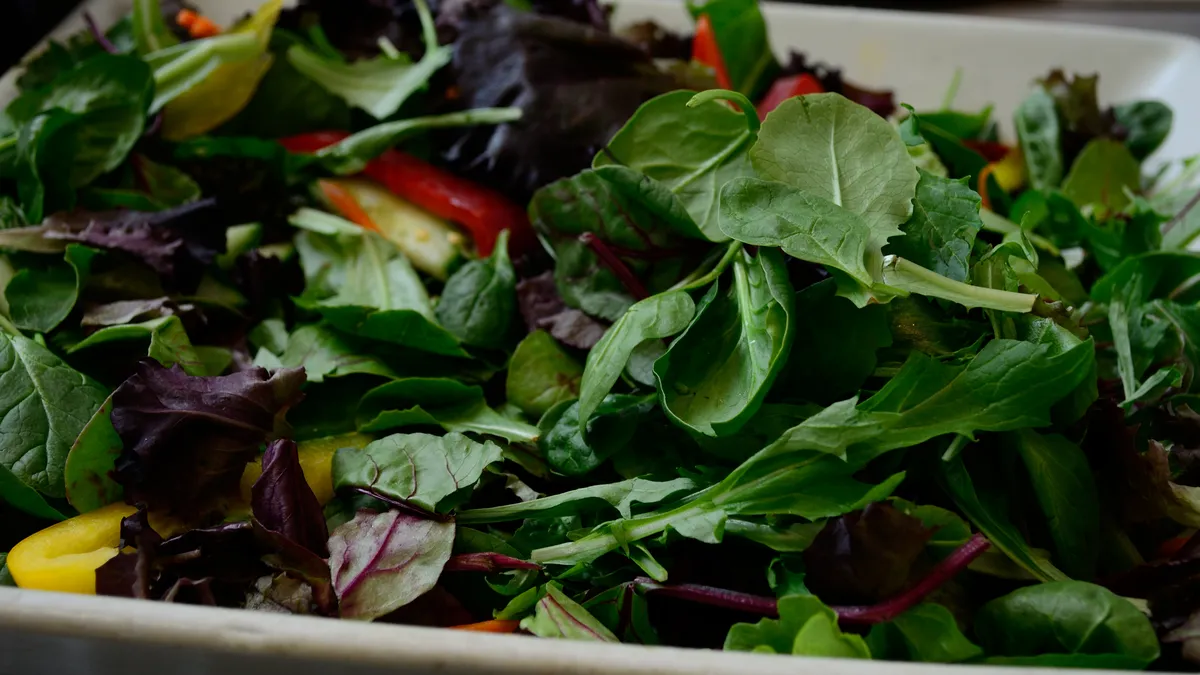
A salad looks like the simplest dish in the kitchen. Leaves go into a bowl, a few other things join them, and dressing ties the whole thing together. This guide explains how salads work as a system, not as one fixed dish. It looks at leaves, crunch, flavour, texture, and dressing, and it shows how those parts fit together. Once the system is clear, a salad stops feeling random. Every choice in the bowl starts to make sense.
Most salads share the same basic idea, although the details change a great deal from one bowl to the next. A green salad, a grain salad, and a warm salad can look nothing alike. However, each one still balances soft and crisp, mild and sharp, plain and rich. That balance is the real subject of this guide. In short, this is a salad explained from the inside out, starting with the parts and ending with the whole bowl.
What Is a Salad, Really?
At its core, a salad is a dish built from ingredients that are mixed rather than cooked into a single mass. The parts stay visible, and each bite can taste slightly different from the last. For example, one forkful might carry mostly leaf and dressing, while the next brings crunch and something savoury. That variety is not an accident. It is the point of the dish, and it is what separates a salad from a soup or a stew.
Salads also cross many lines that other dishes respect. They can be cold, warm, or mixed in temperature. They can sit at the start of a meal, beside a main dish, or stand on their own. Similarly, they can be built from leaves, grains, vegetables, fruit, cheese, eggs, seafood, or cooked meat. The common thread is not one ingredient. Instead, it is the way the ingredients are combined, dressed, and balanced before serving.
What Makes a Leaf Right for a Salad?
Leaves form the base of many salads, and this is where salad leaves explained in plain terms begins. A good salad leaf holds dressing without collapsing at once. It also gives the bowl volume, so a small amount of richer food can stretch across many bites. Tender leaves feel soft and gentle, while firmer leaves give a fresh snap. Both kinds have a place, and mixing them often works better than using one kind alone.
Flavour matters just as much as texture. Some leaves taste mild and almost grassy, which lets dressing and toppings do the talking. Others carry a peppery bite or a slight bitterness that wakes up a plain bowl. For example, a mild leaf makes a calm base for sharp cheese or pickled vegetables. A peppery leaf, on the other hand, can carry a simple oil dressing with very little help. Knowing that contrast helps a cook pick leaves with intent, rather than by habit.
Freshness changes everything about a leaf. A crisp leaf holds its shape and carries dressing on its surface. A tired leaf, however, turns soft and clings together in a damp heap. Cold water can revive leaves that have lost some snap, although badly wilted leaves rarely recover fully. Drying matters too, because water left on leaves thins the dressing and dulls its flavour. A salad spinner helps here, although a clean towel and a little patience do the same job.
What Else Goes Into a Salad?
Beyond leaves, salad ingredients explained simply means sorting everything else by the job it does. Some ingredients add crunch, such as toasted seeds, crisp vegetables, or croutons. Others add softness, such as ripe fruit, cooked grains, or soft cheese. Still others add savoury depth, such as olives, cured meats, or roasted vegetables. Each job matters, because a bowl made only of soft things feels flat, however good the dressing may be.
Colour plays a quieter role than most cooks admit. A bowl of one colour looks dull, even when the flavours are fine. Mixed colours, in contrast, signal variety before the first bite. Red tomato, orange carrot, green herbs, and pale cheese each promise something different. That promise shapes expectation, and expectation shapes taste. For instance, a bright bowl invites the eater to slow down and notice each part, rather than rushing through a uniform pile.
Size and shape deserve attention as well. Pieces cut to a similar size mix evenly and sit well on a fork. Large chunks, however, tend to sink or slide off, leaving the eater chasing them around the bowl. Small, even pieces also let dressing reach more surfaces. As a result, the whole salad tastes seasoned, not just the top layer. Cutting with care is therefore not fussiness. It is one of the simplest ways to make a salad eat well.
How Do You Build a Salad from Scratch?
Learning how to build a salad starts with order, not with a list of ingredients. Begin with the base, which is usually leaves or grains. Then add the main flavour, which might be roasted vegetables, cheese, or something savoury. After that, add crunch and colour, and finish with dressing. Working in that order keeps the bowl balanced, because each layer answers a need left by the one before it.
- A base gives the salad its bulk and its bed for everything else.
- Crunch breaks up softness and keeps each bite interesting.
- Sharp or salty notes wake up mild ingredients and lift the dressing.
- Something rich rounds out the edges and makes the bowl feel complete.
- Dressing binds the parts together and carries flavour across the bowl.
Proportion matters more than any single ingredient. Too much dressing drowns the leaves, while too little leaves the bowl dry and separate. Similarly, too many strong flavours crowd each other out, so no single note can be tasted clearly. A useful habit is to add dressing a little at a time, tossing gently between additions. The salad will tell you when it is ready, because the leaves will shine lightly without pooling liquid at the bottom of the bowl.
Why Does Balance Matter in a Salad?
Balance is the idea that no single taste should shout over the rest. This is salad balance explained in one sentence: every strong flavour needs a gentler partner. Rich cheese, for example, sits well beside sharp vinegar or bitter leaves. Sweet fruit, on the other hand, pairs well with salty cheese or toasted seeds. When those partners meet, the bowl tastes layered rather than loud, and each bite feels complete.
Balance also covers texture and temperature, not just taste. A bowl of only soft foods feels heavy, however fresh the ingredients may be. A bowl of only crisp foods, in contrast, can feel sharp and tiring to eat. Mixing soft and crisp gives the mouth something to do, and the contrast keeps attention alive. Warm and cool elements work the same way, since a warm topping over cool leaves creates a pleasing tension that a single temperature cannot match.
Many cooks learn balance by tasting as they go, and that habit beats any fixed rule. Taste the leaves with dressing before adding toppings. Then taste again after each strong addition. If one flavour dominates, add its opposite rather than removing the strong ingredient. For instance, extra sharpness can be softened with something mild and creamy, while dullness can be lifted with acidity or salt. Small adjustments like these turn a decent salad into a memorable one.
How Does Texture Change a Salad?
Texture is often the difference between a salad people enjoy and one they merely finish. This is salad texture explained through eating itself: the mouth notices crunch, softness, chew, and creaminess before it sorts out fine flavour. A crisp vegetable snaps, a leaf folds softly, and a creamy dressing coats the tongue. When those sensations alternate, eating stays interesting from the first bite to the last.
Crunch deserves special care because it fades fast. Toasted seeds, crisp vegetables, and croutons all soften once dressing touches them. For that reason, many cooks add crunchy toppings at the very end, just before serving. Similarly, dressing a salad too early can wilt leaves and dull every crisp element in the bowl. Timing, therefore, is part of texture. A salad dressed at the last moment tastes livelier than one that has sat dressed for a long while.
Creaminess works as a counterweight to crunch. Soft cheese, a thick dressing, or ripe fruit can smooth the sharp edges of raw vegetables. Without that softness, a very crisp salad can feel harsh. With too much of it, however, the bowl turns heavy and dull. The trick is to let soft and crisp share the bowl in roughly equal measure. Then each bite offers contrast, and neither sensation wears out its welcome.
What Is Dressing, in Plain Terms?
Dressing is the liquid seasoning that coats a salad and carries flavour to every part. This is salad dressing explained at its simplest: dressing seasons, moistens, and unifies. Without it, leaves taste plain and toppings taste separate. With it, the bowl becomes one dish rather than a pile of ingredients. Dressing also adds richness, sharpness, or sweetness, depending on what goes into it.
Most dressings fall into two broad families. Vinaigrettes mix oil with something acidic, such as vinegar or citrus juice, plus seasoning. Creamy dressings, in contrast, build on a thick base such as yoghurt, blended cheese, or mayonnaise-style sauces. Vinaigrettes feel light and bright, while creamy dressings feel soft and coating. Neither family is better in general. Instead, each suits different salads, and the choice shapes the whole character of the bowl.
Seasoning turns a plain mixture into a finished dressing. Salt sharpens flavours that would otherwise taste flat. A pinch of sweetness can round off harsh acidity, although too much sweetness pushes the dressing toward dessert. Herbs, garlic, mustard, and spices each add their own voice. For example, mustard does double duty in a vinaigrette, since it adds flavour and also helps the mixture hold together. Tasting and adjusting in small steps is the surest path to a dressing that fits its salad.
What Happens When Oil and Vinegar Meet?
Oil and vinegar do not naturally mix, and that fact sits at the heart of salad dressing science. Oil is fat, vinegar is mostly water, and the two prefer to stay apart. Shaken together, they form a cloudy mixture that looks united for a short while. Left alone, however, the oil rises and the vinegar sinks, and the dressing separates again. That separation is normal, and it explains why vinaigrettes need shaking before use.
The cloudy stage has a name, although cooks rarely use it at the table. It is called an emulsion, which means tiny drops of one liquid suspended in another. Whisking or shaking breaks the oil into small droplets, and those droplets scatter through the vinegar. Smaller droplets stay suspended longer, so vigorous whisking gives a more stable dressing. Mustard, egg yolk, and similar ingredients help further, because they coat the droplets and slow their reunion. As a result, the dressing stays creamy and clings to leaves instead of sliding off.
Temperature and proportion also shape the result. Cold oil thickens slightly and mixes less readily, while room-temperature oil blends more easily. More oil than vinegar gives a softer, rounder dressing, whereas more vinegar gives a sharper bite. Neither choice is wrong on its own. The right balance depends on the salad beneath it, since bitter leaves welcome a softer dressing and rich toppings welcome sharper acidity. Understanding that trade-off lets a cook adjust with confidence, rather than guessing.
What About Sauces That Are Not Vinaigrettes?
Salad sauces explained beyond vinaigrettes opens up a wider world. Some salads wear thick, spoonable sauces that sit on top rather than coating every leaf. Others use warm sauces poured over just before serving. Still others rely on a flavoured oil, a herby green sauce, or a spiced yoghurt-style topping. Each approach changes the salad, because a sauce adds its own flavour, texture, and weight.
Thick sauces suit sturdy salads best. A grain salad or a roasted vegetable salad, for instance, can carry a heavy sauce without collapsing. Delicate leaves, on the other hand, bend under thick sauces and lose their lift. Lighter sauces suit lighter salads, since they season without smothering. Matching sauce weight to salad weight is therefore a useful rule. When the two match, the salad feels intentional. When they clash, one half of the dish overwhelms the other.
Sauces also let cooks borrow flavours from other food traditions. A sesame-style sauce, a herby green sauce, or a chilli-spiked dressing can each steer a plain bowl in a new direction. The base salad may stay the same, while the sauce changes its whole character. That flexibility is one reason salads travel so well across cuisines. The structure stays familiar, although the flavour story changes completely with the sauce on top.
How Do Warm Salads Differ from Cold Ones?
Warm salads explained simply means salads where at least one element arrives hot. Roasted vegetables, grilled bread, warm grains, or freshly cooked toppings can all play that role. The warmth softens leaves slightly where it touches them, which changes both texture and aroma. Heat also wakes up the scent of herbs and spices, so a warm salad often smells more inviting than a cold one. That aroma shapes the first impression before anyone takes a bite.
Warm salads need a little extra care in timing. If the hot element sits too long, it wilts the leaves beneath it into a soft heap. Served at once, however, the contrast between warm topping and cool leaves feels lively and fresh. Many cooks therefore build the cold base first, then add the warm element at the last moment. Grilled foods pair naturally with this style, and guides to barbeque techniques show how heat and smoke can shape cooked toppings before they ever reach the bowl.
Cold salads, by contrast, reward patience. They can be dressed ahead of serving, chilled, and brought out when the moment suits. Their flavours often settle and mingle during that rest, especially in grain or bean salads. Warm salads cannot wait in the same way, since their contrast fades as temperatures even out. Knowing that difference helps a cook choose the right style for the occasion, rather than forcing one approach onto every meal.
What Are the Main Types of Salad?
This is salad types explained by structure, not by name alone. Leaf salads start with greens and build outward with toppings and dressing. Grain salads start with cooked grains and treat vegetables, herbs, and dressing as partners. Vegetable salads skip leaves altogether and let chopped or roasted vegetables carry the dish. Fruit salads, meanwhile, lean on sweetness and acidity, often with herbs or citrus to keep them lively. Each type follows the same balancing logic, although the starting point differs.
Bound salads form another family, where ingredients are held together by a thick dressing. Classic examples mix chopped vegetables, eggs, or seafood with a creamy coating. These salads feel denser and more filling than leaf salads, and they often serve well as fillings or sides. Restaurant menus show the same range in practice, from light leaf bowls to hearty composed plates, as seen in restaurant dining guides that describe salads alongside main dishes. The setting changes, although the balancing act stays the same.
Composed salads arrange ingredients in separate groups rather than tossing them together. Each element keeps its own colour, shape, and flavour until the eater mixes them on the plate. That style suits presentation, since the bowl looks deliberate and tidy. Tossed salads, in contrast, mix everything before serving, so every bite already contains the full range. Neither style is superior. Instead, each answers a different need, one for display and one for even flavour in every forkful.
How Does a Salad Become a Meal?
Salad as a meal explained comes down to substance and staying power. A side salad can be light, since other dishes follow it. A salad meant to stand alone, however, needs more weight and variety. That weight often comes from grains, beans, eggs, cheese, seafood, or cooked meat, which give the bowl body. Without such an anchor, a large bowl of leaves alone can feel thin, however generous the portion may look.
Variety matters just as much as weight. A meal salad should offer several flavours and textures, so interest lasts through the whole bowl. A single note, repeated for many bites, grows dull fast. Combining something savoury, something fresh, something crisp, and something rich keeps the eater engaged. Menus built around seafood show this idea in action, since a seafood-topped salad pairs fresh leaves with savoury depth, as in seafood restaurant dishes where salads share the table with richer plates.
Portion and pacing also shape whether a salad satisfies as a meal. A meal salad is usually served in a wider, deeper bowl that lets the eater toss and mix without spilling. It also arrives as the centre of attention, not as an afterthought beside a larger dish. When a salad is treated that way, with care in building and dressing, it rarely feels like a lesser option. It feels like a complete dish in its own right, built on the same balancing logic as any other meal.
What Are the Basics of Preparing a Salad?
Salad preparation basics start before any cutting begins. Wash leaves and vegetables well, then dry them thoroughly, since water thins dressing and dulls flavour. Keep ingredients cold until assembly when the salad is meant to be served cold. Gather dressings, toppings, and serving bowls in advance, because salads come together fast at the end. That small amount of preparation prevents a rushed, soggy result.
Cutting technique shapes the final dish more than most cooks expect. Even pieces mix well and eat well, while uneven pieces separate in the bowl. Herbs deserve a gentle hand, since bruising them darkens their colour and dulls their scent. A sharp knife helps here, because it slices cleanly instead of crushing. For cooks weighing smarter food choices in a busy week, simple preparation habits like these save time later, since a well-prepped salad comes together in minutes when the moment arrives.
Order of assembly is the last basic, and it is easy to overlook. Dress sturdy ingredients first, since they can stand up to dressing without wilting. Add delicate leaves next, and toss lightly so the dressing coats without crushing. Finish with fragile toppings, such as fresh herbs or crisp crumbs, at the very end. Following that order keeps each part at its best. Skipping it, however, often means the most delicate parts suffer first, even when the ingredients themselves are excellent.
How Can Two Salads Taste So Different?
Two salads can share the same leaves and still taste nothing alike. Dressing alone can change the result, since a sharp vinaigrette and a creamy sauce pull the bowl in opposite directions. Toppings push it further, because salty, sweet, smoky, and herby notes each rewrite the flavour story. This is why a salad varieties guide matters: it shows that variety comes from choices, not from rare ingredients. Ordinary parts, combined with intent, can produce very different dishes.
Culture and season add further variety. Cooks in different places favour different herbs, oils, pickles, and grains, and those preferences shape local salads. Seasonal change does the same work, since summer produce and winter produce invite different partners. A tomato salad in warm weather, for instance, needs little beyond oil and salt. A winter grain salad, in contrast, leans on roasted vegetables and bold dressings. Both follow the same system, although the ingredients tell different stories.
Personal taste is the final variable. Some eaters love sharp acidity, while others prefer soft, rounded flavours. Some want crunch in every bite, while others favour gentle textures. A good salad system leaves room for those preferences, rather than forcing one ideal bowl. Menus from many places show that range, from restaurant menus to restaurant menus and restaurant guides that list salads among many other dishes. The system stays constant, although the bowl changes with the eater.
What Should You Remember About Salads?
A salad works when its parts cooperate. Leaves give bulk and freshness, toppings add flavour and texture, and dressing binds everything together. Balance keeps strong flavours in check, while contrast keeps eating interesting. None of these parts works alone, and none can rescue a bowl where the others are ignored. That cooperation is the whole secret, and it is simpler than most cooks fear.
The best way to learn is to build, taste, and adjust. Start with a base you like, add one strong flavour, then balance it with its opposite. Notice what crunch adds, what acidity lifts, and what richness softens. Over time, those observations turn into instinct, and salads stop needing careful thought. Until then, this system gives a reliable path: base, flavour, crunch, richness, dressing, and a final taste before serving. Follow it, and the bowl will rarely go wrong.
Above all, remember that a salad is a dish, not a duty. It can be light or hearty, cold or warm, simple or elaborate. It can open a meal, accompany one, or stand alone. However it is served, the same logic applies: choose parts that contrast, dress them lightly, and taste as you go. That is how salads work, and that is why such a simple dish can hold endless variety.




