
Seven days around Iceland sounds generous until you see the map. However, the full loop covers roughly 1,332 kilometres on Route 1. Moreover, the best stops sit far apart, especially in the east and north. This Iceland Ring Road itinerary 7 days plan therefore keeps every day honest and achievable.
The route below runs anti-clockwise from Reykjavik. Firstly, you clear the Golden Circle and the busy South Coast. Then you slow down slightly through the quieter Eastfjords and the north. Finally, you return via Borgarnes with one honest detour decision to make.
Better still, this guide sells you nothing at all. You get realistic driving times, sensible overnight bases and clear safety notes instead. In addition, a full section explains when the full loop is the wrong choice. Overall, seven days can work beautifully, but only with the right season and pacing.
What does the Iceland Ring Road route map and overnight stops plan look like?
Think of the Iceland Ring Road route map and overnight stops as seven linked stages. Each stage ends in a town with fuel, food and a proper bed. Furthermore, no stage demands a heroic drive after dark. The table below shows the whole shape in seconds.
| Day | Route | Roughly driving time? | Overnight stop |
|---|---|---|---|
| Day 1 | Reykjavik and the Golden Circle | About 3 to 4 hours total | Selfoss area |
| Day 2 | South Coast to Vik | About 2.5 to 3 hours | Vik |
| Day 3 | Vik to Hofn via the glacier lagoon | About 3 to 3.5 hours | Hofn |
| Day 4 | Hofn to Egilsstadir via the Eastfjords | About 3 to 4 hours | Egilsstadir |
| Day 5 | Egilsstadir to Myvatn and Akureyri | About 4 to 5 hours with stops | Akureyri |
| Day 6 | Akureyri to Borgarnes | About 4 to 5 hours | Borgarnes |
| Day 7 | Borgarnes, optional Snaefellsnes, Reykjavik | About 1.5 hours, or 5 plus with the detour | Reykjavik |
Ring Road driving times per day stay manageable in this version. Most days sit between roughly three and five hours behind the wheel. However, stops, weather and photo breaks always stretch the clock. Therefore, treat every figure here as a fair-weather guide, never a promise.
Similarly, the overnight bases matter as much as the sights themselves. Vik, Hofn and Egilsstadir break the long eastern stretches perfectly. Meanwhile, Akureyri gives you a real town night in the north. Borgarnes, finally, shortens your last day back to the capital.
Should you do the Ring Road in 7 days or slow down?
Many readers ask one blunt question before booking anything. So, should you do the Ring Road in 7 days or slow down? The honest answer depends on daylight, weather confidence and your driving stamina. Seven days suit confident drivers in late spring, summer and early autumn.
Firstly, summer rewards this pace with very long daylight hours. You can therefore start late, stop often and still arrive in daylight. Secondly, the roads stay clearest and most predictable in those months. Consequently, your daily timing estimates actually hold in practice.
However, ten days feel noticeably kinder if you can spare them. Extra nights let you linger at the lagoon or explore the Westfjords properly. Moreover, a slower pace absorbs one bad-weather day without breaking the plan. Still, a well-run seven days beat a rushed ten with poor bases.
Alternatively, fewer than seven days change the advice completely. With four or five days, skip the full loop entirely. Instead, combine the Golden Circle with the South Coast as far as the glacier lagoon. That shorter trip delivers Iceland’s biggest sights without punishing daily drives.
What is the best month to drive the Ring Road?
Timing decides whether this itinerary feels relaxed or relentless. The best month to drive the Ring Road for most people is June. Days then stretch almost endlessly, and all main roads normally stand open. July, similarly, brings warm weather and the busiest roads of the year.
September also deserves serious consideration for a seven-day loop. Crowds thin out, prices often soften and autumn colours light up the valleys. Furthermore, the first northern lights sometimes appear on darker September nights. In contrast, May offers long days but cooler and changeable conditions.
Winter sits in a different category altogether, as a later section explains. Daylight shrinks to just a few hours around midwinter in the north. Therefore, the same route needs more days and far more caution then. Overall, late spring to early autumn remains the realistic window.
Travellers planning other scenic drives may enjoy our roundup of the best nature places to visit in the world for comparison. Iceland, however, packs unusual variety into one single road. Few countries match its waterfalls, glaciers and volcanic fields in one loop.
Day 1: the Golden Circle in one day route
Day one eases you into Icelandic driving on familiar ground. The Golden Circle in one day route links three famous sights in one loop. Moreover, the roads here feel straightforward and well travelled year-round. You therefore learn the car’s habits before the remote stretches begin.
Thingvellir, Geysir and Gullfoss in order
Start from Reykjavik and head first to Thingvellir National Park. The park protects a rift valley between two continental plates. Furthermore, Iceland’s ancient parliament first gathered on these plains. Allow enough time to walk the main fissures and viewpoints properly.
Next, continue east to the Geysir geothermal area. Strokkur erupts regularly there, throwing hot water high into the air. Meanwhile, steaming vents and bubbling pools cover the surrounding ground. Afterwards, drive the short hop to Gullfoss, a vast two-tier waterfall nearby.
Gullfoss rewards a slow visit in almost any weather. Mist rolls off the canyon and rainbows often form in sunshine. Finally, head south towards Selfoss for your first overnight stop. That base shortens tomorrow’s South Coast drive considerably.
Day 2: Seljalandsfoss and Skogafoss South Coast waterfalls to Vik
Day two delivers the classic South Coast in one satisfying sweep. The Seljalandsfoss and Skogafoss South Coast waterfalls anchor the morning and midday. Between them, the road runs beneath green cliffs and glacier-capped volcanoes. In addition, black beaches wait near your overnight stop in Vik.
Walking behind Seljalandsfoss and climbing beside Skogafoss
Seljalandsfoss drops gracefully from an ancient sea cliff near the road. A path leads behind the curtain of water itself. However, that path stays wet, slippery and thoroughly soaking for visitors. Therefore, wear waterproof layers and shoes with genuine grip here.
Skogafoss, by contrast, hits the ground with real thunder. The wide fall throws up constant spray and frequent rainbows. Furthermore, a staircase climbs beside it to a viewing platform above. The river walk beyond the platform also deserves a short stretch.
Afterwards, continue east across dark sand plains towards Vik. Glaciers loom inland while the coastline stays wild and open. Arrive with enough daylight left for the beach safety visit below. Vik itself offers fuel, food and a calm small-town evening.
How does Reynisfjara black sand beach safety work in practice?
Reynisfjara black sand beach safety deserves your full attention, without exception. This beautiful beach near Vik has genuinely dangerous waves. Sneaker waves can surge far up the beach without any warning. People have died here after underestimating that sudden reach.
Firstly, never turn your back on the sea at Reynisfjara. Secondly, stay well back from the waterline, even on calm days. Moreover, obey the warning signs and the traffic-light system at the entrance. A red light means you stay off the lower beach entirely.
Children, especially, need close supervision on the black sand. Waves also move loose rocks and can knock adults off balance. Therefore, admire the basalt columns and sea stacks from a safe distance. The view loses nothing at all from further back.
Day 3: Jokulsarlon Glacier Lagoon and Diamond Beach to Hofn
Day three often becomes the favourite day of the whole loop. The Jokulsarlon Glacier Lagoon and Diamond Beach sit close together near Hofn. Between Vik and the lagoon, the road also crosses vast lava fields. Consequently, the scenery changes completely several times before lunch.
Firstly, leave Vik reasonably early to protect your lagoon time. The drive to Jokulsarlon takes roughly two and a half hours alone. Moreover, the Skaftafell area tempts walkers with glacier views en route. Still, resist long hikes today, because the lagoon deserves hours.
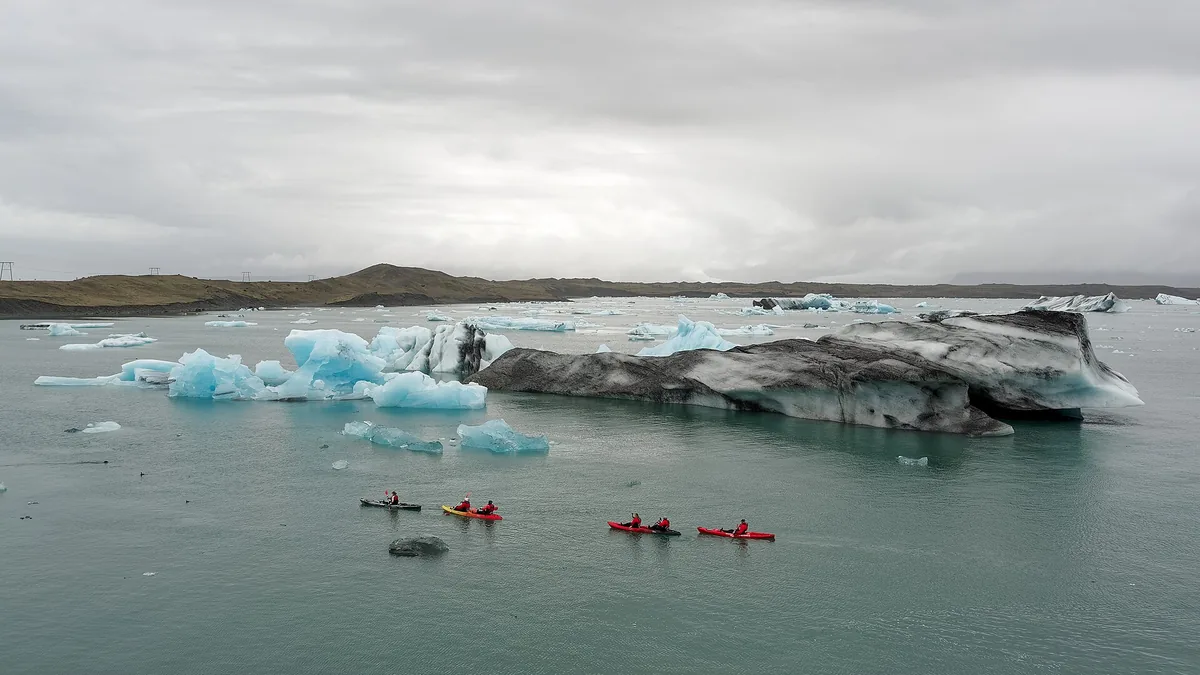
At the lagoon, icebergs drift slowly from the glacier towards the sea. Seals sometimes swim between the blue and white bergs near the bridge. Furthermore, the light changes the colours constantly throughout the day. Photographers, therefore, should allow generous time on both shores.
Across the road, Diamond Beach scatters polished ice chunks on black sand. Each fragment glitters briefly before the waves reclaim it again. Afterwards, continue the short drive east to Hofn for the night. Hofn is a fishing town known locally for its langoustine.
Nature lovers comparing global trips may also enjoy our guide to places to visit in New Zealand in winter afterwards. Both countries reward drivers who respect weather and distance. Iceland, however, concentrates its drama along one unforgettable coastal road.
Day 4: the Eastfjords Egilsstadir stop
Day four feels quieter, and that quiet becomes its charm. The Eastfjords Egilsstadir stop breaks the journey through Iceland’s least crowded region. Moreover, the road winds around fjords rather than cutting straight across them. Therefore, average speeds drop and the driving feels more leisurely.
The Hofn to Egilsstadir leg takes roughly three to four hours. Fishing villages appear at intervals along the folded coastline. For example, Djupivogur makes a gentle pause with harbour views. In addition, reindeer sometimes graze near the road in this region.
Egilsstadir itself is a practical and friendly service town. It sits beside a long lake surrounded by planted forest. Furthermore, it offers the best resupply point before the northern stretch. Stock up here, refuel fully and enjoy an early night.
Some travellers rush this day and regret the haste later. The fjords, however, reward exactly the slower pace you planned. Meanwhile, tomorrow brings bigger driving and Iceland’s most powerful waterfall. Rest, therefore, becomes a genuine part of today’s itinerary.
Day 5: Lake Myvatn and Dettifoss North Iceland to Akureyri
Day five packs the north’s biggest contrasts into one long stage. Lake Myvatn and Dettifoss North Iceland headline a route through volcanic country. Moreover, geothermal fields steam beside the road near your lunch stop. This Iceland Ring Road itinerary 7 days plan therefore starts today early.
Dettifoss first, then the Myvatn area
Leave Egilsstadir and cross the open highland edge towards Dettifoss. The Egilsstadir to Myvatn drive takes roughly two hours without stops. Dettifoss, however, sits down a side road and demands a detour. Allow proper time there, because the scale genuinely overwhelms visitors.
The waterfall pours a huge volume of grey glacial water over a canyon edge. Spray rises constantly and the ground trembles slightly nearby. Furthermore, paths on the eastern side usually give the closest views. Take care on wet rock, especially in wind and drizzle.
Afterwards, continue to the Lake Myvatn area for geothermal sights. Bubbling mud pools and steaming vents surround the nearby Namaskard pass. Meanwhile, the lake itself supports rich birdlife in summer months. Pseudocraters and lava formations also line parts of the southern shore.
Godafoss waterfall and Akureyri in the evening
From Myvatn, the road west leads naturally towards Akureyri. The Godafoss waterfall and Akureyri pairing closes the day perfectly. Godafoss curves gracefully beside the main road, so the stop feels easy. Legend links the falls with Iceland’s conversion to Christianity long ago.
Spend enough time at both viewing levels at Godafoss. The upper paths show the full horseshoe shape clearly. Then drive the final stretch, roughly under an hour, into Akureyri. In contrast to tiny villages, Akureyri offers restaurants, shops and lively streets.
Adventure planners may compare this northern day with our guide to the best places to visit in Canada for adventure later. Both trips mix waterfalls, vast spaces and long rewarding drives. Akureyri, however, adds a cosy town night between the wild days.
Day 6: Akureyri to Borgarnes across the northwest
Day six is the week’s honest driving day, so embrace it calmly. The Akureyri to Borgarnes leg takes roughly four to five hours. Moreover, the scenery softens into valleys, farms and wide fjord views. Therefore, plan proper breaks instead of chasing extra sights today.
Firstly, leave after a relaxed breakfast in Akureyri. The road climbs over a pass before dropping towards Skagafjordur. Furthermore, this region is famous for Icelandic horses and heritage farms. Short photo stops break the journey without stealing your afternoon.
Afterwards, the route crosses open country towards Borgarnes. Traffic stays light, yet wind can still push the car around. Consequently, keep both hands ready on exposed stretches in gusts. Arrive in Borgarnes with time to explore the settlement centre.
Borgarnes also answers part of the where to stay question well. The town offers hotels, guesthouses and good food beside the fjord. In addition, its position sets up tomorrow’s final decision perfectly. Sleep early tonight, especially if the peninsula detour tempts you.
Day 7: the Snaefellsnes Peninsula and Kirkjufell detour, then Reykjavik
Day seven presents the itinerary’s one real temptation. The Snaefellsnes Peninsula and Kirkjufell detour adds hours to a short day. Without the detour, Borgarnes to Reykjavik takes roughly one to one and a half hours. With the peninsula, you should expect five hours or more of driving.
Kirkjufell is the distinctive pointed mountain near Grundarfjordur town. A small waterfall in front completes Iceland’s most photographed scene. Furthermore, the peninsula adds sea cliffs, lava fields and a glacier-capped volcano. The detour, therefore, feels like a bonus region rather than a stop.
However, honesty matters more than squeezing in one famous photo. Only take the detour in good weather with an early start. Moreover, skip it entirely if your flight leaves the next morning early. Alternatively, add an eighth night on the peninsula and breathe properly.
Afterwards, return to Reykjavik for your final night in Iceland. A relaxed evening in the capital closes the loop satisfyingly. In addition, you can return the car with time to spare tomorrow. Our guide to places to visit in the Lake District UK suits walkers planning gentler drives next.
Where to stay on the Iceland Ring Road each night?
New readers often ask plainly where to stay on the Iceland Ring Road. The answer is simple: sleep in or near the named stage towns. Selfoss, Vik, Hofn, Egilsstadir, Akureyri, Borgarnes and Reykjavik anchor this route. Moreover, each base keeps the next day’s drive within reason.
Hotels, guesthouses and farm stays all work along the route. Smaller villages, however, fill quickly during June and July. Therefore, book summer nights early, especially in Vik and near the lagoon. Hofn, similarly, has limited rooms for its popularity in peak season.
In contrast, Egilsstadir and Akureyri offer broader choice and services. Borgarnes also works well for families needing an easy final base. Meanwhile, Reykjavik suits your first and last nights beside the airport road. Overall, consistency of bases beats novelty on a seven-day loop.
Fans of film landscapes may enjoy our feature on Lord of the Rings places to visit for scenic landscapes and historic sites too. Iceland’s scenery needs no film connection to feel otherworldly, though. Its own sagas and volcanoes provide more than enough story.
Iceland Ring Road in winter is it safe?
The question deserves a direct and careful answer. So, Iceland Ring Road in winter is it safe for a seven-day trip? Generally, experienced winter drivers can travel then, but the full loop becomes risky. Short daylight, storms and road closures regularly disrupt winter plans.
Firstly, midwinter daylight lasts only a few hours in the north. You would therefore drive major legs in darkness and poor visibility. Secondly, authorities close sections of Route 1 during severe storms. Consequently, one closure can strand an entire seven-day schedule overnight.
Furthermore, ice and strong crosswinds affect even the main highway. Rental fleets use winter tyres in season, yet tyres cannot fix daylight. In addition, remote eastern and northern stretches offer fewer bail-out options. Overall, winter demands spare days that seven simply cannot provide.
Instead, base yourself in Reykjavik during a short winter visit. Then take the Golden Circle and South Coast in flexible day stages. Moreover, leave the full loop for late spring or early autumn instead. Our guide to places to visit in Poland in winter shows a gentler winter alternative.
Frequently asked questions
How many kilometres is the full Ring Road loop?
The full Route 1 loop covers roughly 1,332 kilometres in total. That figure excludes detours to Dettifoss, Snaefellsnes and side viewpoints. Moreover, those extras can easily add several hundred kilometres more. Therefore, fuel and timing plans should include the detours.
What are realistic Ring Road driving times per day in summer?
Most summer days here need roughly three to five hours of driving. Short days link Reykjavik, the Golden Circle and the South Coast. Longer days connect Akureyri with Borgarnes across the northwest. However, sightseeing usually doubles your total time on the road.
Is the Golden Circle part of the Ring Road itself?
No, the Golden Circle forms a separate loop east of Reykjavik. This itinerary adds it on day one before joining Route 1 properly. Furthermore, the combination works because both routes share the Selfoss direction. You therefore avoid backtracking through the capital later.
When should you skip the full loop and choose the south only?
Skip the loop with fewer than seven days available to you. Winter visits with fixed dates also suit the south only. Moreover, nervous drivers gain more from fewer, calmer driving days. The South Coast and Golden Circle still deliver an outstanding trip.
Do you need a 4×4 vehicle for this seven-day route?
No, this route follows paved main roads throughout the summer season. A normal car handles Route 1 and the listed detours comfortably. However, highland F-roads are a completely different matter altogether. Those tracks require suitable vehicles and river-crossing experience, so avoid them here.
Final verdict on seven days around Iceland
This Iceland Ring Road itinerary 7 days route works with honest pacing. You get the Golden Circle, both coasts, the north and the east. Moreover, every overnight stop protects the next day from exhaustion. That protection, ultimately, is what makes seven days feel realistic.
Still, respect the two clear limits described throughout this guide. Winter darkness and sub-seven-day trips both demand the shorter southern route. In addition, the Snaefellsnes detour only belongs on day seven in kind weather. Travellers seeking slower trips may prefer our ideas for the best places to visit for rest and relaxation instead.
Drive gently, check conditions daily and leave space for surprises. Waterfalls will soak you, winds will test you and lagoons will stun you. However, that raw variety is exactly why people circle Iceland. Seven well-planned days can hold all of it.




