
The best places to visit in the French Riviera stretch along one celebrated sweep of Mediterranean coast. Indeed, this shoreline in the south east of France packs glamorous resorts, medieval hill villages and quiet fishing bays into a surprisingly compact area. Moreover, almost every stop sits on a single coastal railway line. As a result, you can breakfast in one town and swim in another before lunch.
However, the French Riviera towns all feel wonderfully different from each other. For example, Nice brings big city energy, museums and a famous seafront promenade. Meanwhile, Menton drifts along at a gentle, lemon scented pace near Italy. Similarly, tiny Èze clings to a rocky peak high above the sea. Consequently, choosing where to go matters far more than ticking off names. This guide explains what each place does best, and it also shows you how to link them together sensibly.
How the Côte d’Azur fits together
First of all, it helps to picture the coast as a string of bays running from west to east. Saint-Tropez anchors the western end, and Cannes, Antibes and Nice follow along the curve. After that, the railway hugs the cliffs through Villefranche-sur-Mer and Monaco. Finally, Menton sits at the eastern edge, right beside the Italian border. In fact, many locals use the French name Côte d’Azur for the whole stretch.
Additionally, a second Riviera hides just inland from the beaches. Hill villages such as Saint-Paul-de-Vence and Èze watch the coast from above. Likewise, the perfume town of Grasse perfumes the hills behind Cannes. Therefore, the best trips mix both worlds rather than staying on the sand. You might spend one morning among medieval lanes, and then you could end the same day with a harbour side dinner.
Nice, the Riviera capital and best all round base
Nice is the largest city on the coast, and it works beautifully as a first base. Above all, the city gives you the famous Promenade des Anglais along the Baie des Anges. Walkers, cyclists and roller skaters share this broad seafront all day long. Meanwhile, the pebble beach below fills with swimmers from morning onwards. In short, the things to do in Nice begin with simply strolling beside that extraordinary blue water.
Beyond the promenade, the old town rewards slow wandering. Colourful lanes climb between tall, shuttered houses in Vieux Nice. Furthermore, the Cours Saleya market fills the main square with flowers, fruit and local snacks. You should try socca there, because this chickpea pancake is a true Niçois speciality. Afterwards, climb Castle Hill for the classic postcard view over the bay and rooftops.
Art lovers also rate Nice very highly indeed. The Matisse Museum sits up in the Cimiez district among olive trees. Similarly, the Marc Chagall National Museum displays glowing, dreamlike biblical paintings. If ancient art fires your imagination in the same way, our guide to the best places to visit in Athens, Greece makes a wonderful companion read. Overall, Nice blends beach time, culture and transport links better than anywhere else here.
Villefranche-sur-Mer, the prettiest small bay near Nice
Just east of Nice, Villefranche-sur-Mer wraps around one of the deepest natural bays in the Mediterranean. Pastel houses tumble down the hillside towards a small, friendly harbour. Moreover, the waterfront feels calm and residential compared with its famous neighbour. As a result, many travellers call this sheltered bay their favourite swimming spot on the coast.
The old town hides some delightful corners too. For instance, the shaded Rue Obscure runs beneath the houses like a secret tunnel. Jean Cocteau also decorated the little Saint Pierre chapel beside the port. Afterwards, you can settle onto the sandy curve of Plage des Marinières for an easy afternoon. In fact, Villefranche works perfectly as a half day escape when Nice feels busy.
Èze, a medieval village floating above the sea
Èze village perches dramatically on a narrow rocky peak above the coast. Stone lanes wind upwards between galleries, small hotels and craft shops. At the very top, the exotic garden crowns the ruins of an old castle. From there, the view sweeps across Saint-Jean-Cap-Ferrat and the open sea. Unsurprisingly, photographers consider this panorama one of the finest on the whole Riviera.
Getting up there adds to the adventure. Buses climb the Moyenne Corniche road from Nice and Monaco. Alternatively, energetic walkers follow the Nietzsche Path up from Èze-sur-Mer station. The philosopher reportedly walked this route regularly, and the climb certainly clears your head. However, you should wear proper shoes, because the path is steep and stony. Once you arrive, reward yourself with a slow coffee in a quiet square.
Monaco and Monte Carlo, glamour in miniature
Monaco is a tiny independent principality, yet it punches far above its size. Monte Carlo, its most famous district, centres on the ornate Casino de Monte-Carlo and the Café de Paris. Luxury cars circle the square, and yachts fill the harbour below. Meanwhile, the Formula 1 Grand Prix turns these same streets into a racetrack each spring. Even outside race season, walking the circuit route is great fun.
Fortunately, Monaco offers far more than glamour alone. The old town, known as the Rock, holds the Prince’s Palace and narrow, spotless lanes. Nearby, the Oceanographic Museum rises straight from the cliff above the sea. Its aquariums and rooftop terrace delight children and adults alike. In addition, the Exotic Garden and the car collection add variety to a day here. Overall, Monaco makes an easy and memorable day trip from Nice by train.
Menton, the lemon town beside Italy
Menton closes the French coast with colour, calm and citrus. Locals proudly call it the lemon capital, and its famous Lemon Festival fills February with giant citrus sculptures. Even outside festival time, gardens and lemon groves shape the town’s identity. Moreover, the sheltered setting gives Menton an especially mild, sunny feel. As a result, palm trees and exotic plants thrive in its celebrated gardens.
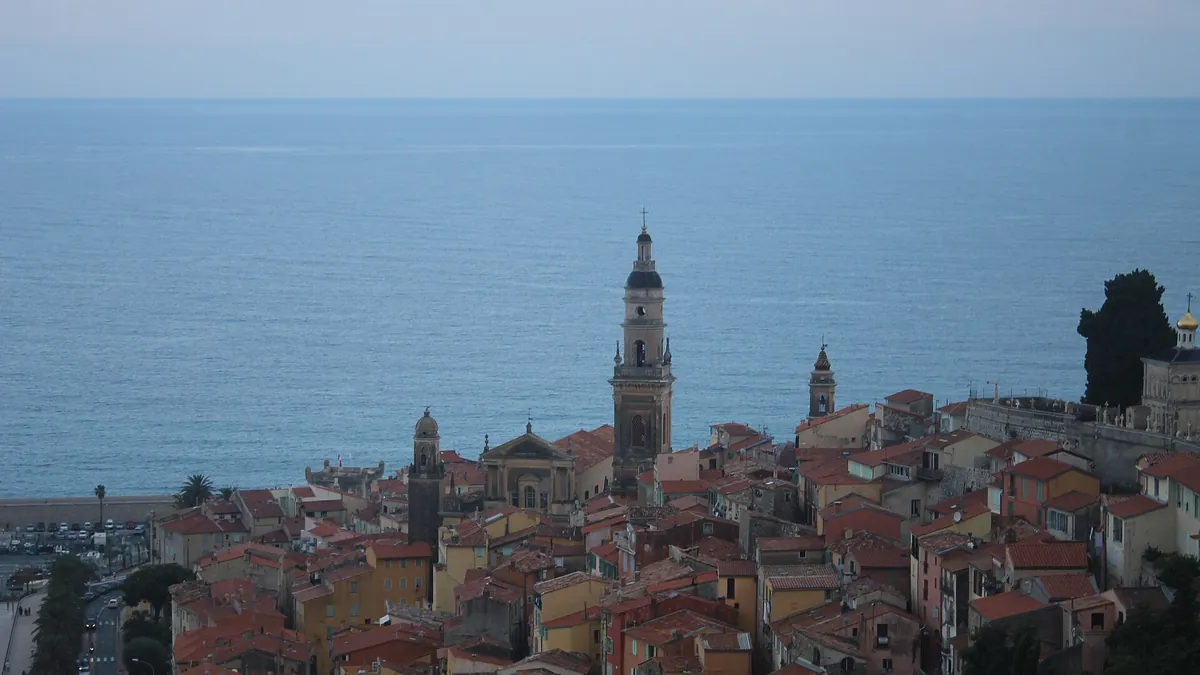
The old town itself is pure Riviera romance. Apricot, rose and ochre houses stack above a curved bay and a small harbour. You can climb towards the Basilica of Saint Michael for sweeping views across the rooftops. Afterwards, the Jean Cocteau Museum and the peaceful seafront promenade invite a slower pace. Because Italy lies just beyond the headland, day trips across the border are easy too. If that tempts you, browse our ideas for good places to visit in Italy before you go.
Antibes and Juan-les-Pins, art, ramparts and sandy beaches
Antibes sits between Nice and Cannes, and it charms visitors with a lived in, relaxed feel. Massive stone ramparts guard the old town from the sea. Inside them, Provençal lanes lead to a lively covered market and small squares. Above all, the Picasso Museum inside the Château Grimaldi anchors the town’s art story. Picasso worked here after the war, and the sea views from its terrace are stunning.
Beach time comes easily around Antibes as well. Sandy stretches run along the ramparts and around the Cap d’Antibes peninsula. Walkers love the coastal path that loops past grand villas and hidden coves. Just next door, Juan-les-Pins brings a livelier, resort style mood. This sibling resort is famous for sandy beaches, seafront dining and its long running jazz festival. Together, the two towns suit families and beach lovers especially well.
Cannes and the Lérins Islands, red carpet glamour with a calm escape
Cannes built its fame on cinema, luxury hotels and one elegant boulevard. La Croisette curves along the bay, lined with palms, grand hotels and beach clubs. At its heart stands the Palais des Festivals, home of the Cannes Film Festival. Visitors happily photograph the famous red carpet steps all year round. Meanwhile, the old town of Le Suquet climbs a hill west of the harbour. Its lanes feel older, quieter and surprisingly unpretentious.
However, the loveliest Cannes surprise floats just offshore. The Lérins Islands sit a short ferry ride from the old port. Sainte-Marguerite offers pine shaded paths, clear swimming coves and a historic fort. In contrast, smaller Saint-Honorat belongs to Cistercian monks who tend vineyards in peaceful silence. Consequently, an island day balances the Croisette glamour perfectly. You can shop in the morning, and then you can swim among pine trees all afternoon.
Saint-Tropez, the legendary resort village
Saint-Tropez began as a humble fishing village, and artists adored its light long before the yachts arrived. Painters such as Signac settled here, and the Annonciade Museum still celebrates that artistic heritage. Later, film stars turned the village into a symbol of Riviera glamour. Nevertheless, the old port, the citadel and the pastel lanes retain real charm. Early mornings here feel especially magical, before the crowds arrive.
Most beach life happens just outside the village itself. Pampelonne beach stretches along a broad bay near Ramatuelle. Famous beach clubs share that sand with quieter public stretches. Meanwhile, small coves along the coastal path suit walkers seeking calmer water. Importantly, Saint-Tropez has no railway station, unlike its neighbours. Therefore, you should plan the journey carefully, using buses, a car or seasonal boats from other resorts.
Saint-Paul-de-Vence, the artists’ hill village
Saint-Paul-de-Vence is a fortified hill village that artists made famous. Marc Chagall lived here for many years, and galleries now fill its medieval lanes. You enter through old stone gates and wander past fountains, studios and tiny squares. Additionally, the ramparts give lovely views over the Provençal countryside. The village feels like an open air museum, yet people still live and work here.
Art continues just outside the walls as well. The Fondation Maeght displays modern art in a beautiful garden setting nearby. Sculptures by major twentieth century artists stand among pine trees and terraces. As a result, pairing the village with the foundation makes a rich half day inland. Buses connect Saint-Paul with the coast, although a car or tour simplifies the trip. Either way, this detour shows you a completely different Riviera.
Grasse, the world capital of perfume
Grasse rises in the hills behind Cannes, surrounded historically by flower fields. For centuries, perfumers here transformed roses, jasmine and lavender into fine fragrances. Today, historic houses such as Fragonard, Molinard and Galimard welcome visitors. Their museums and workshops explain how flowers become perfume, step by step. Best of all, you can often create a simple scent of your own.
The old town deserves time beyond the perfume story too. Shaded squares, an old cathedral and steep lanes give Grasse a distinctly Provençal character. Moreover, the views stretch from the hills right down towards the sea. Consequently, Grasse works beautifully as a gentle contrast to the busy coast. You could combine it with Saint-Paul-de-Vence for a full inland day. That pairing covers scent, art and village life in one satisfying loop.
The Esterel coast and Hyères, the wilder western edge
West of Cannes, the coastline changes character dramatically. The Esterel massif drops red volcanic rocks straight into deep blue water. Small resorts such as Théoule-sur-Mer and Agay sit beneath those crimson cliffs. Walkers and swimmers love the tiny coves along this scenic corniche. In fact, many locals rate this stretch the most beautiful drive on the Riviera.
Further west again, Hyères marks the traditional far edge of the Côte d’Azur. Its old town climbs a hill above palm lined avenues and sandy beaches. Offshore, the Îles d’Hyères offer a protected, car light island escape. Porquerolles, the largest island, is loved for cycling paths and clear bays. Therefore, travellers with extra days should seriously consider extending their trip this far. The reward is a quieter, wilder version of the same dazzling coast.
Where to stay in the French Riviera?
Choosing where to stay in the French Riviera shapes your whole trip. Nice suits first timers best, because it offers the airport, the widest hotel choice and the easiest day trips. Antibes suits travellers who want a smaller town with sandy beaches nearby. Meanwhile, Villefranche-sur-Mer and Menton suit couples seeking calm evenings and pretty harbours. In contrast, Cannes and Monaco suit visitors chasing polished glamour.
What matters most to you on this trip?
- Easy transport and nightlife? Base yourself in Nice, and use the trains constantly.
- Sand and family ease? Choose Antibes or Juan-les-Pins for beaches beside your hotel.
- Romance and quiet? Pick Villefranche-sur-Mer, Menton or a hill village stay.
- Pure glamour? Look at Cannes, Monte Carlo or Saint-Tropez in season.
Importantly, you do not need to change hotels every few days here. Distances are short, and the railway does the hard work for you. Therefore, one good base usually beats three rushed ones. Alternatively, a split stay between Nice and a quieter town gives you both energy and rest.
Getting around on the Côte d’Azur train line
The coastal railway is the Riviera’s greatest practical gift. Regional trains link Cannes, Antibes, Nice, Villefranche, Monaco and Menton in one simple line. Services run frequently through the day, and the sea views between stations are gorgeous. As a result, most Nice day trips need no car at all. You simply hop off, explore on foot and ride back for dinner.
Buses fill the gaps that trains cannot reach. They climb to Èze village, Saint-Paul-de-Vence and Grasse from the coastal towns. Boats then add the final piece, serving the Lérins Islands and, seasonally, Saint-Tropez. However, hill village buses run less often than trains, so you should always check return times. That one habit prevents the classic Riviera mistake of a long, stranded wait.
When is the best time to visit the French Riviera?
Late spring and early autumn usually deliver the sweetest balance here. May, June, September and early October bring warm days and a swimmable sea. Crowds feel manageable then, and hotel choice improves outside peak weeks. In contrast, July and August bring the hottest weather, the fullest beaches and the busiest trains. Winter, meanwhile, is mild and quiet, although swimming becomes a brave choice.
Big events also shape the calendar strongly. The Cannes Film Festival transforms Cannes in May, and the Monaco Grand Prix follows close behind. Menton answers with its Lemon Festival in February. If you love atmosphere, you might plan around one of these celebrations. If you prefer calm, you should avoid those exact weeks. Seasoned travellers who enjoy summer city energy elsewhere, such as in our guide to places to visit in London in summer, will recognise the same trade off here.
A simple French Riviera itinerary that actually works
A good French Riviera itinerary pairs neighbours instead of criss crossing the coast. For a five day trip based in Nice, the logic below keeps travel short and days varied. Moreover, each day mixes a headline sight with slower, local pleasures. As a result, the trip feels rich rather than rushed.
- Day one in Nice. Walk the Promenade des Anglais, explore the old town and climb Castle Hill.
- Day two eastwards. Visit Villefranche-sur-Mer in the morning, and then continue to Monaco for the afternoon.
- Day three up high. Ride the bus to Èze, linger in the exotic garden and return via the coastal path views.
- Day four westwards. Take the train to Antibes for the Picasso Museum, and then stroll Cannes and Le Suquet by evening.
- Day five your choice. Sail to the Lérins Islands, ride east to Menton, or head inland to Saint-Paul-de-Vence and Grasse.
With seven days, you can add Saint-Tropez as a dedicated excursion. You could also slow down and repeat a favourite beach or museum. If European itineraries are your thing generally, our list of the top ten places to visit in Prague uses the same pair and pace approach. Ultimately, the Riviera rewards travellers who group places geographically. That simple rule protects your holiday from timetable stress.
Questions travellers always ask
How many days do you need on the French Riviera?
Three days cover Nice, Monaco and one more favourite at a brisk pace. However, five to seven days feel far better for most first time visitors. That span allows beach time, a hill village and at least one island or inland day. Consequently, you leave feeling satisfied rather than exhausted.
Can you visit the French Riviera without a car?
Yes, absolutely, because the coastal towns link together by frequent trains. Buses then cover the main hill villages, although their timetables need checking. Saint-Tropez is the one famous exception without a station. Therefore, you should treat it as a planned excursion rather than a casual hop.
Which town has the best beaches on the Riviera?
Cannes, Antibes and Juan-les-Pins offer the easiest sandy town beaches. Pampelonne near Saint-Tropez provides the most famous long stretch of sand. Meanwhile, Villefranche and the Lérins Islands offer clearer, calmer swimming bays. Nice itself has a beautiful bay, although its beach is pebble rather than sand. Shoulder season travellers who enjoy contrasting trips, from the best place to visit in Austria in summer to Riviera sunshine, often love September here most.
Is Monaco a country or part of France?
Monaco is its own small, independent country on the French coast. Nevertheless, visiting feels effortless, because trains from Nice arrive in the underground station like any other stop. You need no special arrangements for a normal sightseeing day trip. Simply bring comfortable shoes, because the principality’s lanes and districts involve plenty of steps. Winter sun seekers comparing options with places to visit in winter in London or even places to visit in Poland in winter will find the Riviera far milder.
Final thoughts on the places to visit in the French Riviera
The finest places to visit in the French Riviera succeed because each one offers something distinct. Nice gives you art, energy and the perfect transport hub. Cannes and Monaco deliver glamour, while Antibes and Menton slow the pulse beautifully. Meanwhile, Èze, Saint-Paul-de-Vence and Grasse prove that the hills rival the beaches. In short, the coast works best as a collection, not a competition.
So, where will your Riviera story begin?
Pick one base, ride the little coastal trains and let each town surprise you. Pack light shoes for the hill villages and leave space in every day for doing nothing by the sea. After all, lingering over a harbour side coffee is a Riviera attraction in itself. That unhurried pleasure is exactly why travellers have loved this coast for generations.




