
Minnesota does not hide from winter. Instead, the state leans into the cold with festivals, frozen lakes, and snowy forests. For that reason, the best places to visit in Minnesota in winter feel alive rather than empty. Moreover, short days and deep snow create a mood you cannot find in summer. Consequently, a winter trip here rewards anyone who dresses well and plans ahead.
Admittedly, the cold is serious. Temperatures often sit well below freezing, and wind can make the air feel sharper still. However, locals treat that weather as part of the fun. For example, they skate on frozen lakes, fish through the ice, and parade through snow-covered streets. As a result, visitors quickly learn to enjoy the season on local terms.
Below, you will find cities, small towns, parks, and wild northern corners worth your time. Additionally, you will find honest advice on layering, driving, and daylight. In short, this guide helps you choose where to go and how to enjoy it safely.
Minneapolis and Saint Paul: Culture, Skyways, and Winter Warmth
Most winter trips start in the Twin Cities. Indeed, Minneapolis and Saint Paul offer the easiest mix of indoor comfort and outdoor fun. Furthermore, both cities sit close together, so you can explore them in one stay. Therefore, base yourself here if you prefer museums, food, and short walks in the cold.
Winter in Minneapolis and the Skyway System
Downtown Minneapolis solves the cold in a clever way. Specifically, the Minneapolis Skyway System links many downtown blocks with enclosed, heated bridges. Consequently, you can walk between shops, offices, and hotels without facing the wind. Moreover, the system makes winter in Minneapolis far more comfortable for first-time visitors.
Outside the skyways, the city still shines. For instance, the Minneapolis Institute of Art holds a huge collection that spans thousands of years. Similarly, the Walker Art Center and the Minneapolis Sculpture Garden reward art lovers, even on a snowy day. Afterwards, you can warm up in a cozy cafe or catch a show at the Guthrie Theater. In fact, winter evenings here feel rich and full, not quiet and dull.
Do you want fresh air without leaving the city?
Minnehaha Falls offers a lovely answer. In deep winter, the waterfall often freezes into a pale wall of ice. As a result, the park becomes a favourite spot for a short, scenic walk. However, paths can be slippery, so sturdy boots matter here. Meanwhile, the Chain of Lakes invites skating, walking, and quiet views across white ice.
Saint Paul, the Capitol, and a Famous Carnival
Across the river, Saint Paul feels older and calmer. Notably, the Minnesota State Capitol anchors the city with its grand dome and marble halls. Additionally, the nearby Cathedral of Saint Paul adds another striking landmark. Together, these buildings give a winter walk real character, especially under fresh snow.
Best of all, Saint Paul hosts a celebration like no other. The Saint Paul Winter Carnival has run since the late 1800s, and locals proudly call it one of the oldest winter festivals in the United States. During the carnival, Rice Park fills with ice carvings that glow after dark. Furthermore, parades, snow sculptures, and the famous medallion treasure hunt bring the whole city outside. Therefore, time your visit for late January into February if you can.
Need a break from the cold?
Head indoors at the Landmark Center or the Science Museum of Minnesota. Alternatively, browse the American Swedish Institute in Minneapolis for Scandinavian design and seasonal charm. In short, the Twin Cities balance outdoor spectacle with warm, thoughtful indoor stops.
Mall of America and Easy Indoor Days
Just south of the cities, Bloomington holds a giant indoor escape. The Mall of America combines hundreds of shops with an indoor theme park and an aquarium. Consequently, families love it on the coldest days, when outdoor plans feel too harsh. Moreover, light rail links the mall with the airport and downtown, so travel stays simple.
Still, do not spend your whole trip indoors. Instead, mix one mall day with skating, museums, and a carnival evening. As a result, you will feel the real rhythm of a Minnesota winter, not just its warmest corners.
Duluth and the North Shore: Lake Superior Under Ice
If the Twin Cities offer comfort, the northeast offers drama. Duluth in winter is bold, windy, and unforgettable. Moreover, the drive north along Lake Superior becomes part of the adventure itself. For many travellers, this region holds the finest Minnesota winter attractions of all.
Duluth in Winter: Canal Park and the Big Lake
Start in Canal Park, the lively district beside the harbour. There, the Aerial Lift Bridge rises to let ships pass, even in the cold months. Additionally, the Lakewalk traces the shore and gives wide views across frozen water. On calm days, ice plates groan and shift near the shore. On stormy days, however, waves crash and spray can freeze on the rocks.
Warm up nearby at the Great Lakes Aquarium or the Lake Superior Railroad Museum. Similarly, Spirit Mountain sits just outside town for downhill skiing with lake views. Afterwards, Duluth’s breweries, bakeries, and lakefront hotels make evenings feel snug. In fact, watching snow fall over the harbour from a warm window is a pleasure in itself.
During the holiday season, Bentleyville Tour of Lights brightens Bayfront Festival Park. Families stroll through huge light displays beside the lake. Therefore, Duluth works beautifully for both adventure days and gentle festive evenings.
North Shore Winter: Frozen Falls and Lighthouse Views
Beyond Duluth, Highway 61 follows the shore toward Canada. A North Shore winter road trip links state parks, small harbours, and quiet forests. Moreover, every stop feels different, so the drive never grows dull.
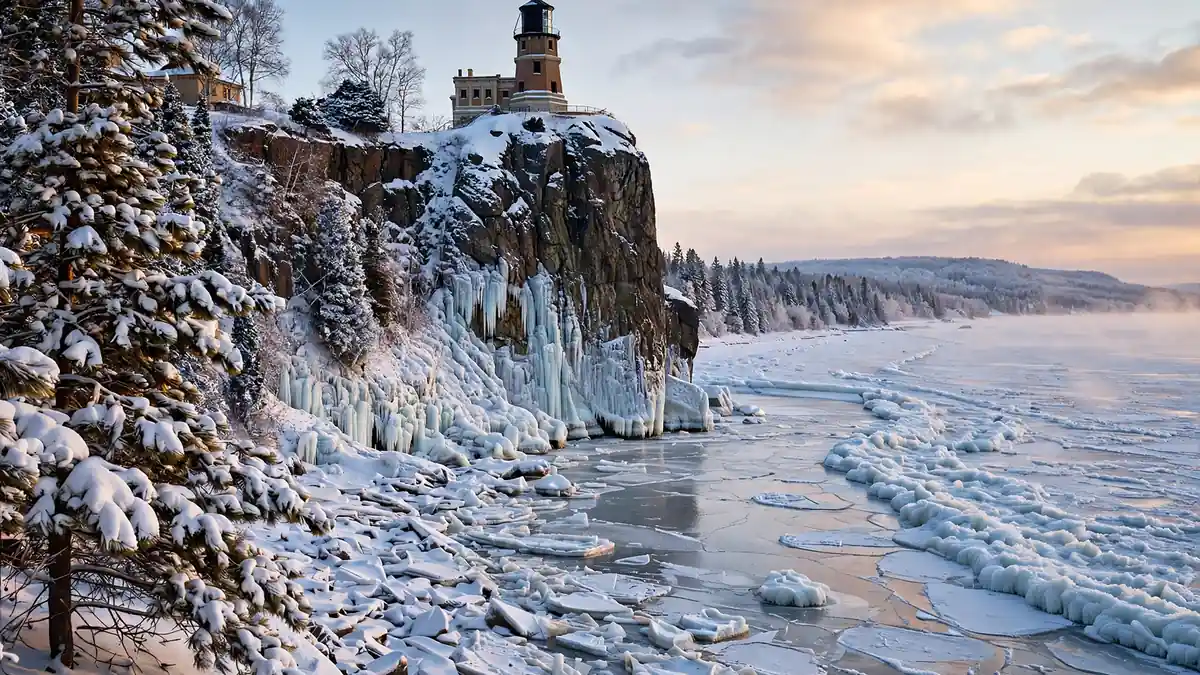
Gooseberry Falls State Park is an essential first stop. In winter, the falls can freeze into layered curtains of ice. Similarly, Split Rock Lighthouse stands above the lake on a dramatic cliff, and snow makes the view even stronger. Further north, Temperance River and Cascade River parks hide gorges, pines, and more frozen waterfalls Minnesota travellers love. However, trails can be icy, so take your time and wear traction on your boots.
Grand Marais makes a perfect final base. This harbour town has galleries, coffee shops, and a calm, creative spirit. Additionally, the nearby Gunflint Trail leads into deep forest and frozen lakes. Consequently, Grand Marais suits couples and photographers who want quiet beauty rather than crowds.
Lutsen, Ely, and the Far North: Skiing, Dog Sleds, and Dark Skies
Head inland and north, and winter grows wilder. Here, forests thicken, lakes freeze hard, and nights turn truly dark. As a result, this is the Minnesota of sled dogs, skis, and silent snow.
Lutsen Mountains Skiing and North Shore Slopes
Lutsen Mountains skiing is the headline act on the North Shore. The resort spreads across several peaks above Lake Superior, with runs for beginners and confident skiers alike. Moreover, the gondola ride to Moose Mountain gives sweeping views over forest and frozen lake. Therefore, even non-skiers can enjoy the summit scenery on a clear day.
Nearby trails add more choice. For example, the Sugarbush and Norpine trail systems offer groomed cross-country skiing through maple and pine woods. Similarly, snowshoeing lets you move slowly and notice animal tracks in fresh snow. Afterwards, a lodge fire and a hot meal feel deeply earned.
If you love winter variety, compare this coast with the high desert snow in our guide to the best places to visit in Utah in winter. Both regions prove that winter travel can feel grand without a beach in sight.
Ely, Dog Sledding, and the Boundary Waters Edge
Ely sits at the edge of the Boundary Waters Canoe Area Wilderness. In summer, canoes rule here. In winter, however, dog sledding in Minnesota finds one of its true homes around this small town. Local outfitters run guided sled trips for beginners, and the dogs clearly love the work. Moreover, the John Beargrease Sled Dog Marathon, which starts near Duluth, celebrates this tradition each winter.
Ely also hosts a winter festival spirit of its own, with snow carving and community events. Additionally, the International Wolf Center helps visitors understand the wild north in an engaging way. Consequently, Ely suits travellers who want nature first and nightlife last.
Do you dream of paddling country turned white?
Winter camping and ski trips enter the Boundary Waters for experienced visitors only. Indeed, the silence out there is total, and help can be far away. Therefore, beginners should choose guided trips and cosy cabins instead.
Voyageurs National Park in Winter and the Northern Lights
Further west, Voyageurs National Park in winter feels vast and still. Frozen lakes become routes for snowmobiles, skiers, and ice anglers. Moreover, the park maintains ice roads on some lakes when conditions allow, which creates a travel experience found in few other parks. Always check current conditions first, however, because ice safety comes before adventure.
At night, the park offers something special. Voyageurs is known for dark skies, and Minnesota northern lights viewing can be superb here on clear nights. Furthermore, long winter darkness improves your chances, since you do not need to stay up so late. Still, the aurora never follows a schedule, so treat any sighting as a gift. Even without the lights, the stars alone can stop you in your tracks.
Nearby International Falls embraces the cold with humour. Its Icebox Days festival celebrates winter with playful events and community pride. As a result, a Voyageurs trip can mix wild quiet with small-town laughter in a single weekend.
Classic Winter Pastimes: Ice Fishing, Skating, and Snow Trails
Some experiences define a Minnesota winter more than any single place. Indeed, these pastimes appear across the state, from city parks to remote lakes. Moreover, joining in helps you understand local life, not just local scenery.
Ice Fishing in Minnesota: A Culture on the Ice
Ice fishing in Minnesota is part sport, part social ritual. Once lakes freeze thick enough, small shelters and heated fish houses dot the white surface. Popular regions include the Brainerd Lakes area, Lake Mille Lacs, and lakes around Voyageurs. Additionally, many resorts and guides help beginners drill a hole, set a line, and stay warm.
Safety matters most here. Never walk or drive on ice unless local reports say it is safe. Furthermore, dress for sitting still, because stillness in cold air chills you fast. With the right guide, however, a quiet morning on the ice can become a trip highlight. Afterwards, a hot lunch tastes better than almost anything.
If frozen lakes fascinate you, the neighbouring shore in our guide to places to visit in the Upper Peninsula of Michigan offers a similar Great Lakes winter mood.
Ice Skating in Minnesota, Tubing, and City Winter Play
Ice skating in Minnesota ranges from wild lake loops to polished outdoor rinks. In the Twin Cities, Centennial Lakes Park in Edina connects ponds and canals under lights and bridges. Similarly, the Guidant John Rose MN Oval in Roseville is a huge refrigerated outdoor rink loved by skaters of all levels. As a result, you can enjoy a classic skate even when natural ice is uneven.
Families also love snow tubing and sledding hills near the cities. For example, Buck Hill and other small ski areas offer tubing lanes that need no skill at all. Moreover, cross-country ski trails fill parks like Theodore Wirth in Minneapolis and Fort Snelling near the river. Therefore, you never need to drive far for honest winter exercise.
For a broader shortlist, our roundup of the best place to visit in the winter in the US shows how Minnesota stands beside other cold-weather favourites.
Snowmobiling, Fat Biking, and Quiet Trails
Minnesota maintains a huge network of groomed snowmobile trails. Riders cross forests, fields, and frozen lakes between small towns. Additionally, fat biking on packed snow trails has grown fast, especially around Duluth and the Cuyuna area. Meanwhile, snowshoeing remains the simplest way to enter the winter woods at your own pace.
Whichever trail you choose, respect the signs and the weather. Conditions change quickly, and daylight fades early. Consequently, start earlier than you think, carry water, and tell someone your plan. In return, the winter forest gives you silence, soft light, and tracks left by deer and foxes.
Small Towns and River Valleys: Cosy Weekends Away
Not every winter day needs a big adventure. Sometimes, the best winter towns in Minnesota win you over with bakeries, bookshops, and slow mornings. Moreover, these towns make easy weekend bases between bigger excursions.
Stillwater and the St. Croix Valley
Stillwater sits on the St. Croix River, northeast of Saint Paul. Its historic main street holds antique shops, cafes, and brick buildings dusted with snow. In winter, the town also hosts major snow sculpting events that draw artists and crowds. Additionally, nearby Afton and Taylors Falls offer skiing, tubing, and river views. Therefore, Stillwater suits a gentle trip with one or two active outings.
Red Wing and the Mississippi River Bluffs
South of the cities, Red Wing charms visitors with bluffs above the Mississippi River. The town is known for pottery, boots, and a proud craft heritage. In winter, the river edges freeze, eagles gather near open water, and the streets feel peaceful. Moreover, the drive along the river valley is scenic in every season. Afterwards, warm shops and cafes make it easy to linger.
Do you prefer your winter trips slow and scenic?
Then pair Red Wing with a night in Winona or a stop in Wabasha, a small river town with a strong eagle-watching tradition. Similarly, Lanesboro in bluff country offers arts, quiet inns, and a slower pace. In short, southern Minnesota gives you winter without the deepest northern cold.
Readers planning a wider cold-season route may also enjoy our guide to places to visit in Poland in winter, which shares the same love of snowy old towns.
Planning Your Trip: Weather, Layers, and Driving
Good planning turns harsh weather into part of the story. Indeed, the practical side of things to do in Minnesota in winter matters as much as the destination list. Moreover, small choices about clothes and timing shape your whole trip.
What Should You Pack for a Minnesota Winter?
Layers are the golden rule. Start with a warm base layer, then add insulation, and finally add a windproof outer layer. Additionally, bring a warm hat, insulated gloves or mittens, a scarf or neck gaiter, and waterproof boots with good grip. Hand warmers help on festival days, when you stand still for long stretches.
Avoid cotton next to your skin, because it stays cold when damp. Instead, choose wool or synthetic fabrics that keep warmth even after activity. Furthermore, pack lip balm and moisturiser, since indoor heating and cold air both dry your skin. As a result, you will stay outside longer and enjoy more of each day.
Daylight, Driving, and Staying Safe
Winter days are short this far north. The sun sets early, so plan outdoor highlights for late morning and early afternoon. Moreover, golden light on snow can be beautiful in those hours. Therefore, save museums, malls, and long dinners for the darker evenings.
Driving needs extra care as well. Roads are usually cleared well, but fresh snow and ice still demand slower speeds. Additionally, keep extra distance, clear all snow from your car, and check forecasts before long drives. If a storm arrives, change your plans rather than pushing on. In contrast, city trips stay easy, because light rail and skyways reduce your time in bad weather.
Finally, book cabins, ski weekends, and carnival hotels early. Popular dates fill fast, especially in Duluth, Lutsen, and Saint Paul. Consequently, early booking gives you better locations and calmer planning.
Choosing Your Minnesota Winter Route
So, which trip fits you best?
City lovers should choose the Twin Cities for museums, the carnival, and easy indoor comfort. Nature lovers, however, should head for Duluth, the North Shore, and Lutsen. Meanwhile, true winter romantics will love Ely, Grand Marais, and the dark skies near Voyageurs. Each route offers a different face of the same proud season.
Whichever route you pick, embrace the cold rather than fighting it. Dress in layers, plan around daylight, and leave room for hot drinks and slow evenings. Moreover, talk to locals, because Minnesotans love sharing winter tips with visitors. In the end, that warmth is what you will remember most.
For more seasonal inspiration across the Midwest, browse our guide to the best places in the Midwest to visit in fall and start dreaming about a return trip. Alternatively, compare northern winters worldwide in our guide to places to visit in New Zealand in winter. If snowy city breaks appeal to you most, our guide to the best places on the East Coast to visit in winter is worth a look as well.
Frequently Asked Questions
What is the best month for a winter trip to Minnesota?
January and February usually offer the most reliable snow and ice. Moreover, the Saint Paul Winter Carnival and many lake activities peak in that window. However, December brings festive lights, and March can feel slightly milder. Therefore, choose by activity rather than by calendar alone.
Is Minnesota too cold for first-time winter visitors?
No, not if you prepare well. Indeed, layers, good boots, and shorter outdoor bursts make the cold manageable. Additionally, the Twin Cities offer skyways, museums, and indoor attractions for the harshest days. As a result, beginners often do best by mixing city comfort with one northern excursion.
Can you see the northern lights in Minnesota in winter?
Yes, you can, especially in the far north on clear, dark nights. Voyageurs, the Gunflint Trail, and areas near Ely and Grand Marais offer low light pollution. Furthermore, winter gives you longer nights, which improves your chances. Still, sightings are never guaranteed, so enjoy the stars either way.
How many days do you need for a Minnesota winter trip?
Three days suit a Twin Cities break with the carnival or Mall of America. However, five to seven days let you add Duluth and the North Shore properly. Moreover, a full week allows a ski day at Lutsen and a quiet night under northern skies. Consequently, longer trips feel less rushed and far more rewarding.




