
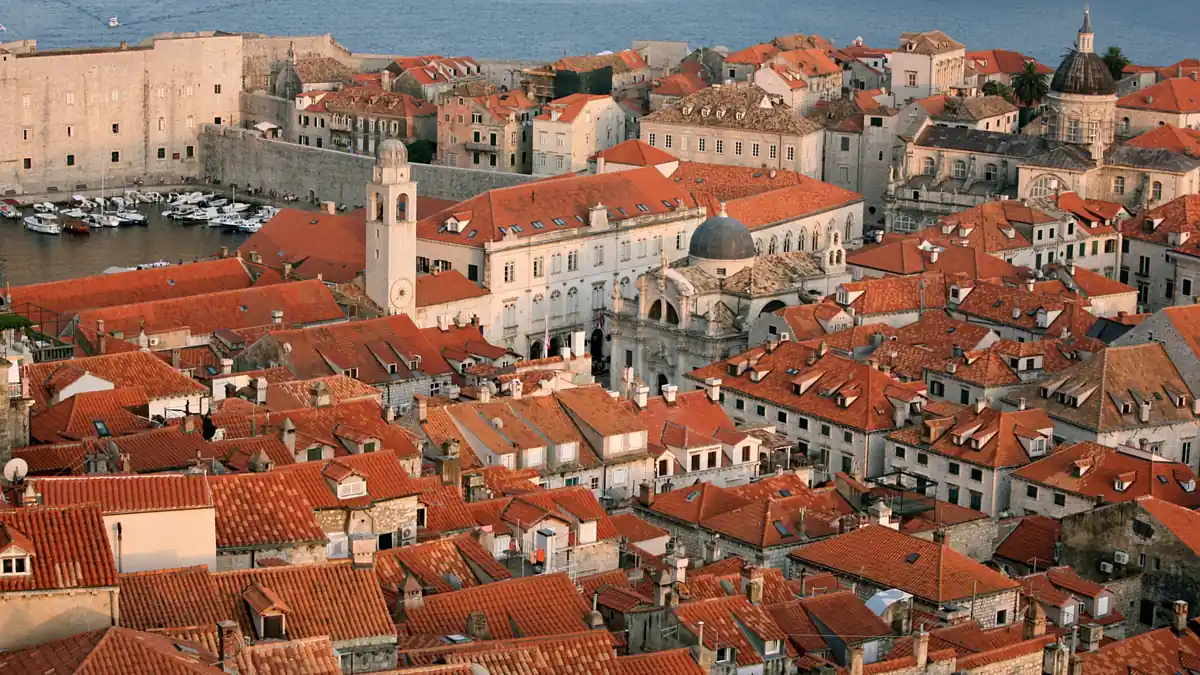
Most Croatia guides hand you seven different routes and wish you luck. This one does the opposite. You get a single 7 day Croatia itinerary, three bases, and one clear direction of travel. Zagreb starts the trip, Split anchors the middle, and Dubrovnik closes it in style.
Better still, the pace stays honest throughout. You change hotels only twice in seven days. Plitvice Lakes becomes a scenic transit day rather than another base. Day trips then radiate out from Split, so your suitcase stays put.
Admittedly, seven days cannot cover every island and inland town. However, this route strings together the places first-timers dream about most. Historic capitals, waterfall parks, Roman palaces, and walled Dubrovnik all fit comfortably. Moreover, every leg works without hiring a car at all.
What does this 7 day Croatia itinerary look like at a glance?
The table below shows the whole week in seconds. Each night belongs to one of just three bases. Furthermore, the route only ever moves south, so you never backtrack.
| Day | Base | Highlight |
|---|---|---|
| Day 1 | Zagreb | Upper Town and the cathedral quarter |
| Day 2 | Split, via Plitvice | Plitvice Lakes as a transit day |
| Day 3 | Split | Diocletian’s Palace and the Riva |
| Day 4 | Split | Hvar by catamaran or Krka by bus |
| Day 5 | Split | Trogir and a slow Split afternoon |
| Day 6 | Dubrovnik | The city walls and the Old Town |
| Day 7 | Dubrovnik | Lokrum Island and a final swim |
Notice how Split carries three full nights in the middle. That choice is deliberate, and it changes everything. Split sits within easy reach of islands, waterfalls, and coastal towns. Consequently, your busiest sightseeing days still end in the same bed.
How do you follow this Croatia itinerary without a car by bus and ferry?
Plenty of readers assume Croatia demands a rental car. In reality, a Croatia itinerary by public transport works beautifully along this corridor. Buses link every stop on the route, and catamarans handle the island hop. This section explains a Croatia itinerary without a car by bus and ferry, leg by leg.
Firstly, coaches connect Zagreb with Plitvice Lakes and then run onward towards the coast. You simply ride the same corridor south with one long sightseeing stop. Later, buses continue from the Plitvice area down to Split. Alternatively, some travellers pause in Zadar on the way down.
Secondly, Split acts as the great transport hub of the trip. Catamarans sail from its harbour to Hvar and other islands in season. Local buses, meanwhile, reach Trogir and the Krka area with ease. Finally, coaches and seasonal catamarans link Split with Dubrovnik along the coast.
One warning matters more than any other here. Ferry and catamaran schedules shrink sharply outside the main season. Winter timetables can leave an island day trip impractical or impossible. Therefore, always check the current seasonal timetable before you lock your dates. If boats look thin, swap the Hvar day for Krka instead.
Where to stay on a 7 day Croatia trip?
Choosing bases well answers half the question of where to stay on a 7 day Croatia trip. This route uses Zagreb, Split, and Dubrovnik only. Each base earns its nights for a different reason. Together, they keep transfers short and evenings relaxed.
Why does Zagreb work as the first base?
Zagreb suits the opening night perfectly. Most international arrivals land here, so the trip starts where you land. Stay near the Upper Town or the main square for easy walking. Cafés, museums, and the cathedral then sit minutes from your door. One or two nights feel right for a first visit.
Why does Split deserve three nights?
Split, in contrast, rewards a longer stay. The old town wraps around a Roman palace, so history surrounds your hotel. Ferries, buses, and day trips all depart from one compact harbour area. Stay inside or beside the palace quarter for the best experience. Similar old-town logic shapes a city break in Amsterdam’s city centre, where a central base saves hours.
Why should Dubrovnik close the trip?
Dubrovnik provides the grand finale. Two nights let you walk the walls without rushing and still breathe. Accommodation inside the walls feels magical, although steps and luggage can challenge. Staying just outside the gates, near Ploče or Pile, often proves easier. Either way, book early, because small old-town properties fill fast.
Day 1 in Zagreb: what should you see first?
Day one belongs to Zagreb Upper Town and St Mark’s Church, the historic heart of the capital. Start gently, especially after a travel day. Coffee culture here is a local ritual, so claim a terrace table first. Then ride the short funicular or climb the steps into the Upper Town.
St Mark’s Square anchors the whole district. Its church wears a famous tiled roof with two colourful coats of arms. Government buildings face the square, giving the area a formal feel. Nearby, the Stone Gate shelters a small chapel that locals still visit daily. Candles glow there from morning onwards, creating a quietly moving stop.
Afterwards, wander down through the Lower Town at an easy pace. The cathedral, the market, and grand Austro-Hungarian streets fill the afternoon nicely. Zagreb shares that imperial elegance with Prague’s top sights, another capital built for strolling. Finish with an early night, because tomorrow starts early.
- Morning: coffee near the main square, then the funicular uphill
- Midday: St Mark’s Church, the Stone Gate, and Lotrščak Tower
- Afternoon: the cathedral, Dolac Market, and Lower Town boulevards
- Evening: dinner on lively Tkalčićeva Street, then an early bedtime
Day 2: can you really do Plitvice Lakes National Park in one day?
Yes, and day two proves that Plitvice Lakes National Park in one day works as a transit stop. Leave Zagreb early with your luggage, and store bags at the park entrance area. Boardwalks then carry you past turquoise lakes and cascading falls. The park splits into upper and lower lake sections, both worth seeing.
Timing, however, decides how enjoyable this day feels. Arrive as early as your bus allows, before day-trip crowds build. Follow one clear walking route instead of zigzagging between viewpoints. The Great Waterfall in the lower section delivers the classic finale. Boats and a panorama train inside the park help tired legs.
Late in the day, continue south by bus towards Split. The optional version of this leg pauses in Zadar Old Town and Sea Organ territory. Zadar rewards even a short stop with Roman streets and a marble seafront. Its Sea Organ plays soft notes as waves push air through pipes. Nearby, the Greeting to the Sun circle glows after dark. Still, treat Zadar as a bonus, not a fourth base.
Day 3 in Split: how do you explore Diocletian’s Palace?
Day three slows down inside a living Roman palace. Think of this simple Split Diocletian’s Palace guide as a wander, not a checklist. Emperor Diocletian built the palace as his retirement residence by the sea. Today, shops, homes, and cafés fill its ancient walls completely.
Begin at the Peristyle, the palace’s columned central square. The cathedral beside it began life as Diocletian’s mausoleum, a rich historical irony. Climb the bell tower if you enjoy views and narrow steps. Afterwards, descend into the palace cellars, which preserve the original layout beautifully. Their cool halls also offer welcome shade at midday.
Later, exit through the Golden Gate and loop back along the Riva promenade. Locals treat the Riva as their outdoor living room, especially towards evening. Settle in for a drink and watch harbour life drift past. For another ancient city layered over Roman bones, the guide to the best places to visit in Athens, Greece makes a fine companion read.
Day 4: should you choose a Hvar day trip from Split or Krka?
Day four offers the week’s happiest dilemma. A Hvar day trip from Split delivers island glamour, while Krka delivers waterfalls. Both work as return trips from your Split base. Your choice depends mainly on season, weather, and energy.
What makes Hvar so appealing?
Hvar Town mixes a pretty harbour, a hilltop fortress, and clear swimming water. Catamarans cross from Split in season, landing you right in the centre. Wander the lanes, climb for the panorama, and swim before sailing home. The scene rivals the chic harbours in the guide to the top places to visit in French Riviera towns. Remember, though, that crossings thin out dramatically beyond the season.
How does the Krka National Park vs Plitvice Lakes choice work?
The Krka National Park vs Plitvice Lakes debate confuses many first-timers. Plitvice, which you visited on day two, offers grander lakes and taller falls. Krka, by comparison, feels smaller, warmer, and easier from Split. Its star, Skradinski Buk, spreads across a wide staircase of cascades. Choose Krka on day four if waterfalls beat island time for you.
Practically, Krka also rescues a windy day when boats stay in harbour. Buses reach the Skradin side from Split without fuss. You can then walk the boardwalks and linger by the falls. Either choice keeps you back in Split for dinner.
Day 5: why is a Trogir day trip from Split the perfect slow day?
A Trogir day trip from Split gives the week its breathing space. Trogir sits a short bus ride or boat trip west of Split. Its entire old town occupies a tiny island, wrapped in medieval walls. UNESCO protects the centre, and the cathedral portal alone justifies the visit.
Because Trogir is compact, a half day covers it generously. Arrive mid-morning, once you have enjoyed a lazy Split breakfast. Climb the cathedral tower, circle the Kamerlengo Fortress, and find a waterfront lunch. Gelato on the promenade then rounds things off sweetly. You will likely return by mid-afternoon, happily unhurried.
Use the rest of day five for Split itself. Swim at Bačvice or beneath Marjan hill if the weather cooperates. Alternatively, browse the markets and revisit a favourite palace corner. An easy evening now matters, because tomorrow brings the longest transfer. Pack tonight, and keep travel documents somewhere obvious.
Day 6: how do you get from Split to Dubrovnik, and what comes first?
Day six moves you down the coast to Dubrovnik. Coaches trace the shoreline south, while seasonal catamarans offer a sea route. Settle into your final base by early afternoon if possible. Then head straight into the Old Town through Pile Gate. Stradun, the polished main street, leads you towards the harbour.
Save the walls for later in the day, following classic Dubrovnik City Walls walk tips. Late light flatters the rooftops, and the stone feels cooler then. Walk the full circuit without hurrying, stopping at the Minceta Tower for views. Across the Adriatic sits Italy, whose coastal towns fill the guide to good places to visit in Italy for a future trip.
- Start late in the day for softer light and fewer crowds
- Carry water, because the circuit offers little shade
- Walk the full loop rather than exiting halfway down
- Pause at the sea-facing side for the best island views
- Wear firm shoes, since the steps and stone can feel uneven
Day 7: what is the best way to finish in Dubrovnik?
Your final day pairs a gentle island escape with last old-town pleasures. Begin with the Lokrum Island day trip Dubrovnik visitors love for its calm. Small boats shuttle from the old harbour to Lokrum in season. Peacocks wander its gardens, and a small salt lake invites a float. Rocky coves around the island offer lovely swimming spots.
Lokrum also frames Dubrovnik beautifully from the water. Photographers adore the view back towards the walls from its shores. Allow a relaxed half day there, including the boat rides. Back in town, revisit Stradun for souvenirs and one last coffee. If energy remains, the cable car up Mount Srđ delivers a farewell panorama.
Departure logistics stay simple from Dubrovnik. Airport buses serve the city, and many travellers fly home from here. Others return north by coach, although that adds a long travel day. Ideally, book an open-jaw ticket into Zagreb and out of Dubrovnik. That single choice saves you an entire backtracking journey.
When is the best time of year for a Croatia itinerary?
Season shapes this route more than almost any other factor. Most locals agree the best time of year for a Croatia itinerary falls in late spring or early autumn. May, June, and September bring warm seas and manageable crowds. Ferries run fuller schedules then, so the Hvar day works smoothly.
July and August, in contrast, bring peak heat and peak prices. Plitvice and the Dubrovnik walls feel busiest around midday in summer. Early starts become essential, and popular accommodation books out far ahead. Winter flips the problem completely, with reduced boats and quiet coastal towns. Zagreb still shines in December, yet island hopping barely functions then.
Shoulder season also softens the budget noticeably. Sea swimming stays pleasant well into early autumn most years. For summer-trip comparisons across Europe, the guide to the best place to visit in Austria in summer shows similar crowd logic. Pick your month first, and only then fix the day order.
Is 7 days enough for Croatia?
Honestly, is 7 days enough for Croatia to feel satisfying on a first trip? Yes, provided you accept one simple truth from the start. Seven days cover the classic highlights, not the whole country. Istria, the Kvarner islands, and Slavonia all wait for another visit.
Within this route, though, nothing major feels skipped. You get a capital, two great coastal cities, and two national parks. An island day, a medieval mini-town, and Lokrum complete the picture. That variety is exactly why this 7 day Croatia itinerary works. Depth in three bases beats a blur of seven.
What should you cut if you want to slow down?
Some travellers will still find this pace brisk in places. Fortunately, the route sheds pieces gracefully without collapsing. The cuts below protect the core trip while buying you rest. Apply one cut first, and see how the week feels.
- Drop the Zadar stop first. Ride straight from Plitvice to Split and gain an easier evening.
- Choose either Hvar or Krka, never both. Day four already forces this choice, so keep its loser dropped.
- Make Trogir a half day only. Its old town is tiny, so a morning visit loses nothing essential.
- Skip Lokrum if departure day feels tight. A slow Stradun morning still ends the trip beautifully.
- Never cut Plitvice or the Dubrovnik walls. Those two experiences define the route more than anything else.
Slower travel also thrives elsewhere in southern Europe. The guide to the best places to visit in the south of Spain rewards the same fewer-bases approach. Fewer moves simply mean richer days, wherever you wander.
Frequently asked questions
Can you really do this whole route without a car?
Yes, the whole route works by bus, catamaran, and local boat. Zagreb, Plitvice, Split, and Dubrovnik all connect along one corridor. Island hops depend on seasonal sailings, so check timetables before booking. Within each city, walking covers nearly everything important.
Which day trip from Split is better, Hvar or Krka?
Hvar suits travellers craving island atmosphere, swimming, and harbour cafés. Krka suits waterfall lovers and anyone travelling outside boat season. Both return you to Split the same evening with ease. Weather on the day can make the decision for you.
Do you need to book Plitvice Lakes in advance?
Booking ahead is wise in the main season, because entry uses timed slots. Your transit-day plan depends on entering reasonably early anyway. Check the park’s official channels for current entry arrangements before travelling. Off-season visits feel far more flexible and quiet.
What is the easiest way to reach Dubrovnik from Split?
Coaches run along the coast throughout the year between both cities. Seasonal catamarans add a faster-feeling sea option in warmer months. Either way, the journey becomes part of the sightseeing itself. Book popular summer departures early to secure good departure times.
Is 7 days enough for Croatia with children?
Seven days can work well for families using this three-base structure. Children cope far better with two hotel changes than six. Plitvice’s boardwalks, Krka’s falls, and Lokrum’s peacocks all delight younger travellers. Build in swim stops, and the pace feels like a holiday.




